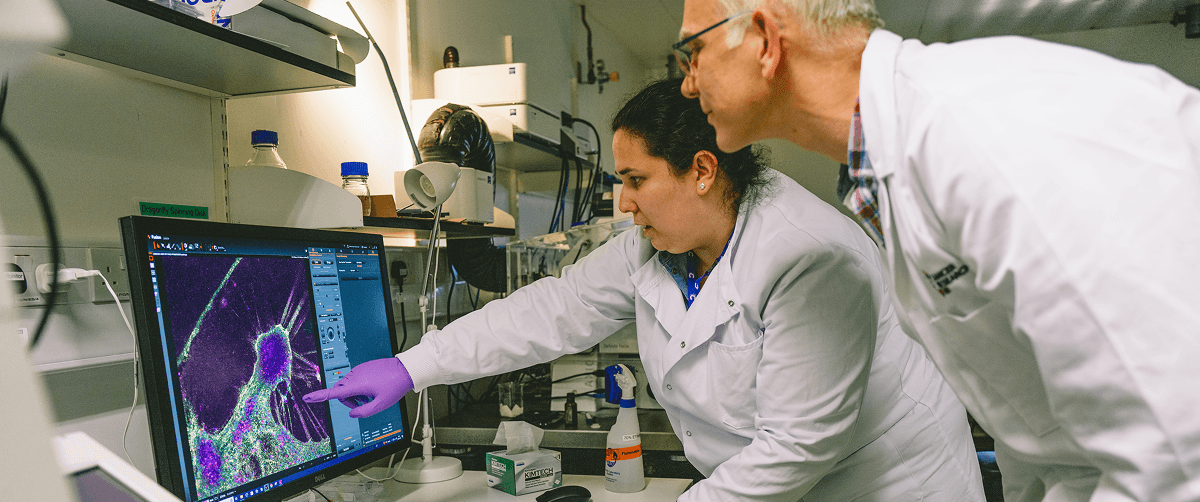
We're driving progress in cancer research by accelerating data and AI-enabled research, unlocking the potential of research data and enhancing workforce capability.
Our data science in research strategy lays out how we’ll realise the massive potential of innovation and advance responsible and effective data science in cancer research.
Explore our strategy for data science in researchThis award, jointly supported by Stand Up To Cancer, offers up to £2.5m per award for research programmes to support data-driven solutions to common challenges in children’s and young people’s cancers.
Our Data Catalyst aims to maximise the impact of cancer datasets that may have commercial value. The catalyst provides funding and support to help researchers make these datasets more accessible and usable by third parties including commercial entities.
We're looking for innovative researchers from all funding areas and welcome proposals involving data science across our funding portfolio.
We’re building a cancer data science community to support our researchers in tackling common challenges, sharing best practices across sectors and connecting people with FAIR (findable, accessible, interoperable, and reusable) and diverse data, tools, platforms and expertise.
We’re facilitating a focused, collaborative space for those interested in data-driven approaches to cancer research. Community members can connect, share expertise, explore new methods, tackle emerging challenges and support skill development.
We want to improve the trustworthiness of data-driven research and promote responsible, transparent and secure practice. To do this, we need to make data-driven research understandable and focused on the needs and concerns of people affected by cancer and the wider public.
Explore our resources for effective PPIE in data-driven research
Explore the latest articles and blogs for researchers, featuring advice, guidance, network updates and research projects.
As datasets grow in scale and complexity, computational cancer biologist Maria Secrier explains why the challenge is no longer simply measuring cancer but modelling its possible futures, to ultimately improve detection and treatment.
As the technology to interrogate data improves rapidly how can our data sets keep up? Reuse of data, says Leslie Glass, is all important – as a consequence it’s vital to get broad consent right.
AI could transform cancer research, and the UK has the ambition to lead. But the science will only deliver in full if we get the foundations right first – here Shivani Sinha tells us how we can ensure just that.
This programme offers data research and information governance advice, support and facilitation to ensure our funded researchers have the support they need for safe and effective collection and reuse of sensitive cancer data. We also offer our own trusted research environment where researchers can securely store, access and analyse patient data to inform cancer care.
This new forum brings together expertise from NHS England, researchers, third sector organisations and people affected by cancer to improve access, quality and timeliness of cancer health system data.
Private sector organisations are important partners in translating data insights into real-world patient benefits. We’re dedicated to ensuring continued responsible use and secure sharing of health-relevant data across our network. We've established a set of guiding principles governing partnerships that involve health-relevant data.
Our Data Advisory Board are international experts in their fields who contribute an invaluable perspective on oncology data science and advise us on the development and delivery of our research data strategy.
This policy outlines our position and expectations around data sharing and management to maximise the value of resarch outputs and enable data reuse across the sector.
Our strategy shapes how we'll discover more about the mechanisms of how cancer develops and progresses to unlock new and better ways to prevent, detect and treat it.
Contact our research data team for support, guidance or other enquiries.

We host scientific conferences, workshops, webinars and other events. Join us to hear about the latest science, present your own research and network with our exceptional community.
Subscribe to our newsletters to hear about the latest news, funding opportunities, events and conferences and other research stories.
