Diet and cancer
There is lots of evidence that eating a healthy balanced diet can reduce the risk of cancer. This is partly because of the diet itself, but mainly because a healthy, balanced diet helps to keep a healthy weight.
A healthy diet means eating mostly:
fruit and vegetables,
wholegrains such as wholewheat pasta, oats and wholemeal bread
healthy protein sources like chicken, fish and pulses
And cutting down on:
processed and red meat,
alcohol,
foods that are high in fat, sugar and salt.
When it comes to cancer risk, your overall diet is more important than individual foods.
The main way diet affects the risk of cancer is to do with body weight.
Eating lots of sugary food and drink, high-calorie food, and foods that are high in fat, sugar and salt can lead to gaining weight. And overweight and obesity increases the risk of at least 13 different types of cancer.
But eating a healthy, balanced diet can help you to keep a healthy weight, which reduces your risk of cancer.
Find out more on our pages about obesity, weight and cancer, including how to understand if you are a healthy weight.
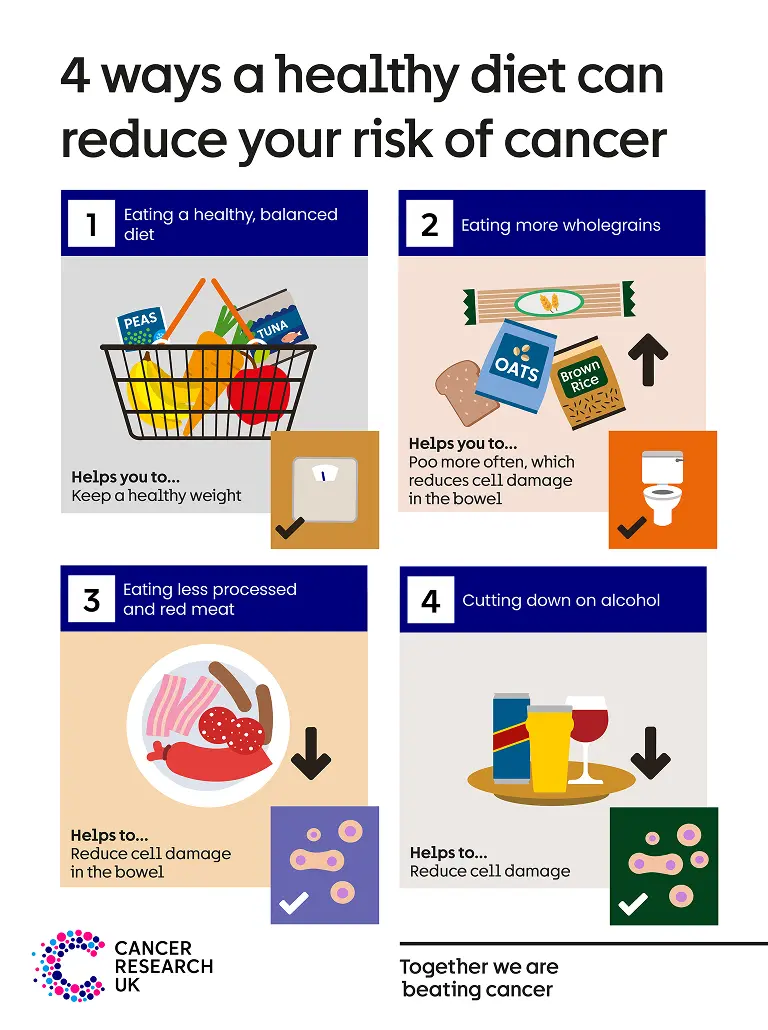
There are no best foods that protect against getting cancer and there isn’t an ‘anti-cancer diet’ to prevent cancer. But eating a healthy, balanced diet can help reduce your risk of cancer.
As part of a healthy, balanced diet eat more:
A diet high in fibre, including plenty of wholegrains, can help reduce the risk of bowel cancer. Wholegrains are foods like wholewheat pasta, oats and wholemeal bread. All wholegrains are high in fibre. Foods that are high in fibre help you poo more often, and keep the gut healthy. This reduces cell damage in the bowel, which means bowel cancer is less likely.
Find out more about fibre and wholegrains, and how to eat more fibre in your diet.
Dairy products, like milk, cheese and yogurt, can be part of a healthy, balanced diet. There is good evidence that eating and drinking dairy lowers the risk of bowel cancer. This is likely to be because it is high in calcium.
Read more about eating dairy and dairy alternatives in your diet.
There are some foods that can cause cancer (carcinogenic foods). Eating these foods doesn’t mean you’ll definitely get cancer, but cutting down on them will help lower your risk.
Remember, what you eat day to day (your overall diet) is more important than any individual food when it comes to cancer risk.
To reduce your risk of cancer, cut down on:
Processed meat is a cause of bowel cancer. It can damage the cells of the bowel, making bowel cancer more likely. Eating red meat may also increase the risk of bowel cancer.
Find out what counts as processed and red meat, and tips for how to eat less of it.
Alcohol causes at least 7 types of cancer. It causes damage to the cells in the body, which can lead to cancer. The less you drink the lower your risk of cancer.
Find our top tips for cutting down.
There are often claims in the news about other foods causing cancer, but reliable research has not proven any other cancer-causing foods. Find out more on our page on common food myths and questions.

You may have heard claims that ultra-processed foods, or UPFs, cause cancer. But currently there is no reliable evidence for a direct link between ultra-processed foods and cancer.
We do know that ultra-processed foods are often high in fat, sugar or salt. Eating too many foods that are high in fat, sugar and salt can make it harder to keep a healthy weight. And overweight and obesity increases the risk of cancer.
The traffic light labels on food packets show you how much fat, sugar and salt are in a product. Try to pick options with more greens and ambers and less reds, to help you cut down on foods that are high in fat, sugar and salt.
Find out more about the research on ultra-processed foods.
Eating a healthy diet is important, but it’s not always easy to do. The world around us can make it harder to find healthy food and stick to a healthy diet.
But you can eat tasty, healthy food without it costing a lot or taking up too much time.
Starting with small changes can help you build up healthy habits over time.
We have lots of tips on how to eat a healthy diet, including:
What a healthy meal looks like
What foods to have in your kitchen
How you can shop for healthy food on a budget
How to cook quick healthy meals
Last reviewed: 06 May 2025
Next review due: 06 May 2028



