Stages, types and grades of cervical cancer
The stage of a cancer tells you how big it is and whether it has spread. It helps your doctor decide which treatment you need.
Doctors use the International Federation of Gynecology and Obstetrics (FIGO) staging system for cervical cancer. There are 4 stages, numbered 1 to 4.
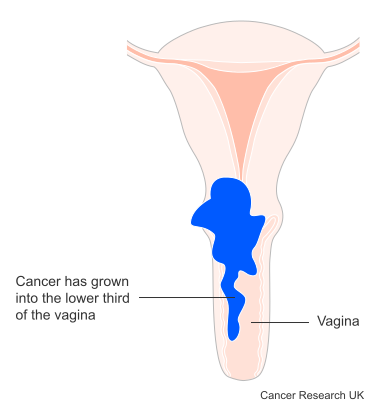
Stage 3 means one or more of the following. The cancer has spread away from the cervix and into:
the lower third of the vagina
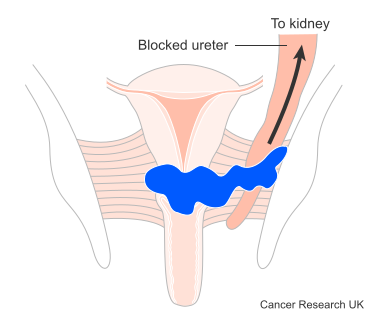
the pelvic wall - the muscles or ligaments lining the area between the hip bones (pelvis)
one or more of the tubes draining the kidneys (the ureter), causing kidney problems
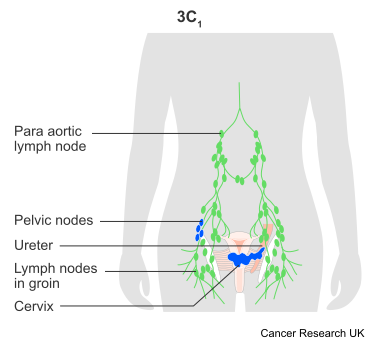
lymph nodes in the space between the hip bones (pelvic lymph nodes)
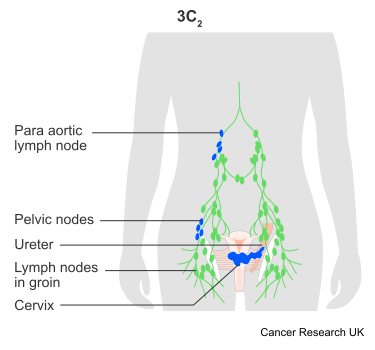
lymph nodes in the tummy (abdomen) called para-aortic lymph nodes
Stage 3 can be divided into:
stage 3A
stage 3B
stage 3C - which is then further divided into stage 3C1 and 3C2 if scans show cancer has spread to the lymph nodes
Stage 3A is when the cancer has spread to the lower third of the vagina but not the pelvic wall.
Stage 3B means one or both of the following. The tumour:
has grown through to the pelvic wall
is blocking 1 or both of the tubes that drain the kidneys (the ureters)
Stage 3C means the cancer can be any size in the pelvis but has not spread to distant sites in the body.
If scans show cancer has spread to lymph nodes, 3C is then divided into:
3C1
3C2
Stage 3C1 means cancer is in the nearby pelvic lymph nodes.
Stage 3C2 means cancer is in the para-aortic lymph nodes (in the abdomen).
The stage of your cancer helps your doctor to decide which treatment you need. Treatment also depends on:
your type of cancer (the type of cells the cancer started in)
where the cancer is
other health conditions that you have
Stage 3 cervical cancer might be treated with:
chemotherapy before chemoradiotherapy (neoadjuvant chemotherapy)
combined chemotherapy and radiotherapy (chemoradiotherapy) and brachytherapy
a boost of radiation to any pelvic lymph nodes seen on a scan
surgery to remove lymph nodes
With this treatment, you have chemotherapy during your course of radiotherapy. You have chemotherapy once a week.
You have daily external radiotherapy for 5 days every week, for around 5 weeks. You also have internal radiotherapy (brachytherapy).
Before you have the above treatments, you might have chemotherapy. This is called neoadjuvant chemotherapy.
You might also have a boost of radiotherapy if there is a risk of any cancer cells in pelvic lymph nodes.
Read about chemoradiotherapy for cervical cancer
Very rarely, you might have surgery to remove the lymph nodes around your cervix and womb (pelvic lymph nodes). This is because there is a risk the cancer may have spread from the cervix to the nearby lymph nodes.
Last reviewed: 24 Oct 2023
Next review due: 24 Oct 2026
The stage of a cancer tells you about its size and whether it has spread. The type means the type of cell the cancer started from. The grade means how abnormal the cells look under the microscope.
If you have been diagnosed with cervical cancer, you might have surgery, chemotherapy with radiotherapy (chemoradiotherapy), chemotherapy, radiotherapy, or a targeted cancer drug and an immunotherapy drug. What treatment you'll have will depend on several things.
Your treatment depends on several factors. These include what type of cervical cancer you have, how big it is, whether it has spread (the stage) and the grade. It also depends on your general health.
You usually start by seeing your GP if you have symptoms that could be due to cervical cancer. Your doctor will then decide whether to do tests or refer you to a specialist.
Cervical cancer is when abnormal cells in the lining of the cervix grow uncontrollably and eventually form a growth (tumour).

About Cancer generously supported by Dangoor Education since 2010. Learn more about Dangoor Education


Search our clinical trials database for all cancer trials and studies recruiting in the UK.

Connect with other people affected by cancer and share your experiences.

Questions about cancer? Call freephone 0808 800 40 40 from 9 to 5 - Monday to Friday. Alternatively, you can email us.
