Stages, types and grades of cervical cancer
The stage of a cancer tells you how big it is and whether it has spread. It helps your doctor decide which treatment you need.
Doctors use the International Federation of Gynecology and Obstetrics (FIGO) staging system for cervical cancer. There are 4 stages, numbered 1 to 4.
Stage 4 means one or more of the following. The cancer has spread:
outside the area between the hip bones (pelvis)
to the lining of the bladder
to the lining of the back passage (rectum)
to other organs such as the lungs
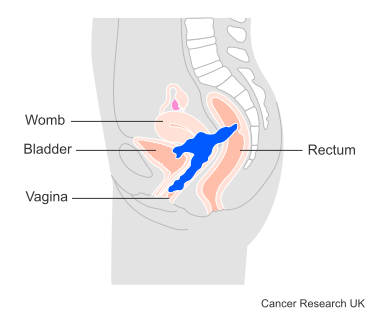
Stage 4A is when the cancer has spread to nearby organs such as the bladder or back passage (rectum).
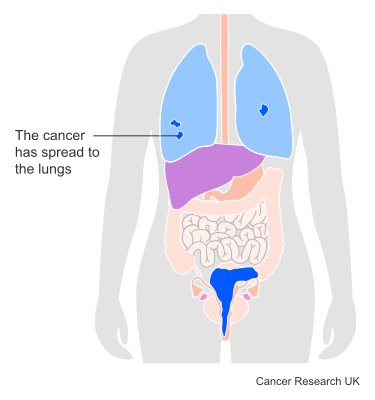
Stage 4B is when the cancer has spread to organs further away, such as the lungs. Your doctor might call this secondary or metastatic cancer.
The stage of your cancer helps your doctor to decide which treatment you need. Treatment also depends on:
your type of cancer (the type of cells the cancer started in)
where the cancer is
other health conditions that you have
Stage 4 cervical cancer might be treated with:
chemotherapy before chemoradiotherapy (neoadjuvant chemotherapy) - stage 4A cancer
combined chemotherapy and radiotherapy (chemoradiotherapy) and brachytherapy
a boost of radiation to any pelvic lymph nodes seen on a scan
surgery to remove lymph nodes
surgery called pelvic exenteration
chemotherapy
targeted drug treatment
immunotherapy
You might have a combination of these treatments.
Some people may choose to just have treatment to control symptoms.
You usually have treatment with a combination of radiotherapy and chemotherapy (chemoradiotherapy) for stage 4A cervical cancer. With this treatment, you have chemotherapy during your course of radiotherapy. You have chemotherapy once a week.
You have daily external radiotherapy for 5 days every week, for around 5 weeks. You also have internal radiotherapy (brachytherapy).
Before you have the above treatments, you might have chemotherapy. This is called neoadjuvant chemotherapy.
You might also have a boost of radiotherapy if there is a risk of any cancer cells in pelvic lymph nodes.
In a few people, a pelvic exenteration might be offered to treat stage 4A cancer.
If you haven’t had chemotherapy before, you might have one of the following:
cisplatin and paclitaxel
carboplatin and paclitaxel
Read more about a pelvic exenteration
Chemotherapy can help to shrink a cancer down to reduce symptoms and help you feel more comfortable. It can sometimes help you live some time longer.
You might have the immunotherapy drug pembrolizumab plus chemotherapy with or without the targeted cancer drug bevacizumab for metastatic cervical cancer.
Radiotherapy can help to shrink the cancer and improve your quality of life if the cancer has spread and is causing symptoms such as pain.
Surgery is not often used. But your doctor might suggest an operation if the cancer is causing a blockage in the kidneys or bowel.
Sometimes cervical cancer can come back after treatment. It may come back near to the area where the cancer first started (local recurrence). Or in another part of the body (secondary or metastatic cancer).
The treatment you have depends on:
where the cancer is
what treatment you had before
your general health
your wishes
Your doctor will talk to you about the treatment options and the treatment's aim.
You might have surgery if chemoradiotherapy was your primary treatment and if the cancer hasn't spread too far. The operation might mean removing:
your womb and cervix (hysterectomy)
the nearby lymph nodes
any part of the bladder or bowel that might be affected
This is a big operation and isn’t suitable for everyone.
If you've had radiotherapy before to treat cervical cancer, you might not be able to have any more to that area of the body. There is a maximum amount of radiotherapy normal body tissues can take.
You might have the immunotherapy drug pembrolizumab plus chemotherapy with or without the targeted cancer drug bevacizumab for cervical cancer that has come back.
Chemotherapy for cervical cancer
Read about targeted drug treatment for cervical cancer
Last reviewed: 24 Oct 2023
Next review due: 24 Oct 2026
The stage of a cancer tells you about its size and whether it has spread. The type means the type of cell the cancer started from. The grade means how abnormal the cells look under the microscope.
Find out about the different treatments for advanced cervical cancer, including chemotherapy, radiotherapy, targeted drugs and surgery.
Get support to cope with emotional, practical and physical issues when you have advanced cervical cancer.
You usually start by seeing your GP if you have symptoms that could be due to cervical cancer. Your doctor will then decide whether to do tests or refer you to a specialist.
Cervical cancer is when abnormal cells in the lining of the cervix grow uncontrollably and eventually form a growth (tumour).

About Cancer generously supported by Dangoor Education since 2010. Learn more about Dangoor Education


Search our clinical trials database for all cancer trials and studies recruiting in the UK.

Connect with other people affected by cancer and share your experiences.

Questions about cancer? Call freephone 0808 800 40 40 from 9 to 5 - Monday to Friday. Alternatively, you can email us.
