Stages, types and grades
The grade of a cancer tells you how much the cancer cells look like normal cells. This gives your doctor an idea of how your cancer might behave and what treatment you need.
The grades of bowel cancer cells are from 1 to 4:
grade 1 - well differentiated, the cells look most like normal cells
grade 2 – moderately differentiated – the cells look a bit like normal cells
grade 3 – poorly differentiated, the cells look very abnormal
grade 4 – undifferentiated, the cells look completely different from normal cells
The bowel makes up a part of the digestive system. It’s split into the small and large bowel:
cancer of the small bowel is called small bowel cancer
cancer of the large bowel is called colon cancer
cancer of the back passage is called rectal cancer
cancer of the bowel opening is called anal cancer
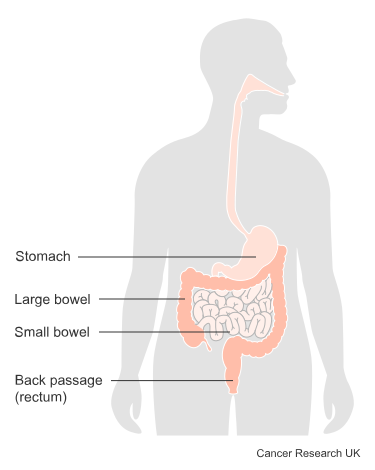
This section is about colon and rectal cancer. We have separate sections about anal cancer and small bowel cancer.
Go to the anal cancer section Go to the small bowel cancer section
Your type of cancer depends on what type of cell it starts in.
Adenocarcinomas start in the gland cells in the lining of the bowel wall. The gland cells normally produce mucus. This is a slimy substance that makes it easier for the poo (also called faeces or stool) to pass through the bowel. Adenocarcinoma is the most common type of bowel cancer.
There are 2 rare types of adenocarcinoma:
mucinous tumours
signet ring tumours
Read more about signet ring tumours
They are treated in the same way as the most common types of adenocarcinoma of the bowel.
What is the treatment for bowel cancer?
Squamous cells are the skin cells that make up the bowel lining, together with the gland cells. They are usually treated in the same way as cancer of the anus.
Find out about the treatment of anal cancer
Large bowel and rectal neuroendocrine cancers are rare cancers. They start in the neuroendocrine cells of the large bowel (colon) or back passage (rectum).
Neuroendocrine cells are part of the .
The umbrella term for this group of cancers is ‘neuroendocrine cancer’. Your healthcare team might call them neuroendocrine neoplasms (NENs). But they mean the same thing. There are 2 key groups of large bowel and rectal NENs:
large bowel and rectal neuroendocrine tumours (NETs)
large bowel and rectal neuroendocrine carcinomas (NECs)
NETs and NECs are very different. So, it is important to know which one you have. Talk to your doctor or specialist nurse if you are not sure.
Get more information on neuroendocrine cancers
Sarcomas are cancers of the supporting cells of the body, such as bone or muscle. Most sarcomas in the bowel are called leiomyosarcomas. This means they are sarcomas that started in smooth muscle.
A gastrointestinal stromal tumour (GIST) is a rare type of sarcoma found in the digestive system. GISTs can grow in any part of the digestive system, but the most common sites are the stomach and small bowel.
Sarcomas are treated differently to adenocarcinomas of the bowel.
Find out more about soft tissue sarcoma Read more about gastrointestinal stromal tumours (GIST)
Lymphomas are cancers of the lymphatic system. They are treated very differently to other bowel cancers.
Get more information on lymphoma
Melanoma is a type of skin cancer. Melanoma can begin in the back passage (rectum).
Last reviewed: 18 Oct 2024
Next review due: 18 Oct 2027
Bowel cancer is also called colorectal cancer. It affects the large bowel, which is made up of the colon and rectum.
You might have a number of tests to check for bowel cancer. This includes a test that looks for tiny traces of blood in a sample of poo (FIT) and a test to look at the inside of your bowel (colonoscopy).
The stage of a cancer tells you how far it has grown through the bowel wall and whether it has spread to nearby lymph nodes or other organs. It helps your doctor to know which treatment you need.
Living with bowel (colorectal) cancer may mean you have changes to your diet, sex life or body image. There is support to help you cope.
Bowel cancer means cancer that starts in the colon (large bowel) or back passage (rectum). It is also known as colorectal cancer.

About Cancer generously supported by Dangoor Education since 2010. Learn more about Dangoor Education


Search our clinical trials database for all cancer trials and studies recruiting in the UK.

Connect with other people affected by cancer and share your experiences.

Questions about cancer? Call freephone 0808 800 40 40 from 9 to 5 - Monday to Friday. Alternatively, you can email us.
