Types
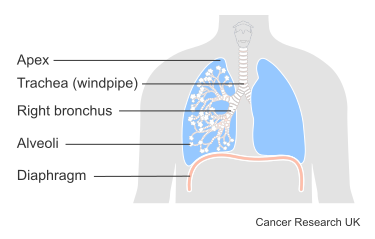
These cancers were named after an American doctor called Professor Henry Pancoast in 1932. They are also called superior pulmonary sulcus tumours.
Cancers in the top part of the lung are rare. Fewer than 5 in every 100 cases of lung cancer (5%) are Pancoast tumours.
A Pancoast tumour can spread into one or more structures in the top part of the chest, which include:
the first ribs in the chest (thoracic ribs)
upper part of the back
the bundle of nerves that sends signals from the spinal cord to the shoulder, arm and hand (the brachial plexus)
blood vessels that supply blood to the arms
Most Pancoast tumours are a type called non small cell cancer and most commonly adenocarcinomas. These are cancers that start in the mucus making gland cells in the lining of your airways.
Because the cancer is at the top of the lungs, it might put pressure on or damage a group of nerves that runs from the upper chest into your neck and arms. The group of nerves is called the brachial plexus.
Pressure on the brachial plexus can cause several very specific symptoms:
severe pain in the shoulder or the shoulder blade (scapula)
pain in the arm and weakness of the hand on the affected side
Horner syndrome
Horner syndrome is the medical name for a group of symptoms. They include:
flushing on one side of the face
not sweating in the face
the eye on the same side has a smaller (constricted) pupil with a drooping or weak eyelid
Pancoast tumours can be difficult to diagnose. This is because, in the early stages, they often don’t show up easily on x-ray. To help diagnose a Pancoast tumour, you might have a:
needle biopsy
biopsy through a video assisted thoracoscopy surgery (VATS)
biopsy through a small cut in the chest wall (small thoracotomy)
scans such as a CT, MRI or PET-CT
The symptoms are unusual, and this might lead your doctor to suspect other conditions before lung cancer.
Treatment for a Pancoast tumour depends on the stage of the cancer, it's exact position in the lung and your general health. The stage means the size of the cancer and whether it has spread to other areas of the body.
If you are fit enough to have surgery, you usually have a combination of chemotherapy and radiotherapy (chemoradiotherapy) first. This helps to shrink the cancer.
Surgery for Pancoast tumours is often difficult. It needs to be carried out by a team of specialist surgeons at a specialist cancer hospital. The surgery involves removing the top two ribs or sometimes more.
Sometimes the surgeon also needs to remove a major artery behind the collar bone. They replace it with an artificial tube (graft). This keeps a good blood supply to the arm on the affected side. They might carry out the surgery through a cut in the back or the front of the chest.
If you can’t have surgery, you might have chemoradiotherapy (chemotherapy with radiotherapy).
You might then have immunotherapy after chemoradiotherapy. Immunotherapy uses our immune system to fight cancer. It works by helping the immune system recognise and attack cancer cells.
You usually have radiotherapy if:
the cancer can't be removed with surgery
has spread to other areas of the body
This treatment shrinks the cancer and reduces symptoms. You can also have other medicines or treatments to control symptoms.
Your doctor will test your cancer cells for certain receptors of particular proteins. The receptors make them sensitive to targeted cancer drugs. If these receptors are present, your doctor might offer you treatment with a targeted cancer drug.
Find out about treatment for lung cancer
Last reviewed: 03 Jan 2023
Next review due: 03 Jan 2026
Lung cancer starts in the windpipe (trachea), the main airway (bronchus) or the lung tissue. Cancer that starts in the lung is called primary lung cancer.
You usually start by seeing your GP, and they might refer you to a specialist and organise tests. Or you might be referred to a specialist and further tests if screening for lung cancer or a lung health check showed that you might have lung cancer.
The stage of a cancer tells you how big it is and whether it has spread. The type tells which type of cell the cancer started from.
Your treatment depends on several factors. These include what type of lung cancer you have, how big it is and whether it has spread (the stage). It also depends on your general health.
There are support organisations and resources available for people living with lung cancer.
Metastatic lung cancer means that the cancer has spread from where it started in the lung to other parts of the body. It is also called advanced lung cancer.

About Cancer generously supported by Dangoor Education since 2010. Learn more about Dangoor Education


Search our clinical trials database for all cancer trials and studies recruiting in the UK.

Meet and chat to other cancer people affected by cancer.

Questions about cancer? Call freephone 0808 800 40 40 from 9 to 5 - Monday to Friday. Alternatively, you can email us.
