Stages, types and grades of kidney cancer
Renal cell cancer is also called renal cell adenocarcinoma. It is the most common type of kidney cancer in adults. Around 80 out of 100 kidney cancers (around 80%) are renal cell cancers.
Renal cell cancer starts in cells in one of the nephrons inside the kidney. Nephrons filter the blood and make urine. Each kidney has between 1 and 2 million nephrons.
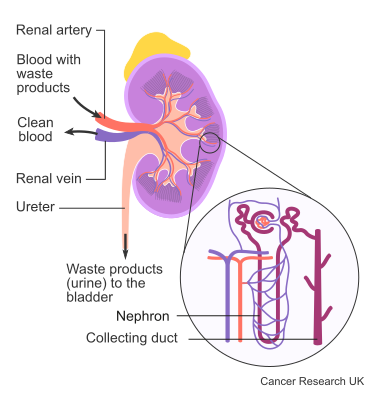
There are different types of renal cell cancer. The main types are:
clear cell - between 70 and 80 out of 100 renal cell cancers (between 70% and 80%)
papillary - between 5 and 10 out of 100 renal cell cancers (between 5% and 10%)
chromophobe - between 3 and 5 out of 100 renal cell cancers (between 3% and 5%)
Around 5 out of 100 renal cell cancers (around 5%) have sarcomatoid features. This means that some of the cancer cells look like sarcoma cells under a microscope. Sarcomatoid renal cell cancer tends to grow quicker than other types of renal cell cancer. And it is more likely to be diagnosed at an advanced stage.
The symptoms and treatment of sarcomatoid kidney cancer are the same as for the others types of renal cell cancer.
Rare types of renal cell cancer include:
cancer of the collecting duct
renal medullary cancer - this is also called SMARCB1-deficient renal medullary carcinoma
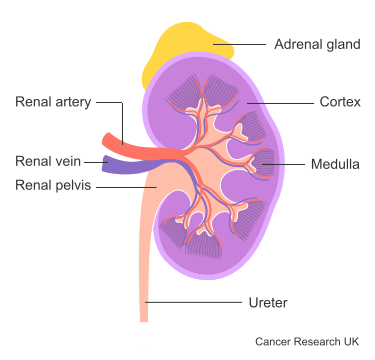
Upper urinary tract urothelial cancer used to be called transitional cell cancer (TCC) of the kidney or ureter. It starts in cells called transitional cells.
Transitional cells can change shape and stretch. They line the renal pelvis and ureter. The renal pelvis is the area of the kidney where urine collects. The urine then moves into the ureter and down to the bladder.
Read more about upper urinary tract urothelial cancer
Sarcoma of the kidney is a rare type of soft tissue sarcoma. This means the cancer started in the connective tissue of the kidney. Connective tissue includes muscles, nerves, fat, blood vessels and fibrous tissue.
The treatment for sarcoma of the kidney is different from the more common types of kidney cancer.
Read more about soft tissue sarcoma and its treatment
A type of kidney cancer called Wilms tumour (nephroblastoma) can affect children. This is different from kidney cancer in adults.
Read about Wilms tumour in our section about children's cancers
Sometimes cancer that has started elsewhere in the body can spread to the kidney. This can happen with lung, breast, bowel and some skin cancers for example.
Cancers that have spread from somewhere else in the body are called secondary cancers. The cancer cells are the same as the first (primary) cancer. The treatment is also the same as for the primary cancer.
If you have cancer that has spread to the kidney, read the section about your primary cancer for information.
The grade of a cancer means how much the cancer cells look like normal cells. It tells your doctor how the cancer might behave and what treatment you need.
Clear cell and papillary renal cell cancers are graded 1-4. Grade 1 is the lowest grade and grade 4 is the highest.
There is currently no agreed way to grade chromophobe renal cell cancer.
To find out the grade of a cancer, a specialist (pathologist) looks at the cells under a microscope. They look at changes to the centre of the cell (nucleus).
The more the cancer cells look like normal kidney cells, the lower the grade. Low grade kidney cancers tend to grow more slowly. They are less likely to spread to another part of the body (metastasise).
The less the cancer cells look like normal kidney cells, the higher the grade. High grade kidney cancers tend to grow quicker. They are more likely to spread to another part of the body.
The main factor for deciding on treatment is whether the cancer has spread away from the kidney or not. This is the stage of the kidney cancer.
Last reviewed: 23 Jan 2024
Next review due: 23 Jan 2027
The kidneys are bean shaped organs near the middle of your back. They filter waste products out of your blood as urine. Kidney cancer develops when abnormal cells in either of the kidneys start to divide and grow in an uncontrolled way.
You should see your GP first if you notice a change that isn't normal for you. They will do some tests and may refer you to a specialist if they think your symptoms could be due to kidney cancer.
Tests tell your doctor more about the kidney cancer. They tell them the sort of kidney cell it started in (type). And how much the cells look like normal cells (grade). They also show how big the cancer is and if it has spread (stage).
Treatments for kidney cancer include surgery, cryotherapy, radiofrequency ablation and radiotherapy. You might have different treatment for advanced kidney cancer.
Being diagnosed with kidney cancer may mean you have to make changes to keep your kidneys or remaining kidney healthy. There are people and organisations available to help you cope with being diagnosed with kidney cancer, and to support you in making these changes.
Kidney cancer is cancer that starts in the kidneys. The kidneys filter waste products out of your blood as urine. Kidney cancer develops when abnormal cells in either of the kidneys start to divide and grow in an uncontrolled way.



