Number stages of anal cancer
Anal cancer can start in different cell types. This information is for which is the most common type of anal cancer.
Find out about anal cancer that starts in other cell types
The stage of a cancer tells the doctor about its size and whether it has spread. It helps your doctor decide on which treatment you need.
There are 4 number stages of anal cancer numbered 1 to 4. Stage 4 anal cancer means the cancer has spread to other parts of the body, such as the liver. The cancer can be any size and may or may not have spread to the nearby lymph nodes.
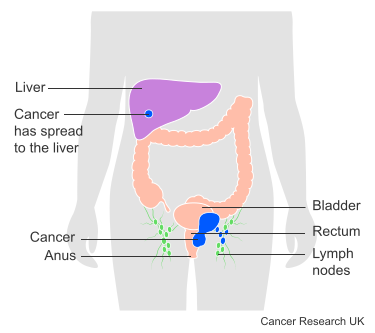
Unfortunately, cancer that has spread elsewhere in the body is advanced cancer.
Doctors also use another staging system for anal cancer. They call this the TNM staging system. It stands for tumour, node and metastasis:
T describes the size of the tumour
N describes whether there are any cancer cells in the nearby lymph nodes
M describes whether the cancer has spread elsewhere in the body
The TNM system describes the cancer in detail. The number staging system puts these details together to give an overall stage.
Number stage 4 is the same as any T, any N, M1 in the TNM staging system.
Knowing the stage of the cancer helps your doctor to decide which treatment is best for you. Treatment can also depend on:
where the cancer is in your anus
your general health
The aim of treatment for stage 4 anal cancer is to slow down the growth of the cancer.
Chemotherapy is the main treatment for advanced anal cancer. It uses anti cancer drugs to destroy cancer cells. These drugs are also called cytotoxic drugs. They circulate throughout the body in the bloodstream.
Read more about chemotherapy for advanced anal cancer
If you’re not well enough for chemotherapy, your doctor might suggest best supportive care. This is also called palliative care. It aims to relieve the symptoms of the cancer and improve your . Treatments may include and surgery.
Find out more about palliative care
Last reviewed: 20 May 2025
Next review due: 20 May 2028
Anal cancer is when abnormal cells in the anus divide in an uncontrolled way. It can start in different parts of the anus and different types of cell.
If you have symptoms of anal cancer you should see your GP. They might ask you to have some tests and may refer you to a specialist.
Chemotherapy uses anti cancer drugs to destroy cancer cells. You usually have chemotherapy on its own if the anal cancer has spread.
Radiotherapy uses high energy x-rays to destroy cancer cells. You might have it combined with chemotherapy (chemoradiotherapy). Or to relieve symptoms of advanced anal cancer.
If you have anal cancer, there can be practical and emotional changes you may need help and support to cope with.
Anal cancer is cancer that starts in the anus. The anus is also called the anal canal.

About Cancer generously supported by Dangoor Education since 2010. Learn more about Dangoor Education


Search our clinical trials database for all cancer trials and studies recruiting in the UK.

Connect with other people affected by cancer and share your experiences.

Questions about cancer? Call freephone 0808 800 40 40 from 9 to 5 - Monday to Friday. Alternatively, you can email us.
