Thyroid cancer
Thyroid cancer develops when abnormal in the thyroid start to grow and divide in an uncontrolled way. The cells can grow into surrounding or and may spread to other areas of the body.
Find out more about cancer and how it starts
The thyroid gland sits in the throat. This two minute video describes the different parts of the throat.
The thyroid is a small butterfly shaped gland that makes and releases . It’s found at the front of your neck in the lowest part, just behind the small hollow where your collar bones meet. You can’t usually feel a thyroid gland that is normal.
The thyroid gland has two lobes that lie on either side of your windpipe. A thinner bridge of thyroid tissue, called the thyroid isthmus, connects the two lobes.
Doctors usually find thyroid cancer in just one lobe. But some types of thyroid cancer can be found in both lobes.

The thyroid gland is part of the system. It makes hormones which affect the way your body works. The thyroid releases these hormones into the . It makes three hormones:
T3 (tri iodothyronine)
T4 (thyroxine)
calcitonin
T3 and T4 help to control how fast your body works. This is your metabolic rate.
If your thyroid gland doesn’t make enough of these hormones, your cells work more slowly than usual. You might put on weight, feel very tired and lack energy. Doctors call this hypothyroidism, or an underactive thyroid.
If your thyroid gland makes too much of these hormones, your cells work faster than usual. You might lose weight despite having an increased appetite. You may feel anxious and find it difficult to relax. Doctors call this hyperthyroidism, or an overactive thyroid.
The is at the base of your brain and is also part of the endocrine system. It senses when the levels of T3 and T4 are low and releases thyroid stimulating hormone (TSH). TSH stimulates the thyroid gland to produce more T3 and T4. When levels of T3 and T4 are high, the pituitary gland releases less TSH. This means the thyroid makes less T3 and T4.
Calcitonin helps to control the amount of circulating in the blood. Calcitonin works with a hormone called parathyroid hormone to do this.
The make parathyroid hormone. These glands are usually found behind the thyroid gland.
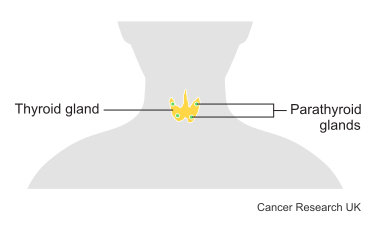
Too much calcium can make you feel sick and drowsy. Too little can cause nerve problems, such as pins and needles, making the muscles twitch and jerk.
Your surgeon normally tries to leave the parathyroid glands behind if they remove your thyroid gland. But the operation can affect the parathyroid glands, and they may take a while to get back to normal. Your doctor will check your calcium levels regularly and might give you calcium supplements.
There are two main types of cells in the thyroid gland. They are:
follicular cells
C cells, that make calcitonin
Less common cells include cells (lymphocytes) and supportive cells (stromal cells).
There are different types of thyroid cancer. The type you have depends on what type of cell the cancer starts in. Growths and in the thyroid gland can be non cancerous (benign) or cancerous (malignant).
Most thyroid cancers start in the follicular cells. This includes:
papillary thyroid cancer
follicular thyroid cancer
oncocytic (Hurthle cell) thyroid cancer
A small number of thyroid cancers start in the C cells. Doctors call these medullary thyroid cancers.
Read more about the different types of thyroid cancer
Thyroid cancer is more common in women than in men. The risk generally increases with age and is most common in people aged 75-79.
The risk of developing thyroid cancer is higher in people who:
are overweight or
have been exposed to radiation
Read more about risk factors for thyroid cancer
Around 4,300 people are diagnosed with thyroid cancer in the UK each year. It’s the 20th most common cancer in the UK.
Last reviewed: 20 Aug 2026
Next review due: 20 Aug 2029
The symptoms of thyroid cancer include a lump in your neck, a hoarse voice, a sore throat or difficulty in swallowing.
See your GP if you notice a change that isn't normal for you. Or if you have any of the possible signs and symptoms of thyroid cancer.
You usually start by seeing your GP. They will ask about your symptoms. They might refer you to a specialist and organise tests.
The type of thyroid cancer refers to the type of cell the cancer started in. The stage of a cancer tells you its size and whether it has spread.
Possible treatments include surgery, radiotherapy, targeted drugs and chemotherapy. What treatment you have depends on your type and stage of thyroid cancer.
The thyroid is a small butterfly shaped gland that makes and releases hormones. It’s found at the front of your neck in the lowest part.

About Cancer generously supported by Dangoor Education since 2010. Learn more about Dangoor Education


Search our clinical trials database for all cancer trials and studies recruiting in the UK.

Connect with other people affected by cancer and share your experiences.

Questions about cancer? Call freephone 0808 800 40 40 from 9 to 5 - Monday to Friday. Alternatively, you can email us.
