Non melanoma skin cancer
Squamous cell carcinoma (SCC) of the skin is also called:
cutaneous squamous cell carcinoma
squamous cell skin cancer
It starts in skin cells called keratinocytes which are in the top layer of the skin. This is called the epidermis.
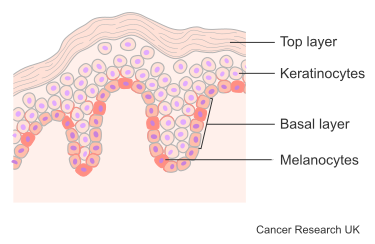
The two main groups of skin cancer are non melanoma skin cancer and melanoma skin cancer. SCC is a type of non melanoma skin cancer. They are different from skin cancers which start in skin cells called melanocytes.
Find out more about melanoma skin cancer
This page is about SCC that starts in the skin.
SCC can also start in squamous cells in other parts of the body. For example, in the mouth, oesophagus or cervix. For information about these types of squamous cell carcinoma, you need to look at the section for your type of cancer. This is named after the part of your body where it started.
Bowens disease is a very early form of non melanoma skin cancer. It develops in the outer layer of the skin and can grow anywhere on your body.
Find out more about Bowen's disease
Squamous cell carcinoma is the second most common type of non melanoma skin cancer, after basal cell carcinoma. Around 25 out of every 100 skin cancers (around 25%) are a SCC.
SCCs can all look different. They can be a pink or red, scaly, small bump or patch.
They can appear differently on black or brown skin. They may look crusty, scaly or appear as a dark .
They can be sore or they might be painless.
They change over time. They can get bigger, and they might develop a sore in the centre. This can bleed or scab over.
Find out more about what a SCC may look like
Most SCCs develop on areas of skin exposed to the sun. These areas include parts of the head, neck, and on the back of your hands and forearms. They can also develop on scars or areas of skin that have been previously burnt. Or on a sore that hasn’t healed for a long time.
SCCs can grow slowly. Or quickly and then spread to other parts of the body. They don't often spread. If they do, it's usually to the deeper layers of the skin. They can spread to nearby and other parts of the body, but this is unusual.
Your doctor looks at your situation and decides whether your SCC is:
low risk
high risk
very high risk
This depends on several factors including:
the size and depth of your cancer and how far it has grown
how abnormal the cancer cells look under the microscope
where the skin cancer is
how well your is working
Low risk SCC is less likely to come back than high risk and very high risk SCC. Your risk group helps the doctor decide what treatment you need.
Your GP should arrange for you to see a skin specialist if they think you have a SCC.
Tests to diagnose include:
a of your skin
looking closely at your skin with a special instrument (dermatoscope)
taking photographs of abnormal area of skin
taking a sample () of the abnormal area or removing it completely
Your doctor might arrange further tests to check for cancer in your lymph nodes. This depends on your situation.
Find out more about getting diagnosed with non melanoma skin cancer
For low risk SCC, your skin specialist will discuss the different treatment options with you. You might have treatment at the hospital. Or your GP might be able to treat you.
For high risk and very high risk SCC, your GP will refer you to a . This is a team of doctors and other professionals who discuss the best treatment and care for you.
There are two levels of MDTs for skin cancer:
The Local Hospital Skin Cancer MDT is usually in cancer units in district general hospitals. This team might discuss treatment for high risk SCC. And they might discuss straight forward treatment for very high risk SCC.
A Specialist Skin Cancer MDT is usually in larger hospitals that have cancer centres or plastic surgery centres. This team usually discusses treatment for very high risk SCC.
Read more about the MDT and being referred to a specialist
The treatment you have depends on:
the size and depth of the cancer
where it is on your body
whether it has spread
your general health and wellbeing
your personal wishes
Your doctor will discuss your treatment options with you. And tell you about the benefits and the possible side effects.
The main aim of the treatment is to completely remove the SCC and any other areas where it has spread.
Surgery is the main treatment. There are different types of surgery.
Doctors sometimes call this a surgical excision. This is when the doctor removes the skin cancer and some of the surrounding healthy . How much healthy tissue they remove depends on whether your cancer is low, high or very high risk.
Your doctor might remove your cancer when they take the biopsy. This is called an excisional biopsy.
You might need further surgery if the doctor thinks there might still be skin cancer cells in the tissue near to the skin cancer. This is called a wide local excision.
Removing this wider area of tissue helps reduce the risk of the cancer coming back. Your doctor removes a large area of tissue.
This surgery is also called curettage and cautery (C and C). It isn’t a common treatment for SCC. But it might be an option if you have a low risk SCC or if you don’t want other types of surgery.
Your doctor cuts away the cancer and uses an electric needle to kill any cancer cells in the surrounding tissue.
A surgeon might need to replace the area of skin if they remove a large area. This is called a skin graft or skin flap. A or specialist does this operation.
Find out more about these types of surgery
Mohs surgery aims to remove all the skin cancer and leave as much healthy skin tissue as possible. It is a specialised surgery you have at the hospital.
You might have Mohs surgery if it is difficult for your doctor to remove enough healthy tissue around your cancer. For example, if your cancer is in an area where removing too much healthy tissue might affect how that body part looks or works.
Find out more about Mohs surgery
Radiotherapy means the use of radiation, usually x-rays, to treat cancer. External radiotherapy uses radiation to destroy cancer cells from outside of the body.
You may have radiotherapy as your main treatment if:
surgery is not possible
you have a high risk SCC
your cancer is in an area where surgery might affect how that body part looks or works
You might have radiotherapy after surgery if:
there is a risk of the cancer coming back
the doctor has not been able to remove enough healthy tissue around the cancer
You might have radiotherapy if your cancer comes back after surgery. You might also have radiotherapy as part of your treatment if your cancer has spread.
Superficial radiotherapy is a type of for skin cancer. It treats cancer on or close to the skin surface. This means that the radiation doesn't travel far into your body.
You may have a one off treatment. Or treatment every day from Monday to Friday, for up to 6 and a half weeks.
Find out more about having radiotherapy
SCC can spread to deeper layers of skin, nearby tissues or lymph nodes. If SCC spreads to other parts of your body, they call this metastatic cancer.
Your treatment might include surgery to remove:
the skin cancer
lymph nodes, if they contain cancer
other areas where the cancer has spread
Your doctor might suggest radiotherapy before or after surgery. Or you might have radiotherapy if surgery is not possible.
Read more about surgery to remove lymph nodes in our melanoma skin cancer section
Your doctor might suggest other treatments.
Immunotherapy drugs help the immune system to attack cancer.
Cemiplimab is a type of immunotherapy called a . It is also called Libtayo.
You might have cemiplimab for locally advanced or metastatic SCC. You can have it if you can’t have surgery or radiotherapy. You have cemiplimab as a drip into your bloodstream.
Find out more about cemiplimab
Chemotherapy is a type of anti cancer drug treatment. It works by killing cancer cells. It is a systemic treatment which means it works throughout your body.
Chemotherapy is an option for SCCs that have spread or come back after treatment.
The most common chemotherapy drugs for SCC are cisplatin and 5FU. You may have these drugs alone or in combination with other drugs.
Find out more about chemotherapy drugs
Depending on the type of SCC you have, you are likely to have follow up appointments with your doctor. At these appointments your doctor will check you if:
your SCC has come back
the cancer has spread
there are any new tumours
Your doctor will also show you how to check your skin regularly.
Being diagnosed with skin cancer can be a shock. Even if treatment is likely to cure you, you may feel worried or sad. Talking about your feelings can help.
You may have a small scar after treatment. This may not affect you very much. But you might have a skin graft or a scar on a very visible part of your body. This can affect how you feel about yourself.
After treatment for skin cancer, you are more at risk of developing another skin cancer. So, it’s important to keep an eye on your skin and protect it when out in the sun.
Find out more about looking after your skin after skin cancer
Last reviewed: 03 Feb 2026
Next review due: 03 Feb 2029
There are many different types of surgery for non melanoma skin cancer. The surgery you have depends on the type of skin cancer you have.
The 2 main types of non melanoma skin cancer are basal cell carcinoma (BCC) and squamous cell carcinoma (SCC). Rarer types include Merkel cell carcinoma, sebaceous gland cancer and Kaposi's sarcoma.
Non melanoma skin cancer includes basal cell carcinoma, squamous cell carcinoma and other rare types. They tend to develop most often on skin that has been exposed to the sun.

About Cancer generously supported by Dangoor Education since 2010. Learn more about Dangoor Education


Search our clinical trials database for all cancer trials and studies recruiting in the UK.

Connect with other people affected by cancer and share your experiences.

Questions about cancer? Call freephone 0808 800 40 40 from 9 to 5 - Monday to Friday. Alternatively, you can email us.
