Stages, types and grades of oesophageal cancer
High grade dysplasia means that there are severely abnormal cells in the inner lining of the oesophagus.
The high grade dysplasia is only in the top layer of cells lining the inside of the oesophagus (the epithelium). It has not started to grow into the deeper layers.
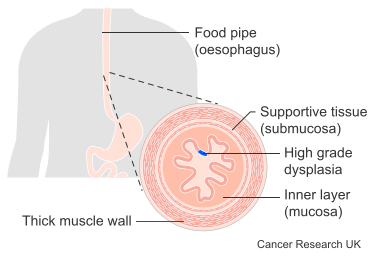
High grade dysplasia can change to invasive cancer if you don't have treatment.
People with have a small risk of developing these abnormal cells.
Removing the lining of your oesophagus is the main treatment for high grade dysplasia.
You have this surgery through a tube called an endoscope. You are asleep when you have it. The doctor puts the tube down your throat. They can then put a thin wire (snare) through the tube to remove the abnormal area of tissue.
You might also need treatment to destroy any abnormal areas that the doctor has not been able to remove. This treatment is called radiofrequency ablation.
Read more about treatment for high grade dysplasia
Last reviewed: 18 Aug 2023
Next review due: 18 Aug 2026
Barrett’s oesophagus means that some cells in the lining of your food pipe have started to change. In a small number of people these cells may develop into oesophageal cancer over a long period of time.
The stage of a cancer tells you how big it is and whether it has spread. It helps your doctor to know which treatment you need.
You might have surgery, radiotherapy or chemotherapy or a combination of these treatments. This depends on a number of factors including the stage and type of your oesophageal cancer.
Survival depends on many factors including the stage and type of your oesophageal cancer.
Oesophageal cancer is a cancer of the food pipe. The food pipe is also called the oesophagus or gullet and is part of the digestive system.
Oesophageal cancer starts in the food pipe, also known as your oesophagus or gullet. The oesophagus is the tube that carries food from your mouth to your stomach.

About Cancer generously supported by Dangoor Education since 2010. Learn more about Dangoor Education


Search our clinical trials database for all cancer trials and studies recruiting in the UK.

Connect with other people affected by cancer and share your experiences.

Questions about cancer? Call freephone 0808 800 40 40 from 9 to 5 - Monday to Friday. Alternatively, you can email us.
