Living with
A breathing stoma is an opening made in the skin in front of your neck to allow you to breathe. The opening is made at the base of your neck. Air goes in and out of your windpipe (trachea) and lungs through this opening.
A tube is placed in the stoma to keep it open. Depending on the type of tube, this can make it difficult to speak. Your doctor and speech and language therapist will work together to decide when it is appropriate to use a tube that will help you to speak.
This surgery is rare for mouth and oropharyngeal cancer and most stomas are temporary.
Your surgeon will discuss this with you. Ask them if you are likely to have a breathing stoma, and for how long.
You might need a stoma if:
your mouth or oropharyngeal cancer is blocking your throat and the surgeon can't remove it because it is too big
you have swelling in and around your voice box (larynx) after radiotherapy
your surgeon expects you to have swelling in your mouth or throat after surgery
you have had surgery to remove all or part of your voice box (larynx)
You sometimes need breathing stomas for very big tongue and oropharyngeal cancers.
If you still have your voice box (larynx), the opening is called a tracheostomy. This is usually temporary. One of your team can often remove the tracheostomy when the swelling goes down and the voice box (larynx) heals.
When they remove the tracheostomy tube, the opening usually heals by itself. Very rarely you need an operation to close the opening.
If all or part of your voice box (larynx) is removed, you will have a permanent stoma to breathe through. You need this because the connection between your windpipe (trachea) and mouth has gone.
This is called a laryngectomy stoma.
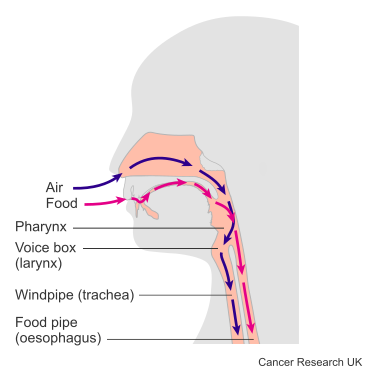
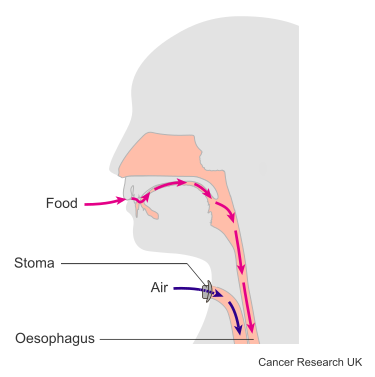
We have more information about a breathing stoma in the laryngeal cancer section. This includes waking up after surgery, caring for your stoma and living with a breathing stoma.
To return to the mouth and oropharyngeal cancer after visiting the above section, go to About cancer in the site menu. Choose cancer type and select mouth and oropharyngeal cancer.
Last reviewed: 17 Sept 2024
Next review due: 17 Sept 2027
Mouth and oropharyngeal cancer develop when abnormal cells in the mouth and oropharynx divide and grow uncontrollably.
Your treatment depends on where in your mouth or oropharynx your cancer is, the type, how big it is, whether it has spread anywhere else in your body and your general health.
Getting practical and emotional support can help you cope with your diagnosis, and life during and after treatment.
Coping with mouth and oropharyngeal cancer can be difficult. There is help and support available.
Mouth cancer can start in the lips, gums or soft sides of your mouth. The oropharynx is the part of the throat (pharynx) just behind the mouth. Cancer starting in the oropharynx is called oropharyngeal cancer.



