Stages, types and grades of kidney cancer
The stage of a cancer tells you how big it is and how far it has spread. It helps your doctor decide which treatment you need.
This information is about the number staging system for kidney cancer. There are 4 number stages for kidney cancer. Doctors might also use the TNM staging system. TNM stands for Tumour, Node and Metastasis.
Read about the TNM stages of kidney cancer
Kidney cancer stages can be difficult to understand. And you may feel frightened or overwhelmed after being told you have cancer. You might not be able to take in everything your doctor tells you.
It might help to have a family member or friend with you when you see your doctor. They can:
support you
ask questions
take notes for you
Some people may find it helpful to listen back to what has been said. Ask your doctor if you would like to record the conversation and explain why. They will say if they are happy for you to record it or not.
You might also want to talk with your specialist nurse (CNS) about the cancer stage. But you may want to wait until you’ve had a chance to take in what your doctor has said. Your CNS can also arrange for you to see your doctor again if necessary.
The cancer is 7cm across or smaller and is completely inside the kidney.
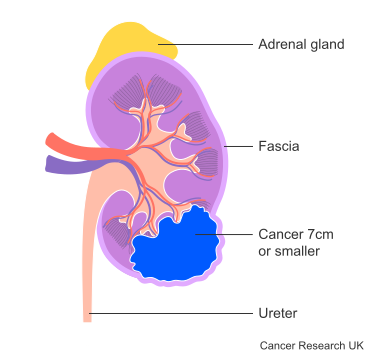
In the TNM staging system, stage 1 is the same as:
T1, N0, M0
The cancer is more than 7cm across but is still completely inside the kidney.
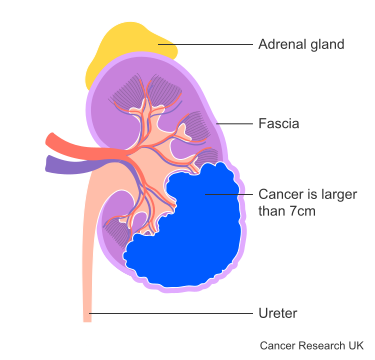
In the TNM staging system, stage 2 is the same as:
T2, N0, M0
The cancer has grown into the tissue around the kidney (fascia). Or it has grown into the main blood vessels such as the renal vein or vena cava. The vena cava is the vein that carries blood back to the heart. The cancer may have spread to nearby lymph nodes.
Stage 3 kidney cancer is also called locally advanced kidney cancer.
The diagram below shows stage 3 kidney cancer that has grown into the renal vein. It has also spread to one of the nearby lymph nodes.
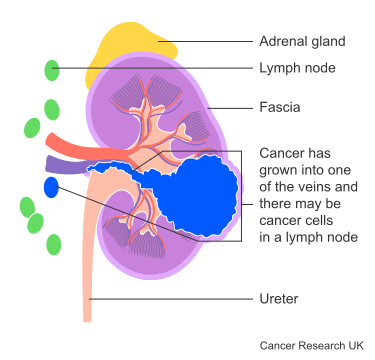
In the TNM staging system, stage 3 is the same as one of the following:
T1, N1, M0
T2, N1, M0
T3, any N, M0
Stage 4 means one of the following:
the cancer has grown outside the fascia around the kidney, or into the adrenal gland. It may have spread to nearby lymph nodes
the cancer has spread to another part of the body, such as the lungs.
This is called advanced or metastatic kidney cancer. Where the cancer has spread to other areas of the body, these cancers can be called secondary cancers.
The diagram below shows stage 4 kidney cancer that has spread to the lungs.
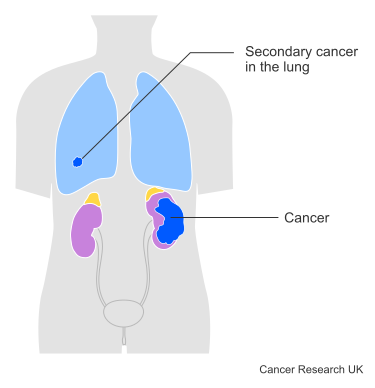
In the TNM staging system, stage 4 is the same as one of the following:
T4, any N, M0
any T, any N, M1
Read more about advanced kidney cancer
The stage of the cancer helps your doctor to decide which treatment you need. Treatment also depends on:
the type of cancer (the type of kidney cells the cancer started in)
how much the cancer cells look like normal cells (the grade of the cancer cells)
where the cancer is in your kidney
other health conditions that you have
Treatment may include:
surgery to remove the part of the kidney where the cancer is (partial nephrectomy) or the whole kidney (radical nephrectomy)
freezing therapy (cryotherapy)
microwave ablation (MWA) or radiofrequency ablation (RFA)
blocking the blood supply to the cancer (renal artery embolisation)
targeted cancer drugs or immunotherapy
radiotherapy
Last reviewed: 23 Jan 2024
Next review due: 23 Jan 2027
The kidneys are bean shaped organs near the middle of your back. They filter waste products out of your blood as urine. Kidney cancer develops when abnormal cells in either of the kidneys start to divide and grow in an uncontrolled way.
You should see your GP first if you notice a change that isn't normal for you. They will do some tests and may refer you to a specialist if they think your symptoms could be due to kidney cancer.
Treatments for kidney cancer include surgery, cryotherapy, radiofrequency ablation and radiotherapy. You might have different treatment for advanced kidney cancer.
Advanced kidney cancer means a cancer that started in the kidney has spread to another part of the body. It is also called metastatic kidney cancer. Treatment depends on how many parts of the body the cancer has spread to and how quickly it has spread.
Being diagnosed with kidney cancer may mean you have to make changes to keep your kidneys or remaining kidney healthy. There are people and organisations available to help you cope with being diagnosed with kidney cancer, and to support you in making these changes.
Kidney cancer is cancer that starts in the kidneys. The kidneys filter waste products out of your blood as urine. Kidney cancer develops when abnormal cells in either of the kidneys start to divide and grow in an uncontrolled way.

About Cancer generously supported by Dangoor Education since 2010. Learn more about Dangoor Education


Search our clinical trials database for all cancer trials and studies recruiting in the UK.

Connect with other people affected by cancer and share your experiences.

Questions about cancer? Call freephone 0808 800 40 40 from 9 to 5 - Monday to Friday. Alternatively, you can email us.
