Changes in your appearance
Changes to how you look can affect you in different ways. They can affect:
how you feel about yourself and how you look
how you think other people feel about you
your sexuality and relationships
your career and social life
This can be upsetting. Some people find that they have intense feelings including depression, grief, anxiety and anger. But there are lots of things you can do to help you cope.
Read about coping with changes to how you look
The changes you might have depend on the type of cancer you have and the treatment you need. Some changes are temporary but some can be permanent.
It is important to discuss any changes to your body with your healthcare team before you start treatment. They can help you understand what to expect, and cope with any side effects or emotions you may have.
You might lose or put on weight.
Weight loss is very common with some types of cancer such as stomach and oesophageal cancer. You might lose weight because you have:
loss of appetite
taste changes
mouth problems
constipation or diarrhoea
difficulty swallowing
Weight loss can sometimes be a sign of advanced cancer.
Read about diet problems and how to manage them
Some people with cancer put on weight. There may be a number of reasons for this. Some types of treatment, for example, treatment can cause weight gain.
Some cancer treatments can change the amount of in the body. This can cause different changes to your body shape, such as:
weight gain
loss of muscle mass
breast swelling (gynaecomastia) in men
Find out more about how sex hormones can affect your weight
Hair loss and hair thinning are common side effects of some cancer treatments. This includes:
chemotherapy
targeted cancer drugs
immunotherapy
hormone therapy
radiotherapy
For most people, the hair grows back or starts to thicken, either with time or when you finish treatment. But your hair might not grow back exactly the same as it was before.
Sometimes the hair doesn't grow back. For example, if you are having radiotherapy to try to cure your cancer, you usually have a high dose of radiation. So your hair may not grow back in the area you have treatment.
Read more about hair loss and cancer treatment
Some cancer drug treatments can cause excess hair growth on your face and eyelashes. Talk to your healthcare team about how to manage this.
Some cancer treatments can cause skin and nail changes such as:
itching
sweating
dry skin
nail ridges or splitting
infection
sensitivity to the sun
Skin rashes can be a side effect of some cancer drug treatments. These changes can be severe.
Find out more about different skin changes you might have
Surgery can change the way you look. Even small changes can have a big effect on how you see and feel about yourself.
Remember, not all operations leave big scars. Your surgeon will try to minimise how big any scar is and how visible it is. Scars often fade and become difficult to see with time.
Surgery to your face might change the way you look. It may also affect how you eat and your speech. There might be quite a big change but even a small change can have a big effect on how you see yourself. This can be very difficult to cope with.
It is important to remember that even with big operations, you might not have a great deal of scarring. And many scars fade and become very difficult to see over time.
Your surgeon will aim to make scars in the creases already on your face or neck. And if you need to have bone removed from your face, they will rebuild them using bone from other parts of your body.
A team of skilled specialists will look after you. This usually includes a as well as your cancer surgeon. They will try to keep the shape of the face and reduce scarring as much as possible.
Scarring from lip surgery might be more difficult to hide. So if you have cancer in this area, it is likely you will have to cope with changes in the way you look.
Read more about appearance changes after facial surgery
Losing a part of your body is distressing. There are different reasons why you might need this type of surgery. For example, you might need surgery to remove your breast (mastectomy) because of breast cancer.
People react differently to losing a part of their body. The first few months after surgery can be difficult as you begin to adjust to the change in your appearance.
You might be able to use a false body part (a prosthesis) or an implant if you want to. Your healthcare team will be able to help you.
You can have swelling because of the cancer or its treatment. For example cancer and some treatments can affect the . This can cause a build up of lymph fluid so a part of your body becomes swollen. This swelling is called lymphoedema.
The most common areas of lymphoedema include arms or legs, but it can happen in other parts of the body.
The changes you have depend on where you have the swelling. Even if other people can’t see it, the swelling may affect how you feel about yourself.
Find out more about lymphoedema
Treatment for some head and neck cancers can include making an opening in your neck to help you breathe. This is a breathing stoma or tracheostomy. Breathing stomas can also affect the way you speak and swallow.
Surgery for cancers affecting the bowel might mean you need to have a stoma on your tummy (abdomen). This might be a colostomy or ileostomy depending on the part of the bowel the cancer is affecting. This means that your bowel empties into a bag which sticks to the skin of your abdomen.
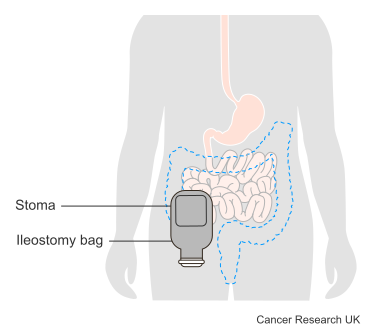
If your cancer affects your bladder you might mean you need an opening in your abdomen to allow you to pee. This is called a urostomy.
Many stomas are temporary but some can be permanent.
Getting used to the stoma will take some time. It is common to feel self conscious at first. You’ll have a specialist nurse, a stoma nurse or a speech and language therapist to help you get used to your stoma and show you how to look after it.
Last reviewed: 27 Apr 2026
Next review due: 27 Apr 2029
It can be hard to cope with changes to how you look. There are different things you can do and people who can help you.
Hair loss and hair thinning are common side effects of some cancer treatments. For most people, the hair grows back or starts to thicken, either with time or when you finish treatment.
Find out about managing cancer symptoms and possible side effects from cancer treatment. There is information about pain, sickness, diet problems and much more.
Whether you are someone with cancer or a carer for someone with cancer, we want you to know that it is common to struggle with your mental health when dealing with a cancer diagnosis. But there are people who can support you during this time and things you can do to help yourself.
Search for the cancer type you want to find out about. Each section has detailed information about symptoms, diagnosis, treatment, research and coping with cancer.
Cancer and its treatment can change how you look. This might affect how you feel about yourself.

About Cancer generously supported by Dangoor Education since 2010. Learn more about Dangoor Education


Search our clinical trials database for all cancer trials and studies recruiting in the UK.

Connect with other people affected by cancer and share your experiences.

Questions about cancer? Call freephone 0808 800 40 40 from 9 to 5 - Monday to Friday. Alternatively, you can email us.
