Children’s cancers
Wilms tumour is a type of kidney cancer that mainly affects children. They are also called nephroblastomas and develop from cells called nephroblasts. Dr Max Wilms wrote the first medical paper about this condition. This is how it got its name.
Kidney cancer in children is less common than adult cancer, but Wilms tumour is the most common type. About 85 children between the ages of 0 and 14 years are diagnosed with Wilms tumour each year in the UK. They are most common in children under 5 years. Rarely they can develop in older children and very rarely, in adults.
Wilms tumours usually only affect one kidney (unilateral). But in fewer than 10 out of every 100 children (less than 10%), it can affect both kidneys (bilateral).
The kidneys are part of your . This system filters water and waste products out of the blood and makes urine. It includes:
2 kidneys
2 ureters
bladder
urethra

Inside the kidney, tiny networks of tubes called nephrons filter the blood. As blood passes through the nephrons all unwanted water and waste gets taken away. Chemicals that your body needs are kept and returned to the bloodstream.
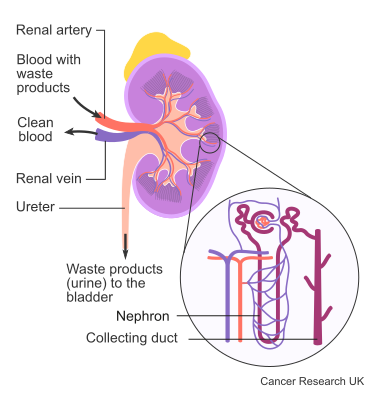
Inside the nephrons, waste products move from the small blood vessels into urine collecting tubes. The urine gathers in an area called the renal pelvis at the centre of each kidney. From here it drains down a tube called the ureter and into the bladder.
There are 2 ureters, one from each kidney. Another tube called the urethra carries the urine from the bladder out of the body.
When a baby is growing in the womb, the kidneys develop very early on. Sometimes something goes wrong. This can cause some early (immature) cells (or nephroblasts) to not develop into mature kidney cells. If this happens, the cells begin to grow out of control and may develop into a cancer known as a Wilms tumour.
The causes of Wilms’ tumours are unknown. We know about some factors that may increase the risk for a very small number of children. Anything that increases your risk of getting a disease is called a risk factor.
Doctors have found that some Wilms tumours have changes in specific . But it’s not clear why these changes happen. Doctors are likely to find changes in different genes in the future. This may help them understand more about the causes of Wilms tumour.
About 8 out of every 100 children (about 8%) who develop a Wilms tumour also have other conditions that may be present at birth.
The conditions associated with Wilms tumours happen in rare syndromes. A syndrome is a group of symptoms and abnormalities that are present in the same person. They affect several parts of the body, not just the kidneys.
WAGR syndrome stands for Wilms tumour, Aniridia, Genitourinary problems and Range of developmental delays.
Children with WAGR syndrome have abnormalities in the coloured part of the eye (iris) and in the brain. There can also be defects in the kidneys, penis, , testicles or ovaries. The child may also have a learning disability.
Children with Beckwith-Wiedemann syndrome have a growth disorder. They have larger than normal internal organs and often have a big tongue. These children might have one side of the body or an area such as an arm or leg that is bigger than the other. In the first few days or weeks of life, they might have low blood sugar.
Other problems might occur. We have listed above some of the most common problems.
This syndrome affects the kidneys and sexual organs (genitalia). Boy babies do not develop a penis, scrotum, or testicles. They also have damaged kidneys. Girls have normal sexual organs but have problems with their kidneys. A Wilms tumour can grow in the damaged kidney.
About 2 in every 100 children (about 2%) with a Wilms tumour have at least one relative who has had the same type of cancer. These children are at an increased risk of developing a Wilms tumour because they have inherited an abnormal gene from one of their parents.
Screening aims to find a cancer early before symptoms develop. Your doctors will work out your child’s risk of developing a Wilms tumour. It is important to remember that screening will not prevent your child from getting a Wilms tumour. The aim is to find it early.
The length of time your child is screened depends on their risk. Screening varies and may continue until your child reaches the age of 7 years.
Screening usually involves your child having a regular . Your doctor will talk more about this with you based on your child’s circumstances.
Most Wilms tumours are quite large when they are found. Most have not spread to other parts of the body.
The most common symptom is a painless swelling of the tummy (abdomen). Parents might notice a lump in the tummy when bathing the baby, or if their child suddenly jumps a nappy size. Or a healthcare worker might notice a swollen tummy when the child is having a routine appointment.
Other less common symptoms include:
blood in their wee (urine)
pain caused by bleeding inside the tumour
loss of appetite
raised blood pressure
high temperature (fever)
weight loss
constipation
generally feeling unwell
being irritable due to their tummy feeling uncomfortable
shortness of breath and cough (usually if the cancer has spread to the lungs)
Remember Wilms tumour is very rare. Having these symptoms doesn’t mean your child has cancer. But it’s important to take them to the GP, so any problems can be looked into.
Other rare types of kidney cancers are found in children. They are treated in a similar way to a Wilms' tumour but often more intensively. They include:
clear cell sarcoma of the kidney (CCSK)
malignant rhabdoid tumour of the kidney
renal cell carcinoma - this is usually seen in teenagers
mesoblastic nephroma - this is usually seen in very young babies and is usually a non cancerous tumour
Your GP should refer your child to a specialist within 48 hours (2 days) if they have any of the following:
a lump in the tummy (abdomen)
a larger than normal organ in the tummy
blood in their pee (urine)
This is called an urgent referral.
There are separate detailed guidelines for Northern Ireland and Scotland. If you live in these nations, your GP will use these to guide their decision. You can find these on the following websites. Please note these are intended for health professionals. Your GP can explain whether or not they are going to refer your child and why this is.
Scottish Referral Guidelines for Suspected Cancer
Northern Ireland Referral Guidance for Suspected Cancer - Reg Flag Criteria
Last reviewed: 28 Dec 2023
Next review due: 28 Dec 2026



