
Children’s cancers
A brain tumour is a collection of cells that have grown in an uncontrolled way. Brain tumours can start anywhere in the brain. They cause different symptoms depending on their position in the brain.
The information in this section is about children with a brain or spinal cord tumour.
Read about brain tumours in adults
Primary brain tumours are tumours that start in the brain. This is different to cancers that have spread to the brain from somewhere else in the body. These are called:
secondary brain tumours
secondary brain cancer
brain metastases
Secondary brain tumours are rare in children. We have information on secondary brain tumours that you might find helpful. But this information is written for adults with cancer.
Benign tumours are non cancerous and usually grow slowly. The cells of the tumour look more like normal cells.
Benign tumours are less likely to spread to other parts of the brain. Your doctor might call some benign brain tumours low grade tumours.
The most common type of benign brain tumour in children is a low grade astrocytoma. You might also hear this called a low grade glioma. This is because astrocytomas develop from glial cells.
Although these tumours are less likely to spread, they can still cause serious symptoms. In some cases they can be life threatening, depending on where the tumour is in the brain.
Malignant brain tumours are cancerous and grow faster than benign tumours. The tumour cells look very abnormal.
These types of tumours are more likely to come back after treatment and to spread to other parts of the brain. Your doctor might call malignant brain tumours high grade tumours.
The most common types of malignant brain tumours in children include:
medulloblastoma
ependymoma
Sometimes it is not possible to say exactly what type of brain tumour it is. This is usually because the tumour is in a part of the brain that is too difficult to take a sample (biopsy) from.
Read about the difference between malignant and benign brain tumours
Brain tumours are relatively rare. And they are less common in children than adults.
Tumours affecting the brain and are the second most common type of children’s cancer in the UK. Around 420 children are diagnosed with these tumours each year in the UK. They can occur in children of any age.
We don’t know exactly what causes brain tumours in children. Certain genetic conditions can increase a child's risk of developing some types of tumours. But this is very rare. And not every child with these conditions develops a brain tumour.
Some of these genetic conditions include:
Neurofibromatosis type 1 and type 2 (NF1 or NF2)
Li-Fraumeni syndrome
Familial adenomatous polyposis
DICER1 syndrome
Nevoid basal cell carcinoma syndrome (Gorlin syndrome)
It’s normal to wonder if there was something you could have done to prevent your child developing a brain tumour. There is no evidence to show that anything anyone does during pregnancy or early in a child’s life could cause a brain tumour.
Find out what we know about the causes and risks of childhood cancer
To understand tumours that affect the brain and the spinal cord, it helps to know about the:
parts of the brain and spinal cord
types of cells and tissues
Here is a short video 3 minute about the different parts of the brain explaining what they do.
Your brain controls your body by sending electrical messages along nerve fibres. The fibres run out of the brain and join together to make your spinal cord. Together your brain and spinal cord make your central nervous system (CNS).
The main areas of the brain include:
the cerebrum (forebrain)
the brain stem
the cerebellum

The cerebrum is the largest part of the brain. It's also called the forebrain. It's divided into two halves, the right and left central hemispheres.
These hemispheres control:
movement
thinking
memory
emotions
senses
speech
The nerves that come from the right side of your brain control the left side of your body. And the nerves that control the left side of your brain control the right side of your body.
There are 4 areas to each central hemisphere.
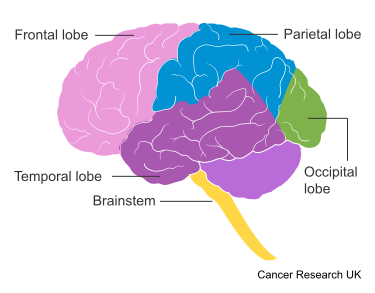
The frontal lobe is important for:
speaking
planning
problem solving
starting some movements
processing sensations
part of your personality and character
emotions and behaviour
The temporal lobe is where you process sounds and where you store memories.
The parietal lobe recognises objects in the world and stores that knowledge. It's where you receive and process:
touch
pressure
pain
This lobe processes what you can see.
This controls body functions we don't usually think about like:
breathing
swallowing
coughing and sneezing
heartbeat and blood pressure
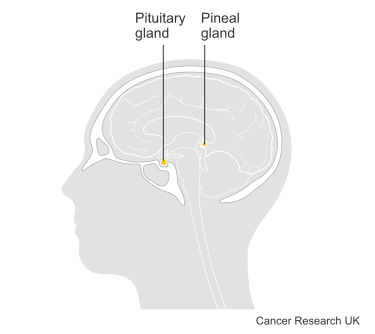
Your brain makes hormones, which are important for your body to function. The pituitary or pineal gland make these hormones. These two glands are part of the system.
Pituitary gland hormones
These affect:
growth
the speed of body processes (your metabolism)
periods and egg production
sperm production
Pineal gland hormone
The pineal gland makes melatonin, which controls your sleep patterns.
Fluid called cerebrospinal fluid (CSF) surrounds the brain and spinal cord.
Ventricles are spaces inside the brain filled with CSF. They connect with the space in the centre of the spinal cord and the brain covering (the meninges). This allows the fluid to circulate around and through the brain and spinal cord.
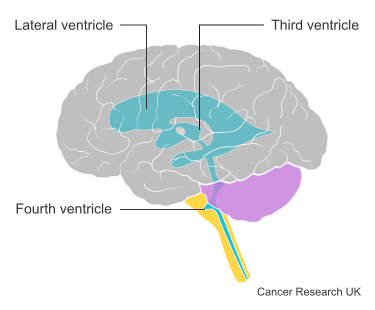
The CSF has some important jobs such as:
protecting the brain
supporting the weight of the brain
maintaining equal pressure around the brain and spinal cord
Brain tumour symptoms can be very similar to those of childhood illnesses. Take your child to the GP if they have any symptoms of a brain tumour.
Tests for a children’s brain tumour might include a neurological examination, MRI scan, CT scan, blood test, lumbar puncture or biopsy.
We have some general information about brain tumours that develop in children. And we have detailed information about 3 of the most common types of children's brain tumours.
Brain tumours are put into groups according to how quickly they are likely to grow. These are called grades. Find out what this means.
The main treatments for children’s brain and spinal cord tumours are surgery, radiotherapy and chemotherapy.
Get information on possible treatment options if your child’s brain tumour comes back.
Many children and young people with brain tumours have their treatment as part of a clinical trial. Read about some of the research happening in the UK.
Brain tumours and their treatment can cause physical and mental changes. Understanding about what they might be can help you cope.
It is essential that parents and other close family have support. Find out what is availble and who can help.
This section is due for review. We will update this as soon as possible.
Last reviewed: 19 Dec 2022
Next review due: 19 Dec 2025



