
About Cancer
Bladder cancer is when abnormal cells in the bladder lining start to grow and divide in an uncontrolled way. Your bladder is a hollow organ in the lower part of your tummy (abdomen) called the pelvis.
Find out more about cancer and how it starts
Your bladder is part of the body system that filters waste products out of your blood and makes urine (pee). This is called the urinary system or urinary tract. It includes the:
kidneys
ureters
bladder
urethra
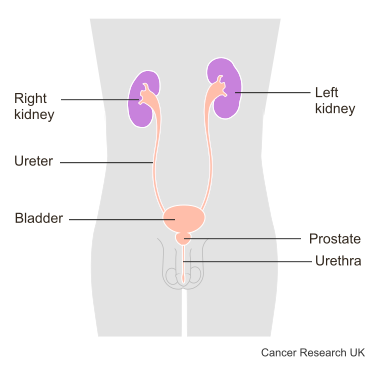
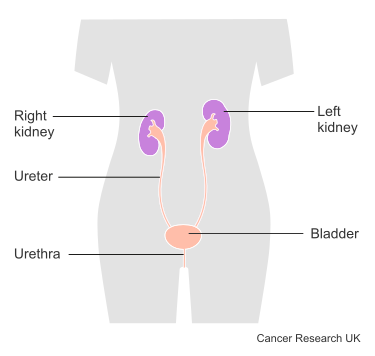
You have two kidneys, one on each side of your body. The kidneys filter your blood and make urine. The urine is carried to your bladder by two tubes called the ureters.
Your bladder is like a balloon which stores urine. It's a stretchy bag made of muscle . It can hold about 300 to 400mls of urine.
When we empty our bladder, the urine passes down a tube called the urethra and out of the body. The urethra in men passes through the and down the penis. The urethra in women is much shorter. It passes from the bladder down to an opening just in front of the .
In men, the prostate gland surrounds the lower part of the bladder.
Your bladder is made up of layers:
The first layer is the lining on the inside of your bladder. It is called the urothelium or transitional epithelium.
The second layer is a thin layer of connective tissue called the lamina propria.
The third layer is muscle tissue called the muscularis propria.
The fourth layer is fatty connective tissue. It separates the bladder from other body organs, such as the prostate and kidneys.
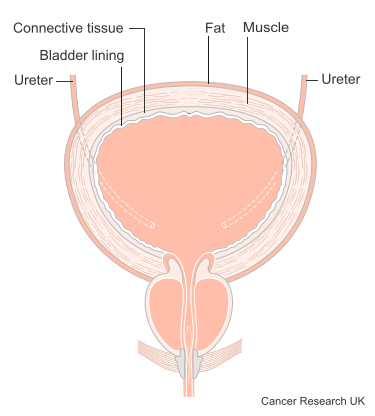
Doctors describe your bladder cancer based on how far it has spread through these layers. You can have:
non muscle invasive bladder cancer - the cancer is only in the lining or the connective tissue beneath the bladder lining
muscle invasive bladder cancer - the cancer has grown into the deeper (muscle) layer of the bladder, or beyond
Learn about the different stages of bladder cancer
Most bladder cancers start in the inner lining of the bladder. This lining has 2 names:
urothelium
transitional epithelium
The bladder lining is made up of cells called urothelial (transitional) cells. Cancers that start in these cells are called urothelial cancers. Doctors may also call them transitional cell bladder cancers.
Urothelial (transitional cell) cancers are the most common type of bladder cancer. There are rare types of bladder cancer that start in different types of cells in the bladder.
Read about the different types of bladder cancer
Around 10,900 people are diagnosed with bladder cancer in the UK every year. It's the 11th most common cancer in the UK, and the 7th most common cancer in men.
Bladder cancer usually takes a long time to develop, so it is most common in older people. Almost 60 out of 100 (almost 60%) of new cases in the UK are in people aged 75 and over. It is rare in people under 40.
More men than women get bladder cancer. This may just be because more men than women have smoked or been exposed to chemicals at work in recent decades.
Read about the risks and causes of bladder cancer
The main symptom of bladder cancer is blood in your pee (urine). Other symptoms include problems passing urine, pain, feeling tired and weight loss.
Smoking tobacco is the biggest cause of bladder cancer in the UK. There are some other risk factors that can increase your risk.
You usually start by seeing your GP. Depending on your symptoms, they might refer you for tests or to see a specialist.
You usually have a few tests to find out if the symptoms you have could be due to bladder cancer. If you have bladder cancer, you then need more tests to find out how far it has grown.
Your treatment options depend on the stage, type and grade of your bladder cancer. Treatments include surgery, radiotherapy and chemotherapy.
Researchers are looking into better ways to diagnose and treat bladder cancer. Talk to your cancer specialist if you are interested in taking part in a clinical trial.
Last reviewed: 17 Apr 2025
Next review due: 17 Apr 2028

About Cancer generously supported by Dangoor Education since 2010. Learn more about Dangoor Education


Search our clinical trials database for all cancer trials and studies recruiting in the UK.

Connect with other people affected by cancer and share your experiences.

Questions about cancer? Call freephone 0808 800 40 40 from 9 to 5 - Monday to Friday. Alternatively, you can email us.
