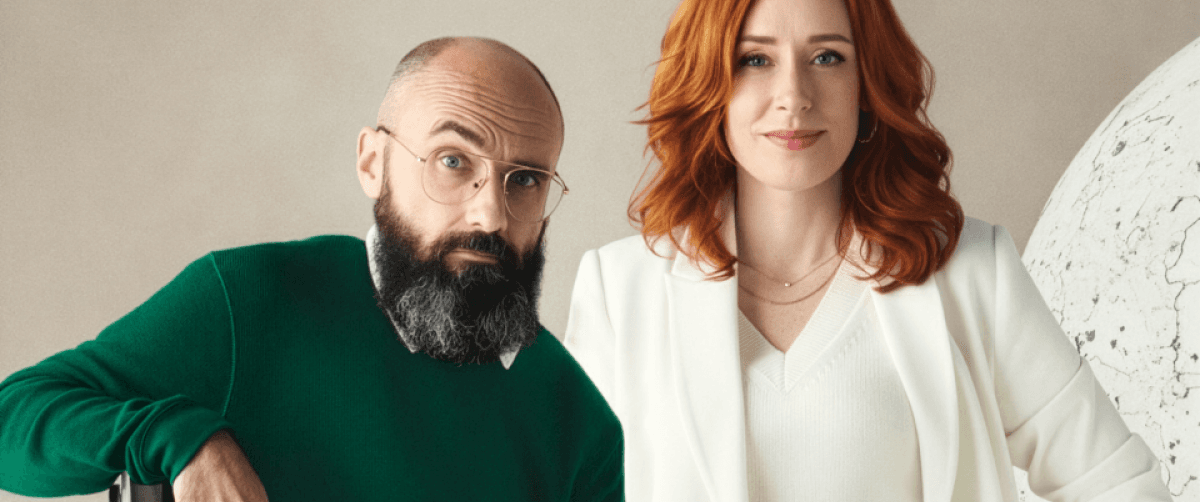
The Rest Is Science brings together mathematician Professor Hannah Fry and YouTuber Michael Stevens (aka Vsauce) to explore the wonders of science. Over the past 50 years, our pioneering work has helped double cancer survival in the UK. With our help, The Rest Is Science explores some of the research that is driving a revolution in our understanding of cancer and our ability to beat it.
In this special episode of The Rest Is Science, Professor Hannah Fry and Michael Stevens speak to our chief clinician, Professor Mariam Jamal-Hanjani, about some of the biggest unanswered questions in cancer research. Hannah shares her experience with cervical cancer and her optimism about the HPV (human papillomavirus) vaccine. Read more about our progress in beating cervical cancer
In the 1990s, our scientists helped discover the BRCA1 and BRCA2 genes, which increase our cancer risk if they’re faulty. This groundbreaking research revolutionised how we prevent, detect and treat cancers linked to these genes.
CAR T-cell therapy is a powerful cancer treatment that helps the immune system detect and fight cancer. Our researchers are working to improve CAR T-cell therapy for children and young people, so the modified immune cells can keep hunting down and destroying cancer cells for longer.
Our scientists discovered that we could use our immune system’s allergic reactions against cancer. They’ve built on their discovery and developed a drug that’s shown promise in shrinking tumours in the lab, opening the door to new allergy-inspired cancer treatment.
Listen on Apple podcasts Listen on Spotify
We’re the world’s leading cancer charity, dedicated to saving and improving lives with our research, influence and information.
Whether you fundraise, volunteer or pledge a gift in your Will, join our collective effort to beat cancer.
The latest news, analysis and opinion from Cancer Research UK.
