How does cancer start, grow and spread?
Normal body cells have a number of important features. They can:
reproduce when and where they need to
stick together in the right place in the body
self destruct when they become damaged or too old
become specialised (mature). This means they have a specific role to perform for example as a muscle cell or red blood cell.
Cancer cells are different to normal cells in various ways.
Unlike normal cells, cancer cells don't stop growing and dividing when there are enough of them. So the cells keep doubling, forming a lump (tumour) that grows in size.
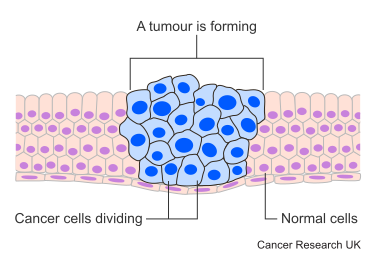
A tumour forms, made up of billions of copies of the original cancerous cell.
Cancers of blood cells don't form tumours for example leukaemias. But they make many abnormal blood cells that build up in the blood.
Cells send chemical signals to each other all the time. Normal cells obey signals that tell them when they have reached their limit. They will cause damage if they grow any further. But something in cancer cells stops the normal signalling system from working.
This 1 minute video shows how cancer cells send messages that tells other cells to grow and divide.
Cancer cells can lose the molecules on their surface that keep normal cells in the right place. So they can break away from their neighbours.
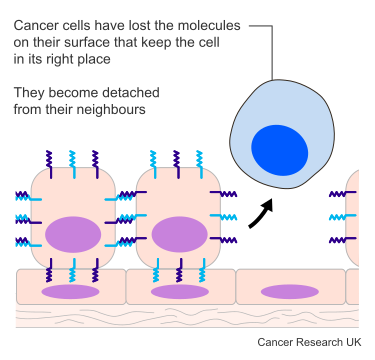
This helps to explain how cancer cells can spread to other parts of the body.
Read about how cancer can spread
Unlike healthy cells, cancer cells don't carry on maturing or become so specialised. Cells mature so that they are able to carry out their function in the body. This process of maturing is called differentiation.
In cancer, the cells often reproduce very quickly and don't have a chance to mature. Because the cells aren't mature, they don't work properly. And because they divide quicker than usual, there's a higher chance that they will pick up more mistakes in their genes. This can make them even more immature so that they divide and grow even more quickly.
Normal cells can repair themselves if their genes become damaged. This is known as DNA repair. Cells self destruct if the damage is too bad. Scientists call this process apoptosis.
In cancer cells, the molecules that decide whether a cell should repair itself are faulty. For example, a protein called p53 usually checks if the cell can repair its genes, or if the cell should die. But many cancers have a faulty version of p53, so they don't repair themselves properly.
This leads to more problems. New gene faults or mutations can make cancer cells:
grow faster
spread to other parts of the body
resistant to treatment
Cancer cells can ignore the signals that tell them to self destruct. So they don't undergo apoptosis when they should. Scientists call this making cells immortal.
Under a microscope, cancer cells may look very different from normal cells. Cancer cells:
are different sizes and some may be larger than normal while others are smaller
often have an abnormal shape
often have a nucleus (control centre) that looks abnormal
Find out about different types of cancer according to the cell type they start in
Last reviewed: 06 Oct 2023
Next review due: 06 Oct 2026
To start with, cancer cells stay inside the body tissue from which they have developed. The cancer cells grow and divide to create more cells and will eventually form a tumour. Once a cancer can stimulate blood vessel growth, it can grow bigger.
DNA stands for deoxyribonucleic acid. It is like a code containing all the instructions that tell a cell what to do. It is made up of genes. Your genes carry all the information that makes you, you.
Body tissues grow by increasing the number of cells. Cells in many tissues in the body divide and grow very quickly until we become adults.
The place where a cancer starts in the body is called the primary cancer or primary site. Cells from the primary site may break away and spread to other parts of the body.

About Cancer generously supported by Dangoor Education since 2010. Learn more about Dangoor Education


Search our clinical trials database for all cancer trials and studies recruiting in the UK.

Connect with other people affected by cancer and share your experiences.

Questions about cancer? Call freephone 0808 800 40 40 from 9 to 5 - Monday to Friday. Alternatively, you can email us.
