Surgery
There are different types of surgery for breast cancer. These include:
removing an area of cancer (breast conserving surgery or lumpectomy)
removing the whole breast (mastectomy)
removing the (sentinel lymph node biopsy, targeted axillary dissection or axillary lymph node dissection)
You might also have surgery to make a new breast (breast reconstruction) after you have had a mastectomy.
The type of surgery you have depends on:
the size of the cancer
where the cancer is in your breast
whether there is more than one area of cancer
if you have had any treatment before to the breast and chest area such as breast surgery, radiotherapy or a pacemaker fitted for your heart
your general health and level of fitness
your personal wishes and feelings
Depending on your situation, your surgeon might recommend that you have a particular operation. Or you might have a choice of operations to consider.
The following is an overview of the different types of breast surgery to treat breast cancer.
Surgery to remove an area of cancer from the breast is called breast conserving surgery. It is also known as a lumpectomy or a wide local excision.
The surgeon removes the cancer and a border (margin) of healthy tissue all around it. They leave behind as much healthy breast tissue as possible.
You usually have radiotherapy to the breast after this type of surgery. In certain early stage breast cancers you might not need radiotherapy and have 5 years of hormone therapy instead. For example, if you’re over 65 years of age with:
a small cancer that is 1 or 2
no cancer cells in the lymph nodes
you have breast cancer
you have negative cancer
Your doctor will talk through your treatment plan with you and explain if you need radiotherapy or not.
Find out about having breast conserving surgery (lumpectomy)
Some women need surgery to remove their whole breast. Or they might choose to have this operation. This is called a mastectomy.
There are different types of mastectomy. The type of mastectomy you have depends on:
how big the cancer is
where it is in the breast
if you’ve had breast surgery before
whether you wish to have breast reconstruction, go flat or wear a breast shape (prosthesis)
A simple mastectomy includes removing:
the breast tissue
the nipple
some of the skin
the tissues that cover the chest muscles
This type of mastectomy doesn’t involve immediate reconstruction, so you have a flat chest.
Other types of mastectomy involve immediate reconstruction. These include:
skin sparing mastectomy – removal of the breast tissue and nipple but keeping most of the skin
nipple and skin sparing mastectomy – removal of the breast tissue but keeping most of the skin, the nipple and the area around the nipple (areola)
skin reducing mastectomy - removal of the breast tissue and some of the skin. You keep the breast shape but makes your reconstructed breast smaller. In some cases you may keep the nipple. This is called a skin reducing and nipple sparing mastectomy
You might have radiotherapy after a mastectomy if:
there are cancer cells in the lymph nodes in the armpit
the border of tissue around the cancer (margin) has cancer cells
the size of the cancer is 5 cm or more
the cancer has grown into the skin or chest wall or both
you have a rare type of breast cancer called inflammatory breast cancer
you have ER negative or HER2 positive breast cancer
Find out about having a mastectomy
Breast reconstruction is surgery to make a new breast after a mastectomy. The aim is to make a breast of similar size and shape to your original breast.
The main ways of making a new breast include:
implants to replace all or some of your breast tissue
using tissue taken from another part of your body (autologous or "flap" reconstruction)
a combination of both
The tissue your surgeon might use includes skin, fat or muscle. Or you might have a combination of these.
Your surgeon will talk to you about the different options for breast reconstruction before your operation.
You might have your reconstruction at the same time as the operation to remove the breast (immediate reconstruction), or sometime later (delayed reconstruction).
Some women having breast conserving surgery will need to have a large amount of breast tissue removed. This leaves a dent in the breast and means the treated breast ends up smaller than the other breast. It is sometimes possible to get back the shape with a partial reconstruction of the breast by filling the dent with a small area of living tissue.
The surgeon may use tissue from your back to fill in the dent. This is called a latissimus dorsi flap (LD flap). There are other ways to do this. Your surgeon will explain these to you.
Read about breast reconstruction
You might decide that you don’t want to wear a prosthesis or have a breast reconstruction after having a mastectomy. You may choose to be flat.
Women decide to do this for various reasons. It might be because you:
don’t want to have more surgery
want to get back to everyday life as soon as possible
don’t want to wear a prosthesis, or find them uncomfortable
Your surgeon and breast care nurse will talk to you about all your options. They will explain the pros and cons to help you make the right decision for you. You may need time to make your decision. Talking to family and friends about how you feel can help.
A charity called Flat Friends UK offers support to women who choose to be flat. You can speak to women who have had similar experiences through their private Facebook group or face to face. The website also has information about research, fashion ideas and personal stories.
Find out more about Flat Friends UK
Lymph nodes are found in many parts of the body. They filter out bacteria and damaged cells from the and contain cells that fight infection.
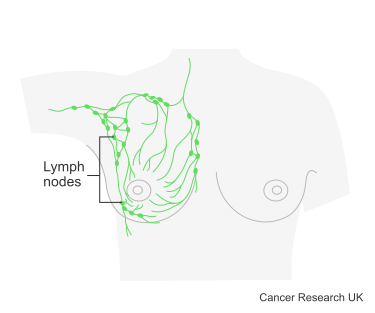
Cancer cells can break away from the breast tissue and go to other parts of the body. If this happens, it usually first spreads to the lymph nodes in the armpit (axilla) close to the breast.
Before your surgery you will have an ultrasound scan to check the lymph nodes in the armpit close to the breast. You will have a biopsy of the lymph nodes if they look abnormal. This is to see if they contain cancer cells.
Your doctor will usually suggest surgery to remove all or most of the lymph nodes in your armpit if the results show that you have cancer cells in the lymph nodes. You can have this at the same time as your breast cancer surgery. This is called an axillary lymph node dissection or clearance.
If the lymph nodes look normal on the ultrasound, you will usually have a sentinel lymph node biopsy during your breast surgery. This is to make sure that cancer has not spread to the sentinel lymph node. The sentinel node is the first node in the armpit, where the fluid drains into from the breast.
Find out about surgery to remove lymph nodes
Your doctor might give you a choice of treatments. This might be because the treatments work equally well in curing the cancer but have different advantages and disadvantages.
You might have a choice between breast conserving surgery followed by radiotherapy or mastectomy.
We have information on things to consider and the advantages and disadvantages between these two surgeries.
Go to choosing between breast conserving surgery (lumpectomy) or mastectomy
Before your operation, you have an appointment at the pre assessment clinic. This appointment prepares you for the operation.
You have a general anaesthetic for breast cancer surgery. This means you are asleep and can’t feel anything during the operation.
Many people have breast surgery as a day case or go home the following day. If you have breast reconstruction at the same time you might be in hospital for a few days.
When you wake up after the operation you might have a wound drain in place. You can go home with a drain still in. Your nurse will give you written instructions on how to take care of it.
Everyone having treatment for breast cancer should have a specialist breast care nurse or key worker. They will support you throughout diagnosis, treatment and follow up. Ask your surgeon about this if you have not been introduced to someone.
Find out what to do before, on the day and after your operation
Davina had a lumpectomy and lymph nodes removed.
“I’m getting stronger every day by doing the exercises I was shown at the hospital.”
Last reviewed: 01 Jun 2026
Next review due: 01 Jun 2029
This is an operation to remove the area of cancer and some of the surrounding breast tissue. It's also called a wide local excision or lumpectomy. Find out more about this breast cancer surgery.
A mastectomy is surgery to remove all of the breast. Find our why you might have one, when to you might have breast reconstruction or why you may choose not to. We also have information about what happens.
There are different types of surgery to make a new breast shape after removal of breast cancer. Read about the different types of breast reconstruction, benefits and possible problems.
The main treatments for breast cancer include surgery, chemotherapy, radiotherapy and hormone therapy. Your treatment depends on a number of factors such as how big the cancer is and whether it has spread.
Depending on your situation you might have a choice of operations to consider. Or your surgeon might recommend that you have a particular operation. Find out about some of the advantages and disadvantages between these surgeries.
Most people begin their breast cancer treatment with surgery. There are different types of surgery for breast cancer including lumpectomy and mastectomy.

About Cancer generously supported by Dangoor Education since 2010. Learn more about Dangoor Education


Search our clinical trials database for all cancer trials and studies recruiting in the UK.

Connect with other people affected by cancer and share your experiences.

Questions about cancer? Call freephone 0808 800 40 40 from 9 to 5 - Monday to Friday. Alternatively, you can email us.
