How you have chemotherapy
Chemotherapy drugs that you have into a vein are called intravenous or IV chemotherapy. People have them over different amounts of time. It depends on the drug and the type of cancer it’s treating.
You might have chemotherapy drugs as one or more of the following:
as an injection into a vein (bolus) – over a few minutes
through a drip or pump (infusion) – over anything from 30 minutes to a few days
through a small pump that you wear – over a few days or a week or more
For treatment that only lasts a few hours, you might have the drugs in the day unit at the hospital. In some areas of the country, specially trained nurses can give you some types of chemotherapy in your home.
You might need to be admitted to a hospital ward for treatment that takes longer than a few hours.
Chemotherapy that you have over a few days or more is called a continuous infusion. You might also hear it called ambulatory chemotherapy.
Ambulant means walking. So ambulatory chemotherapy means you can walk around wearing the chemotherapy pump. Using a small pump that you wear means you’ll usually be able to have treatment as an outpatient.
Find out more about chemotherapy pumps
You have some chemotherapy drugs as an injection into your bloodstream. This is sometimes called an IV bolus or push.
The drug is in a small amount of liquid in a syringe. Your nurse will attach the syringe to your cannula or line. They very slowly push the drug into the line. This can take up to 10 minutes.
Sometimes your chemotherapy drugs are added to a drip bag to dilute them. This is known as an intravenous infusion.
Your nurse connects a set of plastic tubing to your cannula or line. The plastic bag containing your treatment attaches to the top of this plastic tubing. The drug solution drips into your vein slowly over a set period of time.
Chemotherapy through a drip is almost always run through a pump. The pump gently pushes the chemotherapy into your vein at a carefully controlled rate. Your chemotherapy nurse can set it for the right number of hours. This means you get your chemotherapy at exactly the rate needed.
You can have chemotherapy without a pump. But your nurse will have to keep a much closer eye on the drip rate to make sure it’s going in at the right speed. Even moving your arm can affect the rate of a drip. So using pumps is really a safety precaution.
You can have chemotherapy drugs into a small tube called a cannula.
You can have chemotherapy into the bloodstream through a long flexible plastic tube called a central line.
A portacath is a small chamber that sits under your skin. It’s attached to a long plastic tube that goes into a large vein close to your heart.
A PICC line (peripherally inserted central catheter) is a type of central line. You can have chemotherapy and other drugs through it.
Chemotherapy pumps give a controlled amount of drugs very slowly into your bloodstream.
When you have your chemotherapy, your nurse will wear protective equipment such as gloves, a plastic apron and goggles. These are to protect your nurse from accidental splashes of chemotherapy.
The nurses will be very careful to avoid any direct contact with the drugs. This is because many chemotherapy drugs are harmful to the skin.
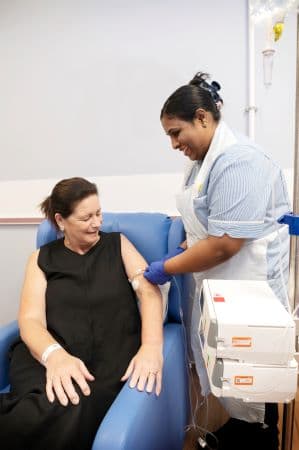
The equipment your nurse uses to give your chemotherapy has to be disposed of carefully. It might include things like syringes, needles and plastic tubing. There are special containers in the hospital that they can use for getting rid of chemotherapy equipment.
This may seem like a lot of fuss and even a bit scary. But it's important to be as safe as possible. Your hospital will have guidelines on what to do if staff spill any of the drugs or get some on their skin or yours.
Very rarely, chemotherapy pumps can leak. If you are having your chemotherapy at home, you might get a kit to use if this happens. Your chemotherapy nurse will give you instructions on how to use it.
Last reviewed: 15 May 2024
Next review due: 14 May 2027



