Surgery for thyroid cancer
It is important to tell your doctor or nurse if you have any problems or complications after surgery. Many problems are minor but some can be life threatening. Treating them as soon as possible is important.
After any major operation there is a risk of:
You are at risk of getting an infection after an operation. This includes a wound, chest or urine infection. Symptoms can depend on where the infection is. Tell your doctor or nurse if you have any symptoms of infection.
These include:
a high temperature
shivering
feeling hot and cold
feeling generally unwell
cough
feeling sick
swelling or redness around your wound and your wound might feel hot
a strong smell or liquid oozing from your wound
loss of appetite
cloudy smelly pee (urine)
If you get an infection, your doctor gives you antibiotics to treat it.
Sometimes for an infection in your wound, you may need another operation. But this is rare.
Chest infections, including pneumonia, can be serious.
You can lower your risk by:
stopping smoking before your operation
getting up and moving as soon as possible after your operation
doing any breathing exercises your physiotherapist teaches you
If you get an infection, you have antibiotics to treat it.
Blood clots are also called a deep vein thrombosis or DVT. They are a possible complication of having surgery because you might not move about as much as usual. Clots can block the normal flow of blood through the veins. Let your doctor or nurse know if you have an area in your leg that is swollen, hot, red or sore.
There is a risk that a blood clot can become loose and travel through the bloodstream to the lungs. This causes a blockage called a pulmonary embolism. Symptoms include:
shortness of breath
chest pain
coughing up blood
feeling dizzy or lightheaded
To prevent clots it's important to do the leg exercises that your nurse or taught you. And to move around as much as possible. Your nurse might also give you an injection just under the skin to help lower the risk while you are in hospital. You might need to carry on having these injections for a few weeks, even after you go home. This depends on the type of operation you had.
Your nurse might teach you to do these injections yourself before you go home. They will make sure you are comfortable doing them. Or a district nurse might come to your home to do them.
It's important to continue wearing your anti embolism stockings if you have been told to by your doctor.
It’s normal to lose some blood during an operation. Depending on how much you lose, you might need a during or after surgery to replace it.
There is a small risk of bleeding inside your body after the operation. This is rare. But if this happens you may need a second operation.
You can also get bleeding from your wounds.
Your nurse will regularly check you for signs of bleeding after surgery.
You might have voice changes after thyroid surgery. Your voice may be hoarse or sound different.
The thyroid gland lies close to your voice box (larynx). Surgery can damage the nerve to your voice box. This usually gets better within a few weeks.
It’s rare to have permanent changes. Your team might refer you to a voice therapist or speech therapist if you continue to have problems.
After surgery, you might need to take thyroid hormone replacement tablets. This depends on what surgery you have.
If the surgeon removes your whole thyroid gland, you will need to take levothyroxine. These are thyroid hormone replacement tablets. They replace the hormones that your thyroid would normally make. You will need to take these tablets every day for the rest of your life.
You don’t generally need to take thyroid hormones if the surgeon only removes part of your thyroid gland. Your remaining thyroid usually makes all the hormones you need. But you have blood tests to check that it is working well.
If you have had follicular or papillary thyroid cancer, the hormones may also help to stop the cancer from coming back. They stop your body from producing another hormone called thyroid stimulating hormone (TSH). TSH encourages these types of thyroid cancer cells to grow.
The parathyroid glands control the levels of calcium in your blood. Surgery to your thyroid gland can damage the nearby parathyroid glands. Or your surgeon might need to remove some of the parathyroid glands.
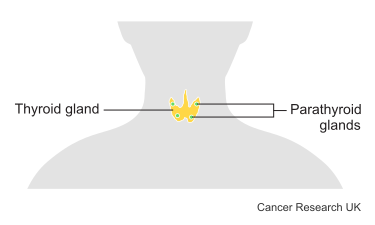
Any damage can mean that these glands don’t work so well and your calcium levels fall. If this happens, you will need to take calcium tablets. You might also need to take extra vitamin D.
This is usually a temporary side effect but could be permanent in some people.
After surgery, it is normal to have some swelling close to the wound. This usually goes away after a few weeks as the wound heals. The area around the wound might also be numb.
If the surgeon removes some in your neck, the swelling may continue to be there. Sometimes it gets worse. Doctors call this .
Tell your doctor if you continue to have swelling in your neck after a few weeks. You may need some more exercises to help the swelling go down.
You may have some difficulty swallowing food after the surgery. This should get better, but let your healthcare team know if it continues. If it lasts longer than they expect then you may need to see a specialist.
You may need to rest at home after surgery and need up to 2 weeks off work to recover. You can speak to your surgeon about what they think is best.
If you have a job which requires you to lift anything heavy or exercise, then you need to let your doctor know. It is usually best to avoid this for a couple of weeks after surgery.
It is best to avoid driving while you are taking painkillers. You also need your neck stiffness to recover and feel comfortable.
Speak to your doctor about when it is best to drive again. You may want to check with your insurance company if they are happy for you to drive.
We have more information on possible problems after surgery for cancer, including:
pain
different types of infection
Find out more about possible problems after surgery for cancer
We have more information about these problems on our page about life after thyroid cancer surgery.
Read about life after thyroid cancer surgery
You have follow up appointments to check your recovery. Your appointments are also an opportunity to raise any concerns you have about your progress.
Last reviewed: 03 Oct 2026
Next review due: 03 Oct 2029
There are different types of surgery for thyroid cancer. Surgery to remove your thyroid gland is called a thyroidectomy.
Possible treatments include surgery, radiotherapy, targeted drugs and chemotherapy. What treatment you have depends on your type and stage of thyroid cancer.
After thyroid cancer surgery, you need time for your body to recover and for your wound to heal.
The thyroid is a small butterfly shaped gland that makes and releases hormones. It’s found at the front of your neck in the lowest part.



