
About Cancer
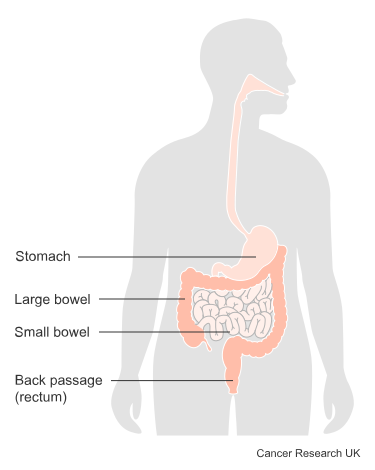
The bowel is split into 2 parts - the small bowel and the large bowel. The small bowel makes up most of the digestive system. This page is about cancer that begins in the small bowel.
Go to our information about cancer of the large bowel (colorectal cancer)
The small bowel makes up most of the digestive system and helps your body to digest food and take in vitamins. Cancer that starts here is called small bowel cancer.
Find out more about cancer and how it starts
The small bowel is between 4 and 6 metres long and is made up of 3 parts. The:
duodenum (dew-oh-dean-um) – the top part of the small bowel, which connects to the stomach
jejunum (jej-you-num) – the middle part
ileum (ill-ee-um) – the lower part, which connects to the large bowel (colon)
Most cases of small bowel cancer are found in the duodenum.

Cancers of the small bowel are rare. Around 2,200 people are diagnosed in the UK each year.
Whereas, around 48,200 cases of cancer of the large bowel (colon) and rectum are diagnosed each year.
We don’t know what causes most small bowel cancers. But there are some factors that may increase your risk:
age - small bowel cancer is more common in older people
familial adenomatous polyposis (FAP) – a rare condition where an inherited faulty gene makes many polyps develop on the bowel lining
Lynch syndrome (hereditary non polyposis colorectal cancer or HNPCC) - a gene fault increases the risk of several different types of cancer at a younger age
Peutz Jeghers syndrome – an inherited condition where benign (non cancerous) polyps form in the bowel
Crohn’s disease – cancers related to Crohn’s disease are usually adenocarcinomas of the ileum
Coeliac disease – may slightly increase your risk of developing lymphoma or adenocarcinoma of the small bowel. Sticking to a gluten free diet reduces the risk
A diet rich in red meat or smoked foods, smoking and obesity have all been linked to an increased risk of small bowel cancer.
Tumours of the small bowel may be either non cancerous (benign) or cancerous (malignant). Benign tumours include polyps and lipomas .
There are different types of malignant small bowel tumour.
Around 40 out of 100 small bowel cancers (around 40%) are adenocarcinomas, making it the most common type. It starts in cells that line the bowel (epithelial cells) and develops most often in the duodenum.
Around 40 out of 100 (around 40%) of small bowel cancers are neuroendocrine cancers. These develop from cells that produce hormones, most commonly in the ileum.
Find out more about neuroendocrine cancers
More than 15 out of 100 small bowel cancers (more than15%) are lymphomas, usually found in the jejunum
Get more information on lymphoma
Sarcomas can develop in the soft tissues anywhere in the small bowel, but most often grow in the ileum. There are different types and the most common is a cancer of smooth muscle (leiomyosarcoma).
Gastrointestinal stromal tumours (GIST) are a rare type of sarcoma that can start in the connective tissue in the small bowel.
Read more about soft tissue sarcomas
These are tumours that have started somewhere else in the body and have spread to the small bowel. These cancer cells have to be treated in the same way as your type. The most common cancers to spread to the small bowel include ovarian and pancreatic cancers.
It's important to read about your type of primary cancer to get the right information and support for you.
Some of the symptoms of small bowel cancer can include a pain or lump in your tummy, weight loss, tiredness or dark black poo.
Scan and blood tests can help to diagnose small bowel cancer.
Read more about symptoms and diagnosing small bowel cancer
Your doctor will talk to you about the treatment they suggest. They will explain its benefits and the possible side effects.
Treatments can include:
surgery
radiotherapy
chemotherapy
immunotherapy
Last reviewed: 02 Jul 2025
Next review due: 03 Jul 2028
Small bowel adenocarcinoma is the most common type of small bowel cancer. Treatment can include surgery, chemotherapy and radiotherapy.
Some of the symptoms of small bowel cancer can include a pain or lump in your tummy (abdomen), weight loss, tiredness or dark black poo. Scans and blood tests can help to diagnose small bowel cancer.
Coping with cancer can be difficult. There is help and support available. Find out about the emotional, physical and practical effects of cancer and how to manage them.



