Secondary brain cancer
Deciding about treatment can be difficult. You need to understand:
what treatment can do for you
any side effects of the treatment
how many visits to hospital the treatment involves
You can stop whenever you want if you find it too much to cope with.
Talk through your options with your doctor or specialist nurse. You may find it helpful to talk things over with a close relative or friend or a counsellor if one is available.
Your treatment will depend on several factors, including:
your type of primary cancer
the treatment you have already had
how many tumours are in the brain
where the cancer is in the brain and how big it is
whether your cancer has spread to other parts of the body
your general health
your symptoms
You are likely to have a combination of treatments. Some to control the cancer and others to control specific symptoms.
Radiotherapy treatment uses high-energy x-rays to kill cancer cells. Radiotherapy can help to control cancer growth and symptoms. You usually have this as external radiotherapy. This is where a machine outside the body directs radiation beams at the cancer to destroy it.
Stereotactic radiotherapy (SRT) is one type of external radiotherapy. You usually have treatment through a machine called a linear accelerator (LINAC). But you may also have it on a CyberKnife or GammaKnife machine.
It's a targeted treatment. It gives radiotherapy from many different angles around the body. The beams meet at the cancer site, so it receives a high dose of radiation. The tissues around the cancer get a much lower dose of radiation. This lessens the risk of side effects to the rest of the brain. Your doctor might use this to target one or two small areas of cancer in the brain.
Some people with secondary brain cancer can have the full dose as a single . This is also called stereotactic radiosurgery.
If you have several areas of secondary brain cancer, you might have whole-brain radiotherapy. You might have this treatment if you haven’t had the following treatments before:
stereotactic radiosurgery
stereotactic radiotherapy
surgery
You usually have this course of external radiotherapy over 1 or 2 weeks. The total dose is split into several smaller doses (fractions). Splitting the dose allows healthy cells to recover between treatments. You usually have one treatment (fraction) a day, Monday to Friday, with weekends off.
Some people may have whole-brain radiotherapy. This helps prevent secondary brain cancer. You might have this if you have small cell lung cancer (SCLC). You may hear this called prophylactic cranial irradiation (PCI).
Find out about radiotherapy and how it can relieve symptoms
Secondary brain cancer and its treatment can increase the pressure in the brain. This migth be from treatments such as surgery or radiotherapy.
Your skull is hard and made of bone, so it has a fixed amount of space for the brain. Cancer or swelling can increase the pressure inside the skull. This is called raised intracranial pressure. Symptoms of raised intracranial pressure might include:
headaches
feeling or being sick
seizures (fits)
behaviour changes
changes to your vision
Steroids can help to reduce swelling. This can help improve symptoms and keep them under control.
You usually take steroids for short periods ranging from a few days to a few weeks. Your specialist will reduce your steroid dose slowly. Stopping them suddenly can make you unwell.
Find out more about steroids for brain tumours
You may have surgery for a single or small number of secondary brain cancers that look removable. Surgery may not be possible for widespread brain tumours. Brain surgery is not suitable for everyone. It’s a major operation, and you need to be generally well.
For brain surgery, your surgeon will also want to make sure your primary cancer is stable. By this, they mean the cancer has stayed the same size, so it hasn’t got any better or worse. This also includes any other areas where the cancer has spread.
Your surgeon removes secondary brain tumours the same way they remove a primary brain tumour.
Find out more about surgery for brain tumours
Chemotherapy uses anti-cancer drugs to kill cancer cells. The type of chemotherapy you have depends on the type of primary cancer.
It can be difficult to treat brain tumours with some chemotherapy drugs. This is because the blood-brain barrier protects the brain. This is a natural filter between the blood and the brain. It protects the brain from harmful substances.
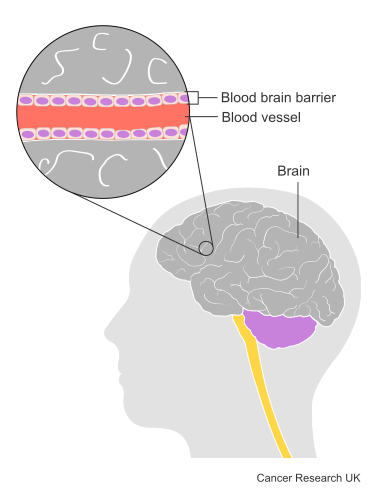
Your doctor will talk to you about what chemotherapy is best for your situation.
Find out more in the chemotherapy section for your cancer type
Some cancers depend on hormones to survive and grow. This includes cancers such as advanced breast and advanced prostate cancer. Lowering hormone levels in the body can help control them.
You can have hormone treatment as tablets or injections. It is a common treatment for advanced breast cancer and advanced prostate cancer.
Go to your cancer type for information about hormone therapy
Targeted cancer drugs target the differences that help cancer cells survive and grow.
Your doctor may suggest a targeted cancer treatment if it is suitable for your primary cancer. There are different types of targeted cancer drugs, including:
monoclonal antibodies (MABs)
cancer growth blockers
PARP inhibitors
drugs that block blood vessel growth (anti-angiogenics)
Targeted cancer treatment can help to shrink and control secondary brain cancer for the following cancers:
lung
breast
melanoma
Find out more about the targeted cancer drugs for your cancer type
Immunotherapy uses your immune system to fight cancer. It works by helping the immune system recognise and attack cancer cells.
You might have immunotherapy if, for example, you have lung cancer or melanoma skin cancer.
Find out more about immunotherapy you might have for your cancer type
Secondary brain cancer can cause symptoms. The treatments above might help to control your symptoms by shrinking or removing the cancer. You might have other treatments to help control it if you still have symptoms. A few other ways of controlling secondary brain cancer symptoms include:
Your doctor might give you anti epileptic medicines to help prevent seizures (fits). Seizures are sudden bursts of electrical activity in the brain. They can be quite scary for you and the people around you.
Secondary brain cancer can cause pain such as headaches. It’s important to tell your treatment team if you have any pain so they can get on top of it early. They will work with you to find the right painkiller and strength to help ease the pain.
Find out more information on controlling brain tumour symptoms
Research is ongoing into treatments for secondary brain cancer. This helps us better understand how the cancer develops and why treatment stops working. Cancer Research UK supports many UK and international clinical trials.
Last reviewed: 23 Oct 2026
Next review due: 23 Oct 2029
Coping with secondary cancer can be very difficult. Getting the help and support you and your family need can help.
When someone is dying with cancer, they and their carers can get help and support. This information might help at a very emotional and difficult time.
Coping with cancer can be difficult. There is help and support available. Find out about the emotional, physical and practical effects of cancer and how to manage them.
Secondary brain cancer is when a cancer that started in another part of the body has spread to the brain. It is also called brain metastases.
Search for the cancer type you want to find out about. Each section has detailed information about symptoms, diagnosis, treatment, research and coping with cancer.



