Salivary gland cancer
There are several different salivary glands inside and near your mouth. Salivary glands make spit (saliva). Saliva helps us to:
keep our mouth and throat moist
swallow food
digest food
protect against infections in the mouth and throat
protect our teeth
There are two main types of salivary glands called the:
major salivary glands
minor salivary glands
We have 3 main pairs of major salivary glands, the:
parotid glands – just under the lobes of your ears
sublingual glands – under your tongue
submandibular glands – under each side of your jawbone
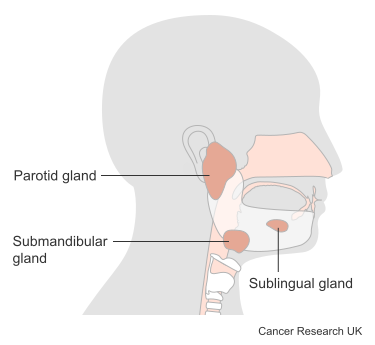
As well as the 3 major pairs of salivary glands we have over 600 smaller, minor salivary glands throughout the lining of the mouth and throat.
There are a number of different types of cells in the salivary glands. Cancer can start in any of these cells.
Your exact type of salivary gland cancer will depend on which cell type your cancer started in.
Read more about different types
Salivary gland cancer is a very rare cancer. Around 760 people are diagnosed with salivary gland cancer in the UK every year. It is slightly more common in men than women.
We don’t know what causes salivary gland cancer but several factors can increase your risk.
Find out about the causes and risks of salivary gland cancer
Last reviewed: 07 Apr 2026
Next review due: 07 Apr 2029
Your risk of salivary gland cancer increases with age. Radiation treatment to the head and neck area can also increase your risk.
The most common symptom of salivary gland cancer is a swelling on the side of the face, just in front of the ear or under the jawbone.
You usually start by seeing your GP and they might refer you to a specialist and organise tests.
Treatment for salivary gland cancer depends on where the cancer is, the size, whether it has spread anywhere else and your health.
Salivary gland cancer can start in any of the glands that make spit (saliva). As well as 3 major pairs of salivary glands we have over 600 smaller, minor salivary glands throughout the lining of the mouth and throat.

About Cancer generously supported by Dangoor Education since 2010. Learn more about Dangoor Education


Search our clinical trials database for all cancer trials and studies recruiting in the UK.

Connect with other people affected by cancer and share your experiences.

Questions about cancer? Call freephone 0808 800 40 40 from 9 to 5 - Monday to Friday. Alternatively, you can email us.
