Stomach neuroendocrine cancer
Read more about the difference between NETs and NECs and what these terms mean
The stomach is part of the . It's in the upper left side of the tummy (abdomen). The top of the stomach joins the bottom of the food pipe (oesophagus) and the other end is joined to the bowel.
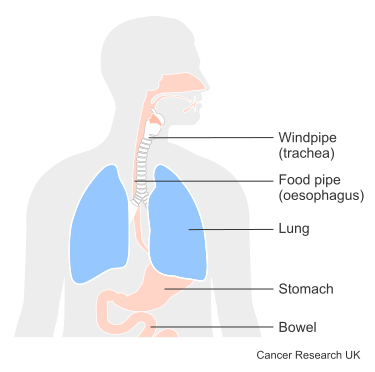
The stomach is a muscular bag that has three main parts. They are the:
top (fundus)
middle (body)
bottom (antrum or pylorus)
The cardia is the entrance to the stomach and the pylorus is the exit into the duodenum (top part of the small bowel).
At each end of the stomach there is a valve called a sphincter. These valves control the movement of food through the digestive system.
They are the:
cardiac sphincter - at the top joining the oesophagus to the stomach
pyloric sphincter - which is at the bottom joining the stomach to the duodenum (the top part of the small bowel)

Read more about how the stomach works
Stomach neuroendocrine cancers are rare stomach cancers. Around 190 people are diagnosed with stomach neuroendocrine cancers in England every year.
There are different types of cancer that develop in the stomach. Only around 1 out of every 100 stomach cancers (around 1%) are a stomach neuroendocrine cancer.
Most neuroendocrine cancers start somewhere in the digestive system (gut). Around 5 out of every 100 neuroendocrine cancers (around 5%) start in the stomach.
Some things increase the risk of developing stomach neuroendocrine cancers. But having one of these risk factors doesn’t mean that you will definitely develop a cancer.
The risk factors for stomach neuroendocrine cancer include:
a long lasting inflammation of the stomach - this is called atrophic gastritis and can be an inherited disorder
an inherited condition called
having a family history of cancer
Read more about the risks and causes of neuroendocrine cancer
Many people with a stomach neuroendocrine cancer do not have any symptoms. Doctors often diagnose a stomach neuroendocrine cancer when looking for something else.
If you do have symptoms, they might be not be specific. They can be similar to other conditions that aren’t caused by a neuroendocrine cancer. Symptoms are usually caused by:
the growth of the cancer in your stomach
the neuroendocrine cancer spreading to other parts of the body
hormones made by the cancer
Symptoms might include:
tummy pain
feeling or being sick
dark poo (because it contains blood) or blood in your vomit
breathlessness or looking pale due to low levels of red blood cells (anaemia)
indigestion (dyspepsia) that doesn't go away
feeling full after eating small amounts
unexplained weight loss
diarrhoea – this means having 2 or more loose bowel movements than usual
Some stomach neuroendocrine cancers spread and might cause a collection of symptoms. This is called carcinoid syndrome. It is rare.
Read more about carcinoid syndrome
Stomach neuroendocrine cancers often don’t cause symptoms. Most people are diagnosed with when they are having tests for something else.
If you have symptoms, you usually see your GP first. They might organise some tests. Your GP will decide if you need to see a specialist.
Read more about referral to a specialist
If your doctor suspects cancer, you have tests to check the type of cancer you have. Tests also show the size of the cancer and whether it has spread. This helps your doctor plan your treatment.
Tests might include:
blood tests - these check your general health and check levels of substances raised by neuroendocrine cancer
a type of called a gastroscopy – this is to look inside your stomach and take a cancer sample ()
of your chest and tummy
of your tummy and food pipe
radioactive scans – these are octreotide scans (or ) and MIBG scans
urine tests to check levels of substances raised by neuroendocrine cancer
You might have other tests, depending on your symptoms. Your doctor can tell you which tests you need.
Read more about tests to diagnose neuroendocrine cancer
The best person to talk to you about your outlook () is your doctor. Not everyone wants to know. People cope differently with cancer and want different information.
Survival depends on many factors. So no one can tell you exactly how long you will live. Your doctor might be able to give you some guide, based on their knowledge and experience.
Your prognosis will depend on the type of stomach neuroendocrine cancer you have. And how far it has spread (the stage).
Read more about survival for stomach neuroendocrine cancer
The tests and scans you have give information about:
your type of cancer
the grade of your cancer - this is how quickly or slowly the cancer cells are growing and dividing
the stage of your cancer - this is how big the cancer is, and whether it has spread
This information helps your doctor decide which treatment you need.
Read about grades, types and stages of stomach neuroendocrine cancer
Last reviewed: 11 Feb 2025
Next review due: 11 Feb 2028
Neuroendocrine cancers are also called neuroendocrine neoplasms (NENs). There are 2 key groups - neuroendocrine tumours (NETs) and neuroendocrine carcinomas (NECs).
The grade shows how quickly or slowly the cancer cells are growing and dividing. The stage tells you the size of the cancer and if it has spread. There are 3 types of stomach NET - type 1, type 2 and type 3. There are 2 types of stomach NEC - small cell and large cell.
Your treatment depends on what type of neuroendocrine cancer you have. Surgery is the most common treatment option for stomach NETs. For stomach NECs you usually have chemotherapy.
Survival (prognosis) depends on several factors. This includes your type of neuroendocrine cancer, where it is in your body, and whether it has spread.
Practical and emotional support is available to help you cope with neuroendocrine cancer.
Neuroendocrine cancers develop in cells of the neuroendocrine system. They can develop in different parts of the body including the lungs, stomach, pancreas and bowel.



