Surgery
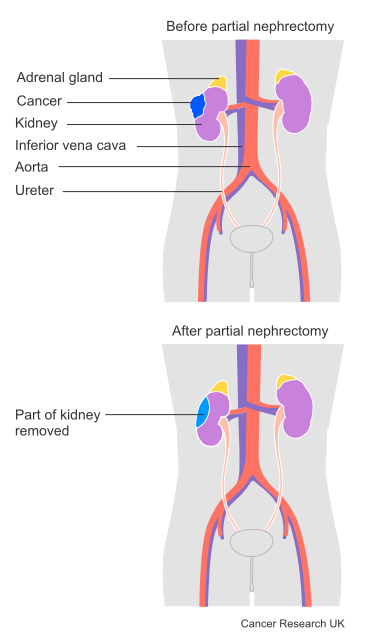
The size of the cancer and whether it has spread will help your surgeon decide what type of surgery you can have. They might recommend you have part of your kidney removed (partial nephrectomy) or your whole kidney (radical nephrectomy).
Your surgeon may also remove some of the and the tissue around your kidney. Rarely they may need to remove the which sits above your kidney.
Surgery can remove cancer that:
is completely within the kidney (early kidney cancer)
has spread into nearby tissues (locally advanced kidney cancer)
Surgery aims to cure the cancer if the surgeon can remove it completely.
Sometimes surgery may not be able to cure the cancer, particularly if it has already spread. But it can still help to control its growth and relieve some symptoms.
The anaesthetist will give you a (GA) so you will be asleep when you have the surgery.
Removing part of the kidney is used to treat small kidney cancers that have not spread. These are normally stage 1 kidney cancers (7cm across or less). Or larger cancers if you can’t have your whole kidney removed. Reasons for this include:
having only one kidney
your kidneys do not work very well
The surgeon only removes the part of the kidney containing the cancer. The rest of the kidney is left behind. This is also called nephron sparing surgery. The nephron is the filtering unit of the kidney – so you have some working kidney left after the operation.
Some people may not be able to have this surgery because of the cancer’s position in the kidney. Your surgeon will talk to you about this.
The surgeon removes the whole kidney and some of the tissue around it. They may also remove some of the lymph nodes near the kidney.
Above each kidney is an adrenal gland. It is quite unusual for cancer to spread to one of the adrenal glands. But if the surgeon thinks the gland contains cancer cells they might remove it at the same time.
If they do have to remove the adrenal gland you will be perfectly well with only one. The remaining adrenal gland will make all the hormones you need.
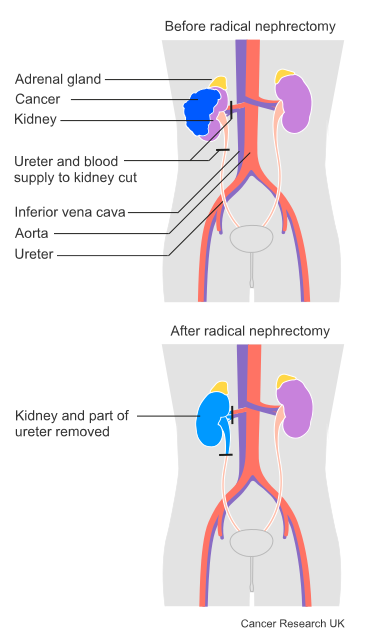
A radical nephrectomy is major surgery. But if your cancer hasn't spread, you may not need any more treatment. Your doctor will continue to monitor you carefully.
If surgery is unlikely to cure the cancer your doctor may still recommend you have your kidney removed. This is called a palliative nephrectomy. It can help with symptoms such as pain or blood in your urine.
Kidney cancer can release chemicals into your blood. These are called cytokines. They can cause symptoms such as drowsiness or sickness. Removing the kidney can reduce or get rid of these symptoms.
Removing the kidney may also slow down the growth of the cancer in other parts of your body.
Your specialist can tell you whether surgery is recommended for you.
Surgeons normally remove all or part of a kidney using small cuts in the tummy (abdomen) instead of making one large cut (open surgery). This is called keyhole surgery or laparoscopic surgery. Sometimes your surgeon may use a robot to do the operation. This is called robot assisted laparoscopic surgery.
Your surgeon uses an instrument called a laparoscope. It is like a telescope with a light at one end and a camera at the other. This lets your surgeon see into your body. They also put some gas into your tummy (abdomen) which creates space, and helps them to see better.
Your surgeon makes 3-5 small cuts through your skin. Each cut is around a centimetre long. They put the laparoscope and other small instruments through the cuts to do the operation. They watch what they're doing on a television screen. If you're having all of your kidney removed (radical nephrectomy), your surgeon separates the blood vessels and the ureter from the kidney. They can then remove the kidney.
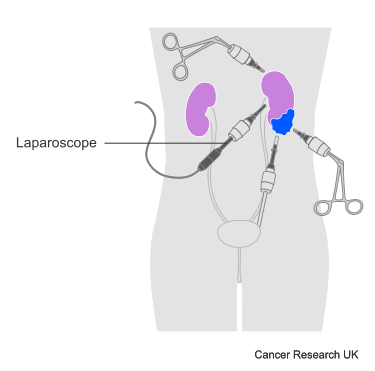
If you're only having part of your kidney removed (partial nephrectomy), your surgeon may temporarily stop the blood flowing to the kidney. This reduces the amount of blood lost during the operation.
Your surgeon makes one of the small cuts larger so they can remove part or all of your kidney from the body. At the end of the operation the surgeon lets the air out of your abdomen. It's not possible to get all of the air out, and what is left can cause you to have shoulder pain. This is because the air puts pressure on your which irritates the nerve that goes up to your shoulder. It will settle down on its own in a few days.
Some hospitals use a machine (robot) to control the laparoscopic instruments during surgery. This is called robot assisted surgery, robotic surgery or da Vinci surgery. In the UK robot assisted laparoscopic surgery is mainly done at specialist cancer hospitals.
The robot has 2 machines. They are the:
patient unit
console unit
During the operation the patient unit is beside you. It has 4 arms that hold the camera and surgical instruments. The surgeon has an assistant who helps them during your operation. They sit next to you with the patient unit.
Your surgeon makes a few small cuts in your skin. They put the camera and instruments through the cuts and connect them to the patient unit.
The console unit is where the surgeon sits. This is still in the operating theatre but is separate from the patient unit. It has a screen that gives the surgeon a 3D magnified view of the operation area.
The console unit has controls. The surgeon uses these to move the instruments in the patient unit.
The photo below is an example of robot assisted laparoscopic surgery. You can see the doctor sitting at the console unit on the right of the picture. The surgeon’s assistant is on the left of the picture.

Keyhole surgery techniques have different risks and benefits to open surgery.
The advantages of keyhole surgery are you:
are likely to need less painkilling medicine after your operation
can usually go home from hospital sooner
usually recover from the operation quicker
have less scarring
The disadvantages of keyhole surgery are:
the operation may take longer, so you may be under anaesthetic for longer
sometimes the surgeon has to switch to open surgery during the operation - for example, if the cancer is difficult to reach or there is difficulty controlling bleeding
If you're interested in having keyhole surgery, talk to your surgeon. You may need a referral to a specialist urological surgeon who has experience in it.
Last reviewed: 11 Jan 2024
Next review due: 11 Jan 2027
Before you have your operation you will meet members of your healthcare team. They will tell you how to prepare for the operation. You may also some tests.
Your nurse, surgeon and anaesthetist will ask you questions and make sure you are ready for your operation.
Kidney cancer surgery is a big operation. You will have several tubes in place and some wounds afterwards. When you can go home depends on what type of operation you have had and how well you are recovering.
Treatments for kidney cancer include surgery, cryotherapy, radiofrequency ablation and radiotherapy. You might have different treatment for advanced kidney cancer.
You have regular appointments at the hospital after treatment for kidney cancer. This is called follow up. You may also have CT scans and blood tests. How often you have follow ups depends on what treatment you've had and the chance of the cancer coming back.
Kidney cancer is cancer that starts in the kidneys. The kidneys filter waste products out of your blood as urine. Kidney cancer develops when abnormal cells in either of the kidneys start to divide and grow in an uncontrolled way.



