Surgery
After the operation, you wake up in the recovery room. You will have one to one nursing care. The nurse looks after you until you are awake and well enough to go back to the ward.
Everybody is different when they are waking up after an operation. It takes some people longer than others to wake up. Some people remain very sleepy for a while afterwards. You may be in the recovery room for hours before you are ready to go back to the ward.
Back on the ward your doctor will see you regularly. Specialist nurses may visit you. They look after people who have had major surgery but do not need to be in the intensive care or high dependency unit.
Sometimes you may wake up in the or after your operation. This is so your doctors can keep a closer eye on you. This may happen if:
your general health is poor
the operation took longer than planned
the operation was more complicated than the doctors thought it would be
In the ICU you have one to one nursing care. In the HDU you have very close nursing care.
The staff in the ICU or HDU will speak to a member of your family or friends about visitors. But, you usually move back to the ward within a day or so.
You might have several tubes in place after your operation. These can include:
drips (intravenous infusions) to give you fluids, painkillers or extra blood
one or more tubes (drains) in your back or side – these stop blood and tissue fluid collecting around the operation site
a tube into your bladder with a bag on the end (catheter) so your urine can be measured
a tube giving you oxygen into your nostrils or a mask over your nose and mouth
You will also have:
a blood pressure cuff on your arm
a little clip on your finger (pulse oximeter) to measure your pulse and the oxygen levels in your blood
Your nurse checks your blood pressure regularly in the first few hours. They also check how much urine is in your catheter bag at least every hour at first. And keep a close eye on your wound and drains.
It’s normal to have pain for the first week or so. You have painkillers to help.
Tell your doctor or nurse as soon as you feel any pain. They need your help to find the right type and dose of painkiller for you. Painkillers work best when you take them regularly.
Immediately after surgery you might have painkillers through a drip into the bloodstream that you control. This is called patient controlled analgesia (PCA). Analgesia is another word for painkillers.
Or you might have painkillers through a small thin tube that is put into your back. This tube connects to a pump that gives you a constant dose of painkillers. This is called an epidural.
You get painkillers to take home. Your nurse will talk to you about:
how often to take them
when to take them
what side effects you may get
Contact your healthcare team if you still have pain or if it gets worse.
Your nurse will normally encourage you to eat and drink as soon as you feel well enough. You start drinking water before moving on to other drinks and food. Once you’re able to drink without being or feeling sick, your nurse takes out your drip.
Occasionally your doctor may want you to build up slowly to eating and drinking. This is because the bowel may stop working for a while after surgery on your tummy (abdomen). Until it starts working again, you will not be able to eat or drink.
You can tell when it is working again as you will be able to pass wind and have a poo.
When you’re making enough urine and can walk to the toilet, your nurse will take your catheter out.
You usually still need to collect all the urine you produce while you’re in hospital. Your nurse will write down the amount and compare it to how much you’re drinking. This is so your doctor can see how well your kidney is working.
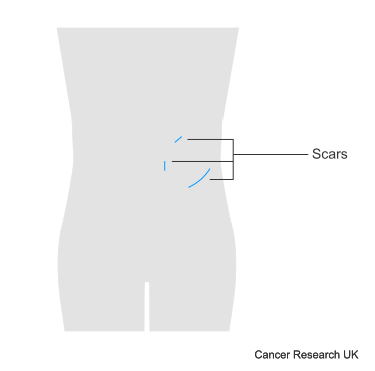
For keyhole surgery, you have 3 or more small wounds in your tummy on the side you have had the operation. Each wound is about 1cm long, except for the lowest wound. This is normally about 6 to 8cms long. This is so your surgeon can remove your kidney or part of your kidney.
You normally have a special glue on the wounds. This is waterproof and comes off on its own in about 10 days.
The diagram below shows the scars after keyhole surgery for cancer of the left kidney.
If you've had open surgery to your left kidney, your wound normally looks like the letter L. It starts just under where your ribs join together at the top of your abdomen. Then it goes down to your belly button and around to your left side. The wound will heal and become a scar.
The diagram below shows the scar line after open surgery for cancer of the left kidney.
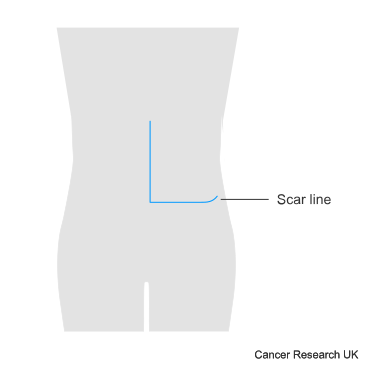
If you've had surgery to your right kidney, the wound goes around to your right side. It looks like a backwards letter L.
Your surgeon may use surgical clips or stitches to close your wound. They will be covered up with dressings when you wake up. Your nurse will take the dressings off a couple of days after your operation. They will only put another dressing on if needed.
The clips are left in for at least 10 days. When you go home, your nurse will tell you when to get them removed. You may need to make an appointment for the practice nurse at your GP’s surgery to do it.
If your surgeon uses stitches, these will usually be absorbed by your body and don't need to be removed. Your nurse will tell you what to do if the stitches do need removing.
Sometimes doctors use a special glue on keyhole surgery wounds instead of stitches. You don't need dressings on these wounds.
If you have a drain in your wound it stays in until it stops draining fluid. Your nurse usually takes it out 3 to 7 days after your operation.
Getting up may seem difficult at first, but moving about helps you get better quicker. It also helps to stop you getting a chest infection or blood clot. And it helps your bowel work as it might be a bit slow after the operation.
If you are well enough, your nurse may encourage you to sit out in a chair shortly after your operation. They will help with all your drains and drips.
You may have an injection every day. This also helps stop you from getting blood clots. Some people need to continue having these injections when they go home.
A physiotherapist may visit to help you with your breathing and walking around.
Once your drips, drains and catheter are taken out it’s much easier to get around. That’s when you feel you’re beginning to make progress.
You may be ready to go home 1 to 2 days after keyhole surgery, or 3 to 4 days after open surgery.
Before you leave hospital, your nurse will give you any medicines you need at home. They will tell you about:
getting your stitches or clips removed
how to look after your wound
when you will have a follow up appointment
who to contact if you have a problem when you are at home
when you can go back to your normal activities including driving
Talk to you doctor or nurse specialist (CNS) about how long you will need off work. This will depend on what type of operation you had, and how well you are recovering. It also depends on what job you do.
Read about possible problems after surgery for kidney cancer
Last reviewed: 11 Jan 2024
Next review due: 11 Jan 2027
Your surgeon may remove all of your kidney or only the part where the cancer is. Your healthcare team make sure you are prepared for the operation, care for you afterwards and make sure you are ready to go home.
There is a risk of problems or complications after any operation. Many are minor but some are more serious. Problems after kidney cancer surgery can include infection and bleeding.
You have regular appointments at the hospital after treatment for kidney cancer. This is called follow up. You may also have CT scans and blood tests. How often you have follow ups depends on what treatment you've had and the chance of the cancer coming back.
Treatments for kidney cancer include surgery, cryotherapy, radiofrequency ablation and radiotherapy. You might have different treatment for advanced kidney cancer.
Coping with kidney cancer is difficult. There are specialists who can help you and your family and friends cope. There are also things you can do.
Kidney cancer is cancer that starts in the kidneys. The kidneys filter waste products out of your blood as urine. Kidney cancer develops when abnormal cells in either of the kidneys start to divide and grow in an uncontrolled way.



