Radiotherapy
Your planning appointment takes from 15 minutes to 2 hours.
You usually have a planning CT scan in the radiotherapy department.
The scan shows the cancer and the area around it. You might have other types of scans or x-rays to help your treatment team plan your radiotherapy. The plan they create is just for you.
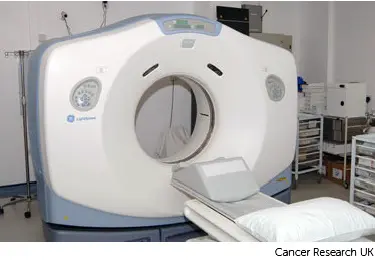
Your radiographers tell you what is going to happen. They help you into position on the scan couch. You might have a type of firm cushion called a vacbag to help you keep still.
The CT scanner couch is the same type of bed that you lie on for your treatment sessions. You need to lie very still. Tell your radiographers if you aren't comfortable.
You might need an injection of contrast into a vein in your hand. This is a dye that helps body tissues show up more clearly on the scan.
Before you have the contrast, your radiographer asks you about any medical conditions or allergies. Some people are allergic to the contrast.
Once you are in position your radiographers put some markers on your skin. They move the couch up and through the scanner. They then leave the room and the scan starts.
The scan takes about 5 minutes. You won't feel anything. Your radiographers can see and hear you from the CT control area where they operate the scanner.
The radiographers make pin point sized tattoo marks on your skin. They use these marks to line you up into the same position every day. The tattoos make sure they treat exactly the same area for all of your treatments. They may also draw marks around the tattoos with a permanent ink pen, so that they are clear to see when the lights are low.

The radiotherapy staff tell you how to look after the markings. The pen marks might start to rub off in time, but the tattoos won’t. Tell your radiographer if that happens. Don't try to redraw them yourself.
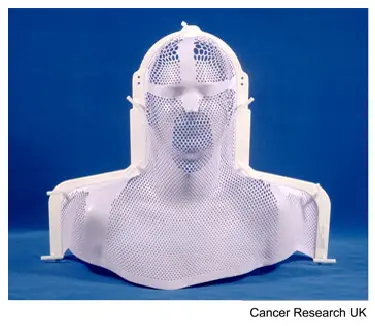
Your treatment team might make a mask for you if you are having radiotherapy to your head and neck area. They are also called radiotherapy shells.
Your treatment team will make one for you to wear during your treatment sessions. It will help you to keep very still when you have radiotherapy.
The radiographers make marks on the mask and use the marks to line up the radiotherapy machine for each treatment.
The process of making the shell can vary slightly between hospitals. It usually takes around 30 minutes.
You need to wear clothes that you can easily take off from your neck and chest. You also need to take off any jewellery from that area.
Facial hair, long hair or dreadlocks can make it difficult to mould the shell. The radiotherapy staff will tell you if you need to shave or to tie your hair back.
A technician uses a special kind of plastic that they heat in warm water. This makes it soft and pliable. They put the plastic on to your face, neck and chest so that it moulds exactly.
After a few minutes the plastic gets hard. The technician takes the mask off and it is ready to use.
The video below shows what happens when you have your radiotherapy mask made. The video lasts less than 2 minutes.
You might have to wait a few days or up to 3 weeks before you start treatment.
During this time the physicists and your radiotherapy doctor (clinical oncologist) decide the final details of your radiotherapy plan. They make sure that the area of the cancer will receive a high dose and nearby areas receive a low dose. This reduces the side effects you might get during and after treatment.
Last reviewed: 24 Jun 2024
Next review due: 24 Jun 2027
You usually have treatment from an external radiotherapy machine. Radiotherapy machines are very big and may rotate around you to give treatment from different directions. You usually have treatment once a day from Monday to Friday, usually over a few weeks.
Radiotherapy can cause side effects in the area where you have treatment. There are short term and long term side effects. Everyone is different and the side effects vary from person to person.
The main treatments for Hodgkin lymphoma include chemotherapy and radiotherapy. The treatment you have depends on a number of things such as the type and stage of Hodgkin lymphoma and your general health.
Coping with Hodgkin lymphoma can be difficult. There are things you can do and people who can help you and your family to cope with a diagnosis of Hodgkin lymphoma.
Get practical and emotional support to help you cope with a diagnosis of Hodgkin lymphoma, and life during and after treatment.
Hodgkin lymphoma is a cancer of a type of white blood cell called lymphocytes. Find out more about the tests, treatments and support available if you have Hodgkin lymphoma.



