
About Cancer
There are different types of leukaemia and the treatment you need depends on which type you have.
Get information about the other main types of leukaemia
Hairy cell leukaemia (HCL) is a rare type of chronic leukaemia. It develops slowly from white cells called B lymphocytes. The leukaemic blood cells have tiny, hair like outgrowths on their surface, which can be seen under a microscope. This is where the name comes from.
Hairy cell leukaemia can be kept under control for many years with treatment.
You might hear hairy cell leukaemia called 'classic' or 'classical' hairy cell leukaemia. This is because there's another type of leukaemia called hairy cell leukaemia variant (HCL-V). Doctors used to think HCL-V was a rare type of hairy cell leukaemia. But they now consider it to be a different condition.
Find out about hairy cell leukaemia variant
Leukaemia is a blood cancer. Your bone marrow makes . The bone marrow is the soft, spongy tissue of the inner part of some of your bones.
In most types of leukaemia, abnormal are made in the bone marrow. These cells can get into the bloodstream and circulate around the body. They do not develop properly and so do not work normally. For example, they don't give you the protection from infection that they should. There are too many of these abnormal white blood cells. They might stop the bone marrow producing enough healthy blood cells.
They can also build up in the and and cause swelling.
There are different types of leukaemia. They are divided into two main groups:
acute leukaemia
chronic leukaemia
Acute leukaemias tend to develop quickly and get rapidly worse if they are not treated.
There are 2 main types of acute leukaemia:
acute myeloid leukaemia (AML)
acute lymphoblastic leukaemia (ALL)
Chronic leukaemias develop slowly and tend to get worse slowly, over a long time.
In chronic leukaemia the white blood cells are almost fully developed. But they are not completely normal. They still work, but not as well as they should do at fighting infection. Your body makes too many of these abnormal white blood cells.
There are 3 main types of chronic leukaemia:
chronic lymphocytic leukaemia (CLL)
chronic myeloid leukaemia (CML)
hairy cell leukaemia
Find out more about the different types of leukaemia
To understand the effects of any type of leukaemia it helps to know more about blood cells.
Your body makes blood cells in the bone marrow. The bone marrow is the soft inner part of your bones. You make blood cells in a controlled way, as your body needs them.
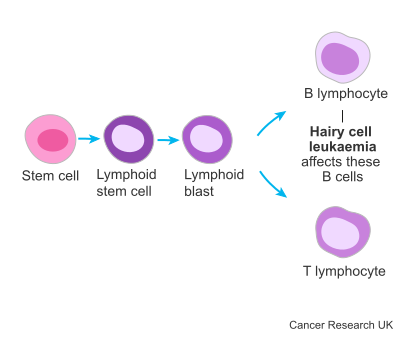
All blood cells start as the same type of cell, called a stem cell. The stem cells then develop into:
myeloid stem cells become white blood cells called monocytes and neutrophils (granulocyte), red blood cells and platelets
lymphoid stem cells, which become white blood cells called lymphocytes
The diagram below helps to explain this.

The type of chronic leukaemia you have tells you which type of white blood cell has become cancerous. In hairy cell leukaemia, it is the white cells called B lymphocytes that become cancerous.
There are several different types of white cells in the blood. There are more of some types than others. They are an important part of the immune system, helping the body to fight infection. These blood cells can be made very quickly and generally have a short life. Some only live for a few hours, others for a few days.
Red blood cells carry oxygen from the lungs around the body to the tissues. They give the blood its red colour.
Platelets are very important in blood clotting. They clump together to form a plug if bleeding occurs. Then they release other chemicals that help the blood to clot and the blood vessel to be repaired.
Leukaemia can affect your blood and other areas of your body.
White blood cells help fight infection. If your body makes a lot of abnormal white blood cells, they can prevent normal healthy cells from developing. So you are more likely to get infections and may find it difficult to get rid of them.
Too many white blood cells can overcrowd the bone marrow. So there isn't enough space to make other types of blood cells. This can cause a lower than normal number of red blood cells and platelets.
Having too few red blood cells is called anaemia. It can cause you to feel tired and breathless.
Platelets are blood cells that help the blood to clot. If you don’t have enough platelets you can have bleeding problems such as nosebleeds and bruising.
Abnormal white blood cells can build up in parts of your body such as the spleen, lymph nodes and liver making them bigger.
This can make your tummy (abdomen) swell and feel uncomfortable. The leukaemia cells can also spread to the brain in some people.
The two most common types of chronic leukaemia are:
chronic myeloid leukaemia (CML)
chronic lymphocytic leukaemia (CLL)
The difference is the type of white blood cell that has become cancerous.
Hairy cell leukaemia variant (HCL-V) is a separate type of leukaemia. It is different to the typical or classic hairy cell leukaemia.
In CML, the abnormal cells develop from the myeloid blood stem cells. So the cancerous white blood cells are myelocytes. These cells are sometimes called granulocytes.
In CLL the abnormal cells develop from the lymphoid blood stem cells. The cancerous white blood cells are B lymphocytes, also called B cells.
Doctors used to think HCL-V was a rare type of hairy cell leukaemia. But they now consider it to be a completely different condition.
HCL-V and classic hairy cell leukaemia are both chronic leukaemias. They develop slowly from cells called B lymphocytes.
HCL-V cells are usually smaller than classic hairy leukaemia cells. They have different genetic material in the cells. And they respond differently to treatment.
Hairy cell leukaemia is very rare. It is estimated that around 230 people are diagnosed with hairy cell leukaemia in the UK each year. It is more common in men than women.
Read about risk factors for hairy cell leukaemia
Symptoms of hairy cell leukaemia can include frequent infections and swelling of the tummy. Some people don't have symptoms.
We don’t know what causes hairy cell leukaemia. But there are some factors that might increase your risk of developing it.
You usually start by seeing your GP and they might refer you to a specialist and organise tests. Find out more about tests and screening for hairy cell leukaemia.
Your doctor can usually diagnose hairy cell leukaemia by doing a number of checks on your blood sample cells. These are called immunophenotyping tests. You then may have other tests to find out more about the type of leukaemia you have.
Hairy cell leukaemia variant (HCL-V) is a separate type of leukaemia from the typical or classic hairy cell leukaemia.
The stage means how far your leukaemia has developed. There is no widely agreed staging system for hairy cell leukaemia.
There are different treatments for hairy cell leukaemia. You might have one treatment, or a combination. The main treatment is chemotherapy.
Researchers around the world are looking into the causes and treatment of hairy cell leukaemia.
Last reviewed: 22 Oct 2024
Next review due: 22 Oct 2027



