Breathing problems with cancer
Many people with cancer have shortness of breath at some time during their illness. More than 75 out of every 100 people (more than 75%) with experience breathlessness. This figure is higher for people who have lung cancer.
Difficulty breathing is also called dyspnoea (pronounced dis-nee-a).
If you have existing problems with breathlessness and it gets worse, your healthcare team will want to know. Contact the advice line at your hospital.
New shortness of breath when you are resting can be an emergency.
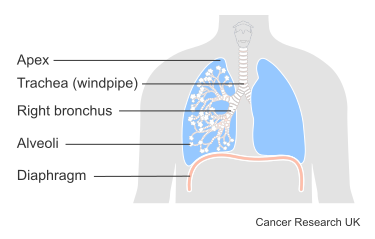
Our lungs provide oxygen to our body and remove the waste product carbon dioxide. We need oxygen to do our everyday activities. For example, moving around.
When we breathe in through our nose or mouth we draw air into our lungs through the windpipe.
The windpipe divides into 2 airways. These are called the right and left bronchi. One goes to each lung. These further divide into smaller tubes and at the end of these are small air filled sacs called alveoli.
It is here that the oxygen we breathe in passes into the bloodstream. The alveoli also take the waste gas, called carbon dioxide, from the blood so that we can breathe it out.
When we breathe normally, we use the diaphragm (pronounced dye-a-fram) and the muscles around our ribs.
The diaphragm is a large sheet of muscle that separates your chest cavity from your tummy (abdomen). When we breathe in, it tightens up and pulls downwards, making more space in the chest.
The muscles around the ribs also make more space by pulling the ribcage up and out. The lungs expand to fill the space and air rushes into them.
If you are short of breath, you may also be using muscles in your shoulders and upper chest to help you breathe. You normally use these muscles for heavy lifting and they tire very easily. So breathing in this way can make you more out of breath and drain your energy.
The symptoms of breathlessness can include:
difficulty catching your breath
noisy breathing
very fast, shallow breaths
an increase in your pulse rate
wheezing
chest pain
skin that looks pale and slightly blue, especially around your mouth
cold, clammy skin
using your shoulders and the muscles in your upper chest to help you breathe
anxiety or panicky feelings
At first you might become breathless when you are walking or climbing the stairs. In time you might be breathless even when resting and sitting down.
Talk to your doctor if you are worried about your symptoms, or if they are getting worse.
People with cancer can become breathless for many different reasons. For example, side effects of some cancer drug treatments or some symptoms of advanced cancer such as fluid on the lungs (pleural effusion).
Breathing problems are more likely with:
lung cancer
cancer that has spread to the lung )
Other types of cancer can also cause breathing difficulties.
Read about the causes of breathlessness
Being short of breath can be very uncomfortable and frightening. It can make you feel very anxious and panicky, which often makes it even harder to catch your breath. Once your doctor finds out the cause of your breathing problems there is usually a type of treatment to help relieve your symptoms.
Read about fear, anxiety and panic
Being short of breath can have a big impact on how much you can do each day.
You may be too breathless to shower, cook, or even take a mouthful of food. People with lung cancer sometimes say they can't do the most basic daily tasks and find not being able to get their breath very frightening.
You might be worried that your breathlessness means your cancer is getting worse. This might be true in some situations, but this is not always the case. It is very likely that your doctor can give you some treatment to help your breathing.
Last reviewed: 10 Aug 2026
Next review due: 10 Aug 2029
Breathlessness can be caused by cancer or its treatment. Other medical conditions can also cause breathlessness.
The type of treatment you need depends on the cause of your breathlessness. Find out about treating breathlessness, including treating fluid on the lung (pleural effusion).
Search for the cancer type you want to find out about. Each section has detailed information about symptoms, diagnosis, treatment, research and coping with cancer.
Coping with cancer can be difficult. There is help and support available. Find out about the emotional, physical and practical effects of cancer and how to manage them.
Shortness of breath is a common problem for people with cancer. The treatment you need depends on the cause of your breathlessness. There are a number of things you can do to help yourself.



