Chronic lymphocytic leukaemia (CLL)
Many symptoms of CLL are vague. You may feel as if you had the flu.
Symptoms of CLL include:
swollen or tummy (abdominal) discomfort from an enlarged spleen
weight loss
infections that will not get better
feeling tired
bleeding or bruising
bone pain or night sweats
In CLL, you can have swollen glands (). The swollen glands are most often in your neck or under your arms. You may also get an enlarged . The spleen is an organ on the left of your body, just under your ribs. If your spleen becomes much bigger than normal, it can be uncomfortable or painful. Your doctor may be able to feel that the spleen is enlarged.
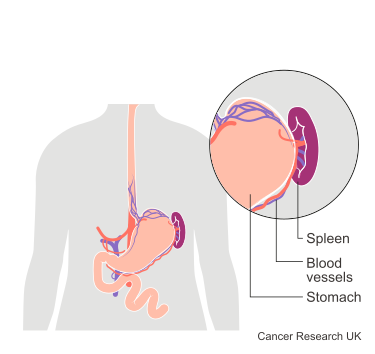
CLL itself uses up energy that your body would otherwise use or store. So you may lose weight, even if you eat normally. Rarely, an enlarged spleen may also increase the weight loss by squashing your stomach and making you feel full more quickly than usual. You may then eat less than normal.
As the number of abnormal white blood cells rise, you may pick up infections more easily. This is because the abnormal white blood cells cannot fight off infection as well as healthy ones.
The extra white blood cells take up more space in the as their numbers grow. So there is not enough room for platelets to be made. Platelets help to clot the blood, so you may have nosebleeds, unexplained bruising or unusually heavy periods. This is generally a later symptom of CLL, rather than an earlier one. Often bleeding and bruising happens in people who have a bleeding condition as well as CLL.
You might feel more tired than normal, even if you're getting a good night's sleep. This could be because you do not have enough red blood cells (anaemia).
The lack of space in the bone marrow also interferes with the production of red blood cells. These normally help to carry oxygen around the body. If you do not have enough red blood cells, this is known as anaemia. You may feel breathless and tired. Anaemia is generally a later symptom of CLL.
Some people whose CLL has changed (transformed) into a disease have bone pain and night sweats. Bone pain happens because there are too many leukaemia cells in the bone marrow, causing pressure on nerves and causing pain. The exact cause of the night sweats is unknown.
Last reviewed: 15 Aug 2024
Next review due: 15 Aug 2027
Chronic lymphocytic leukaemia (CLL) is a cancer that affects the white blood cells called lymphocytes. It tends to develop very slowly.
We don’t know what causes most cases of CLL. But there are some factors that may increase your risk of developing it.
You usually start by seeing your GP and they might refer you to a specialist and organise tests. Find out more about tests and screening for CLL.
CLL affects the white blood cells called lymphocytes. It tends to develop very slowly. Find out about the treatment you might need and much more.



