Stomach cancer
The stomach is part of the . It's in the upper left side of the tummy (abdomen). The top of the stomach joins the bottom of the food pipe (oesophagus) and the other end is joined to the bowel.
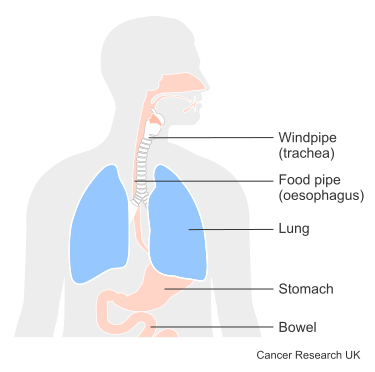
The stomach is a muscular bag that has three main parts. They are the:
top (fundus)
middle (body)
bottom (antrum or pylorus)
The cardia is the entrance to the stomach and the pylorus is the exit into the duodenum (top part of the small bowel).
At each end of the stomach there is a valve called a sphincter. These valves control the movement of food through the digestive system.
They are the:
cardiac sphincter - at the top joining the oesophagus to the stomach
pyloric sphincter - which is at the bottom joining the stomach to the duodenum (the top part of the small bowel)

Food passes from the oesophagus into the stomach. The stomach then stores the food and breaks it down (digests it) so our body can absorb it. It does this by producing gastric juice which mixes with the food, so it is easy to digest.
Glands in the inner lining of the stomach make gastric juice. It contains stomach acid, water and a protein called pepsin. It begins to flow as soon as we smell something. The stomach muscle contracts, churning the food with the juice, which changes it to a thick liquid. It takes a couple of hours for this to happen. Then the liquid moves into the bowel where the body absorbs it.
The stomach continues to produce gastric juice and hormones, even when it’s empty. It also produces a thick mucus to protect the lining of the stomach from the acid and pepsin.
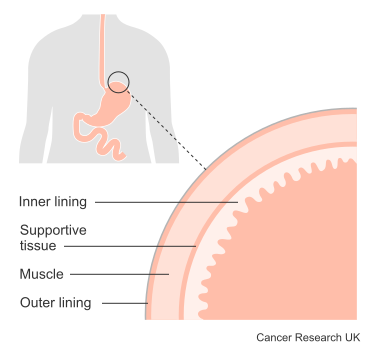
The stomach wall is made up of a number of layers. These are:
outer lining
muscle layer
supportive tissue
inner lining
Cancer can start in any part of the stomach wall. Your treatment depends on where in the stomach the cancer starts and what type of cell it starts in.
Most stomach cancers start in the gland cells in the inner stomach lining. These are called adenocarcinomas.
Some cancers can start in the cells that help food move through the digestive system. These are called gastrointestinal stromal tumours (GIST) and are a type of soft tissue sarcoma.
Some cancers can also start in immune system cells in the stomach. These are called non-Hodgkin lymphoma. MALT lymphoma of the stomach is often linked to a chronic stomach infection caused by the bacteria Helicobacter pylori.
Neuroendocrine cancers (NECs) start in the hormone cells in the stomach.
Find out more about the different types of stomach cancer
Around 6,600 people are diagnosed with stomach cancer in the UK each year. The number of people in the UK diagnosed with stomach cancer has fallen since the early 1990s.
Stomach cancer is more common in older people. Around 50 out of 100 cases (around 50%) occur in people aged 75 or over.
It is more common in men than women.
Many stomach cancers are linked to lifestyle or environmental factors, including diet. Stomach cancer is linked with a bacteria that lives in the stomach called Helicobacter pylori (H. pylori). But not everyone with H. pylori will develop stomach cancer.
Last reviewed: 17 Feb 2025
Next review due: 17 Feb 2028
Factors that increase the risk of stomach cancer include being older, smoking and a type of infection called helicobacter pylori.
There is no national screening programme for stomach cancer in the UK. But you may have tests or treatment if you are at an increased risk of developing it.
The stage of a cancer tells you how big it is and how far it’s spread. It helps your doctor decide which treatment you need.
The type of stomach cancer you have depends on what type of cell it started in. The grade tells you how abnormal the cells look under a microscope. Adenocarcinoma is the most common type of stomach cancer.
Stomach cancer is cancer that starts anywhere inside the stomach or the stomach wall. It’s also called gastric cancer.

About Cancer generously supported by Dangoor Education since 2010. Learn more about Dangoor Education


Search our clinical trials database for all cancer trials and studies recruiting in the UK.

Connect with other people affected by cancer and share your experiences.

Questions about cancer? Call freephone 0808 800 40 40 from 9 to 5 - Monday to Friday. Alternatively, you can email us.
