Treatment for stomach cancer
Cancer in the top part of your stomach can cause a blockage. This stops food from going into your stomach. It can cause sickness and pain and makes you feel unwell. Laser therapy treats advanced cancer by burning away the cancer cells. This reduces the pain and sickness. You might also be able to swallow food and drink more easily.
Laser treatment is used more as a treatment for oesophageal cancer or cancer of the gastro oesophageal junction. But it might be used for stomach cancer in some situations.
You have this treatment in an endoscopy department that specialises in laser therapy. It usually takes about 30 minutes.
Your doctor or specialist nurse explains what happens and how they do the treatment. They then ask you to sign a consent form saying that you agree to have the procedure. Do ask them any questions that you have. Tell them about any medicines you’re taking.
You shouldn’t eat or drink anything except water for 4 to 6 hours beforehand. You stop drinking water 2 hours before the procedure.
A nurse puts a small tube called a cannula into a vein in the back of your hand. They go with you to the endoscopy or x-ray department.
The nurse or doctor injects medicine to make you sleepy into the tube in your hand. Or you might have a which means you are asleep during the treatment.
While you’re very sleepy or asleep your doctor puts a long flexible tube called an endoscope into your mouth and down into your food pipe. The tube has a light and a small camera on the end so your doctor can see the blockage.
They position the end of the tube close to the tumour and direct a laser at it. A laser is a very powerful beam of light that heats up the cancer cells and burns them away. This takes a few minutes.
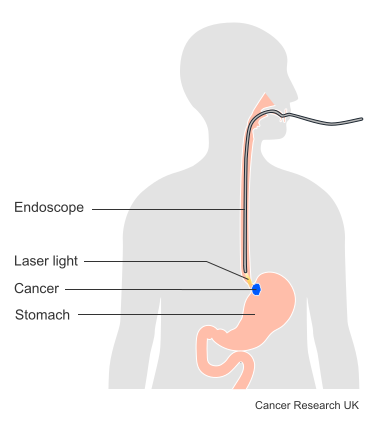
Your doctor then takes the endoscopy tube out.
You stay in the endoscopy or x-ray department until the sedative or anaesthetic wears off. You might wear an oxygen mask for a while. A nurse then takes you back to your ward. You might be able to go home that evening or you might need to stay overnight.
You can’t eat or drink for the first 4 to 6 hours. Your nurse tells you when you can start drinking. Then you can build up to eating soft or normal foods again. A dietitian can advise you on what to eat.
Laser treatment can cause swelling. This can make it difficult to swallow for the first few days.
Read more about eating problems
You might have a sore throat. Your stomach area might also feel sore. Taking painkillers for a few days helps.
Tell your doctor or endoscopy department if your pain doesn't get better.
You might have some slight bleeding in the stomach. You could also cough up small pieces of tumour and have an unpleasant taste in your mouth. This usually gets better over a few days.
Your nurse will give you mouthwashes. Tell your nurse if you cough up blood.
Damage to the food pipe can tear it or make a hole (perforation). This is very rare.
In the first 3 days after having treatment, tell your doctor or nurse straight away if you:
have difficulty breathing
get severe chest pain
vomit blood
can’t keep food or drinks down
You might be able to have laser treatment again if the tumour grows back. Or your doctor might suggest other treatments to help relieve your symptoms.
Last reviewed: 28 Apr 2025
Next review due: 28 Apr 2028
Advanced stomach cancer means that a cancer that began in the stomach has spread to at least one other part of the body, such as the liver or lungs.
Coping with cancer can be difficult. Help and support is available. There are things you can do, people to help and ways to cope with a diagnosis of stomach cancer.
Stomach cancer and its treatment can cause problems with eating. Dietitians can help you cope with diet problems and suggest the best foods to eat.
Your treatment depends on whereabouts your cancer is in the stomach. How big it is, whether it has spread anywhere else in your body and your general health.



