Leptomeningeal metastases
Doctors are still looking which treatments enter the cerebrospinal fluid (CSF) best. They also want to know:
how well they treat leptomeningeal metastases
what their side effects are
The CSF is a clear fluid that surrounds the brain and spinal cord. The CSF supports and protects the brain and the spinal cord.
Below is an overview of some treatments you might have. Treatment will depend on where the cancer started (primary cancer).
Chemotherapy uses anti-cancer drugs to kill cancer cells. It works throughout your body (systemic treatment).
You might have chemotherapy in one or more of the following ways for leptomeningeal metastases:
injected into a vein (intravenous)
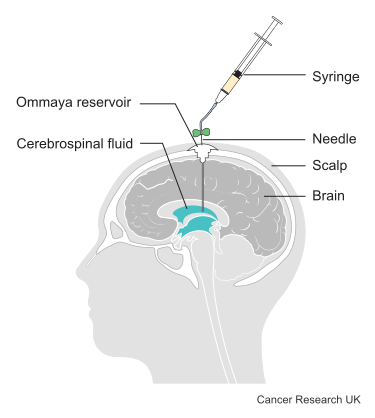
injected into the spinal fluid. You have this through a or a ventricular access device. The device is called an Ommaya reservoir. Having treatment this way is also called intrathecal chemotherapy
Ventricular access devices allow chemotherapy to reach the brain's fluid-filled spaces. These spaces are called ventricles. So, it goes straight into the cerebrospinal fluid (CSF).
Find out about having a lumbar puncture
The most commonly used chemotherapy drugs include:
methotrexate
cytarabine
thiotepa
The drug you have depends on your type of primary cancer.
Find out about the drug you are having from our A to Z list
Radiotherapy is the use of radiation, usually x-rays, to treat cancer cells.
Radiotherapy to the brain can help to reduce symptoms. This is usually radiotherapy to the whole brain. Some people might have targeted radiotherapy to one area of the brain.
Read more about radiotherapy to the brain
Targeted cancer drugs work by targeting the differences in cancer cells that help them to survive and grow. Researchers have been using targeted drugs in to treat leptomeningeal metastases. Some of the drugs include:
trastuzumab for HER2-postive breast cancer
ceritinib, pemetrexed and osimertinib for non-small cell lung cancer (NSCLC)
Talk to your doctor if you want to know more about targeted drugs for your type of primary cancer.
Find out more about targeted cancer drugs and how they work
Immunotherapy uses the immune system to fight cancer. Researchers have been looking at immunotherapy for leptomeningeal metastases. Some of the drugs they have used include:
nivolumab for melanoma
pembrolizumab for several types of cancers
Find out more about immunotherapy and how it works
Coping with leptomeningeal metastases can be difficult. Your doctor and cancer nurse specialist are your best source of information. Ask them whether there are:
any cancer support groups in your area
local groups that offer practical help
It may help to speak to others in a similar situation.
You can also call the Cancer Research UK information nurses on freephone 0808 800 4040. The lines are open from 9am to 5pm, Monday to Friday.
If you want to share experiences online, you could use Cancer Chat, our online forum.
It can help to talk to those close to you. Some people decide that they would like to try counselling.
Last reviewed: 21 Oct 2026
Next review due: 21 Oct 2029
Coping with secondary cancer can be very difficult. Getting the help and support you and your family need can help.
Treatments can include surgery, radiotherapy and drug treatments (such as chemotherapy, hormone therapy or targeted cancer drugs). Find out about treatments and how to cope with side effects.
Coping with cancer can be difficult. There is help and support available. Find out about the emotional, physical and practical effects of cancer and how to manage them.
Leptomeningeal metastases mean cancer cells have spread to one of the membranes that surround the brain.
Search for the cancer type you want to find out about. Each section has detailed information about symptoms, diagnosis, treatment, research and coping with cancer.



