Stages, types and grades of pancreatic cancer
The tests and scans you have when diagnosing your cancer give some information about the stage. But your doctor may not be able to tell you the exact stage of your cancer until after your surgery, if you are able to have it.
Knowing the stage of the cancer helps your doctor decide on the best treatment for you. Doctors may also use the number staging system.
Find out about the number staging system
Tumour (T) describes the size and depth of the tumour (area of cancer).
This is a very early stage pancreatic cancer. It hasn't grown into the deeper layers of tissue within the pancreas. It is uncommon for pancreatic cancer to be diagnosed this early.
This means the cancer is inside the pancreas and is 2cm or less in any direction.
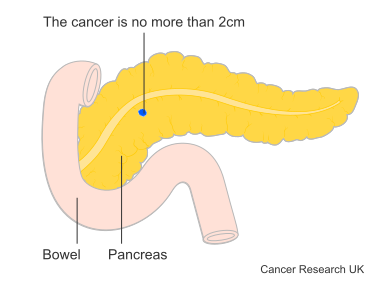
T1 is split into 3 stages:
T1a means the cancer is no more than 0.5cm
T1b means the cancer is more than 0.5cm but less than 1cm
T1c means the cancer is between 1cm and 2cm
This means the cancer is between 2cm and 4cm in any direction.
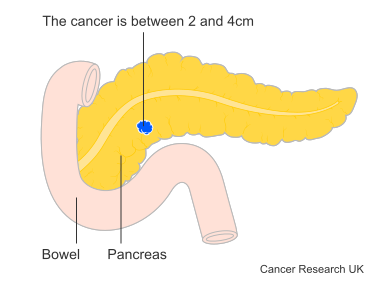
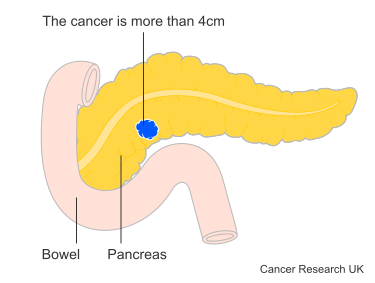
This means the cancer is bigger than 4cm but is still within the pancreas.
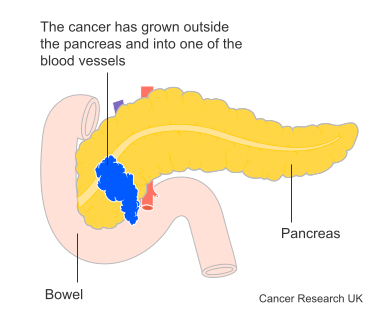
This means the cancer has grown outside the pancreas, into the nearby large blood vessels.
Node (N) describes whether the cancer has spread to the lymph nodes.
N0 means there are no cancer cells in the nearby lymph nodes.
N1 means there are 1 to 3 lymph nodes that contain cancer cells.
N2 means that there is cancer in 4 or more lymph nodes.
Cancer that has spread to the nearby lymph nodes means there is a higher risk that cancer cells may have spread further than the pancreas.
Metastasis (M) describes whether the cancer has spread to a different part of the body.
M0 means the cancer has not spread to other areas of the body such as the liver or lungs.
M1 means the cancer has spread to other areas of the body.
The stage of your cancer helps your doctor to decide which treatment you need. Treatment also depends on:
your type of pancreatic cancer
where the cancer is
if they can remove (resect) the cancer
your general health and level of fitness
The stage of the cancer and these other factors can also give an idea of your outlook (prognosis).
Find out about treatments for pancreatic cancer
This page is due for review. We will update this as soon as possible.
Last reviewed: 31 Jan 2023
Next review due: 31 Jan 2026
Stage means the size of the cancer and whether it has spread. Type means the type of cell it started from. Grade means how abnormal the cells look. Knowing this information helps doctors decide about treatment.
The main treatments for pancreatic cancer include chemotherapy, radiotherapy, surgery and treatment to control symptoms. Find out how your doctor decides which treatment you can have.
Your treatment depends on the position of the cancer in the pancreas, how big it is, the type of pancreatic cancer it is, whether it has spread, if they can remove it with surgery and your general health.
Most people are diagnosed with pancreatic cancer after they become unwell and go to A&E. Others start by seeing their GP. Find out what to expect when you see a GP and tests you might have.
Pancreatic cancer is cancer that starts in the pancreas. The pancreas is a gland that produces digestive juices and hormones.
Pancreatic cancer is cancer that starts in the pancreas. The pancreas is a gland that produces digestive juices and hormones. Find out about symptoms, tests you might have to diagnose it, treatment and about living with it.

About Cancer generously supported by Dangoor Education since 2010. Learn more about Dangoor Education


Search our clinical trials database for all cancer trials and studies recruiting in the UK.

Connect with other people affected by cancer and share your experiences.

Questions about cancer? Call freephone 0808 800 40 40 from 9 to 5 - Monday to Friday. Alternatively, you can email us.
