Pancreatic neuroendocrine cancer
Somatostatinomas are neuroendocrine tumours (NETs) that start in neuroendocrine cells that make the hormone . They develop in the and .
Doctors sometimes group NETs depending on whether they make and release abnormal levels of hormones:
Non functioning NETs make and release normal levels of hormones.
Functioning NETs make and release abnormal levels of hormones.
Somatostatinomas are a type of functioning NET. Most somatostatinomas make large amounts of the hormone somatostatin. This hormone controls the production of other hormones by the pancreas. It also controls how the gut works.
They are also called gastro entero pancreatic neuroendocrine tumours (GEP NETs). Or if they develop in the pancreas, pancreatic neuroendocrine tumours (pNETs).
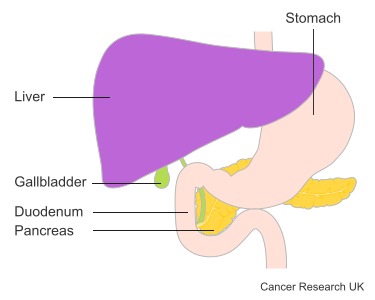
The pancreas and duodenum are part of our .
The pancreas is a large gland that makes digestive juices and hormones. The juices flow down a tube (duct) into the duodenum. The duodenum is the first part of the small bowel.
Another duct called the bile duct joins the duodenum to the liver and the pancreas. The bile duct comes down from the and liver and joins the duodenum right next to the pancreatic duct.
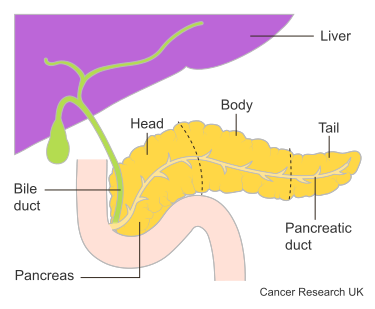
More than 50 out of every 100 somatostatinomas (more than 50%) start in the pancreas. The remaining somatostatinomas usually start in the duodenum.
More rarely somatostatinomas can start in:
the middle part of the small bowel (jejunum)
a tube called the cystic duct that connects the gallbladder to the common bile duct
the ampulla of vater – this is where the bile duct and pancreatic duct join and meet the duodenum
All somatostatinomas are cancers. Some grow slowly and don't spread to other parts of the body. Others can spread (metastasise) to different parts of the body. The most common place to spread to is the liver and .
Somatostatinoma is very rare. Only around 1 person in every 40 million people develop a somatostatinoma every year.
Some people don’t have any symptoms. Or the symptoms can be vague.
You may have symptoms caused by the tumour itself. These can include:
tummy pain
unexplained weight loss
yellowing of the skin and whites of your eyes ()
a bowel blockage ()
bleeding in the bowel or stomach – you may see blood in your vomit or poo
Somatostatinomas make large amounts of the hormone somatostatin. Less often, people have symptoms caused by the increase in the amount of somatostatin in your body. Doctors call this somatostatinoma syndrome. This is more common in pancreatic somatostatinomas than duodenal somatostatinomas.
The symptoms of somatostatinoma syndrome include:
high blood sugars (diabetes)
diarrhoea
gallstones
fatty poo – your poo might be pale and float, and be difficult to flush away
If you have symptoms, you usually see your GP first. They might organise some tests. Your GP will decide if you need to see a specialist. They might refer you to a gastroenterology specialist. These doctors specialise in problems affecting the digestive system.
Somatostatinomas are rare tumours. So your doctor might ask you to have tests that check for other conditions first.
If your doctor suspects cancer, you have tests to check the type of cancer you have. If tests show that you have a gastrinoma, your specialist will refer you to a team of doctors and specialist nurses who have expertise in treating NETs.
Find out more about seeing a specialist
Your GP and specialist arrange tests. Tests also show the size of the cancer and whether it has spread. Some of the tests help your doctor plan your treatment.
Tests you have might include:
a blood test to check the amount of somatostatin
other blood tests to check your general health and check levels of other substances raised by neuroendocrine cancer
– this is to look inside your food pipe, stomach and small intestine and take a
- this combines an ultrasound and endoscopy to look at the inside of your food pipe, stomach, pancreas and bile ducts
to look at abnormal areas in your liver, bile duct, pancreas or gallbladder
radioactive scans – these include or Tektrotyd scans, and gallium PET scans
Read more about the tests to diagnose NETs
The looks at a sample of somatoatatinoma cells under a microscope. They look at:
how abnormal the cancer cells look – doctors call this differentiation
how quickly or slowly they are dividing and growing – this is grading
Somatostatinomas are well differentiated cancers. This means the NET cells look abnormal. But they still have some similarities to normal neuroendocrine cells.
You have tests to find out the size of the somatostatinoma and whether it has spread. This is your stage. Doctors use your stage to plan your treatment.
There are different ways to stage somatostatinomas. Doctors usually use the TNM system or number stages. There are 4 main stages of NETs - stage 1 to stage 4.
The staging also depends on whether the somatostatinoma develops in your pancreas or duodenum.
Read more about staging and grading pancreatic neuroendocrine cancers
We have separate information about staging neuroendocrine cancers that start in the duodenum.
Read more about staging duodenal neuroendocrine cancers
A risk factor is anything that increases your risk of getting a disease.
We don’t know what causes most neuroendocrine cancers. But there are some risks factors that can increase your risk of developing it. Having one of these risk factors doesn’t mean that you will definitely develop a cancer.
The risk factors for pancreatic NETs include:
inherited conditions such as and
having a family history of cancer
Read more about the risks and causes of neuroendocrine cancer
Surgery is the main treatment for somatostatinomas. But surgery is not always possible. Some somatostatinomas might have already started to spread. Or you may not be well enough to have an operation.
You might have other treatments if surgery isn’t an option.
A team of doctors and other professionals discuss the best treatment and care for you. They are called a multidisciplinary team (MDT).
The treatment you have depends on:
where the NET is and its size
how many tumours you have
whether it has spread to other parts of the body
your general health and fitness
the symptoms you have
Your doctor will discuss your treatment. And tell you about its benefits and the possible side effects.
You are likely to have a clinical nurse specialist (CNS). They go to the MDT meetings. They can help answer your questions and support you. They are often your main point of contact throughout your treatment.
Your MDT also consider whether you have MEN 1. This might affect treatment decisions.
Surgery to remove the somatostatinoma is usually the main treatment.
Some of these are major operations and there are risks. But if the aim is to try to cure the NET, you might feel it is worth some risks. Talk to your doctor about the risks and benefits of your surgery.
There are different types of surgery. The type of operation you have depends on several factors. These include:
where the cancer is in your pancreas or duodenum
the size of your cancer
There are different ways of doing the operation:
Open surgery means the surgeon makes a large cut (incision) in your tummy.
Keyhole or laparoscopic surgery means your surgeon makes some small cuts in your tummy. They put a and other small instruments though these to remove the cancer. It is also called minimally invasive surgery.
You often also have an during your operation to check for other tumours.
How you feel and how quickly you recover depends on the type of surgery you have. Your surgeon will be able to tell you more about what to expect.
You usually have follow up appointments after treatment. This is to check how you are and see whether you have any problems or worries.
You might also have tests on some visits. The tests might include:
blood tests
an MRI or CT scan
How often you see your doctor depends on:
the grade of your NET
whether it has spread to other parts of the body
what treatment you have had
any side effects you might have
It is important you contact your doctors if you have any worrying symptoms between appointments.
The best person to talk to you about your outlook () is your doctor. Not everyone wants to know. People cope differently with cancer and want different information.
Survival depends on many factors. So no one can tell you exactly how long you will live. Your doctor might be able to give you some guide, based on their knowledge and experience.
Your prognosis will depend on the type of NET you have and what it is.
You might have physical changes to your body because of your cancer or the treatment. These changes can be hard to cope with and can affect the way you feel about yourself. It can help to talk to friends and family. Or join a support group to meet people in a similar situation.
We have a discussion forum called Cancer Chat. It is a place for anyone affected by cancer. You can share experiences, stories and information with other people with cancer.
You might need practical advice about benefits or financial help. There is help and support available. There are also organisations to support and provide information to people affected by neuroendocrine cancer.
We have information about living and coping with a neuroendocrine cancer
Last reviewed: 11 Mar 2025
Next review due: 11 Mar 2028
There are different types of neuroendocrine cancer that develop in the pancreas. Pancreatic neuroendocrine tumours (NETs) include insulinoma, gastrinoma, somatostatinoma, glucagonoma and VIPoma.
Grade means how quickly or slowly the cancer cells are dividing and growing. The stage of a neuroendocrine cancer tells you its size and whether it has spread. There are many different types.
Treatment depends on the type of neuroendocrine cancer you have, where it is, its size and whether it has spread (the stage).
Survival (prognosis) depends on several factors. This includes your type of neuroendocrine cancer, where it is in your body, and whether it has spread.
Practical and emotional support is available to help you cope with neuroendocrine cancer.
Neuroendocrine cancers develop in cells of the neuroendocrine system. They can develop in different parts of the body including the lungs, stomach, pancreas and bowel.

About Cancer generously supported by Dangoor Education since 2010. Learn more about Dangoor Education


Search our clinical trials database for all cancer trials and studies recruiting in the UK.

Connect with other people affected by cancer and share your experiences.

Questions about cancer? Call freephone 0808 800 40 40 from 9 to 5 - Monday to Friday. Alternatively, you can email us.