Treatment for kidney cancer
Renal artery embolisation is where the blood supply to the kidney is blocked. Your doctor might stop the blood supply going just to the cancer or the whole kidney.
Your blood carries oxygen and nutrients to the cancer so that it can keep growing. If your doctor stops the blood supply to the cancer its growth may be slowed and your symptoms may improve.
Renal artery embolisation is a minor procedure done in the x-ray (radiology) department. You stay in hospital for a couple of nights afterwards.
You might have a renal artery embolisation if:
you’re not well enough for surgery to remove all or part of your kidney
your cancer is too large for surgery and you are getting symptoms like pain or bleeding
Renal artery embolisation does not cure the cancer as the doctors have not removed it. There is still a chance that cancer cells will spread to other parts of the body in the future. But it can help to reduce symptoms.
The hospital will tell you how to prepare for the procedure. They usually arrange for you to have some blood tests. And tell you if you need to stop taking any of your normal medicines before the procedure, such as blood thinning medicines. They check if you have any allergies, including to the dye that they use.
They also tell you when to stop eating and drinking before the procedure.
Speak to your doctor, nurse specialist (CNS) or the department where you are having the procedure if there are any changes to your health or medicines before the embolisation. Or if you have any questions or concerns
You normally lie on your back on an x-ray table for the procedure. Your doctor (radiologist) or radiology nurse may give you some medicine to make you feel sleepy. This is called sedation. You have it through a small tube in your vein (a cannula).
The radiology nurse stays with you throughout the procedure. They make sure you are comfortable and measure your blood pressure, breathing rate and oxygen levels.
Your doctor injects local anaesthetic into the skin at the top of your leg (groin) to make the area go numb. They put a thin plastic tube (catheter) through your skin and into a blood vessel in your groin. They move the catheter up until it reaches the artery that carries blood to the kidney. They inject a dye into the catheter which shows up the arteries on x-ray. This shows the doctor when they are in the right place.
Your doctor blocks the blood supply by injecting very thin metal coils into the catheter. Or they might inject a liquid. There are different types of liquid they can use to block or damage the blood vessel. This stops the blood supply getting to the cancer.
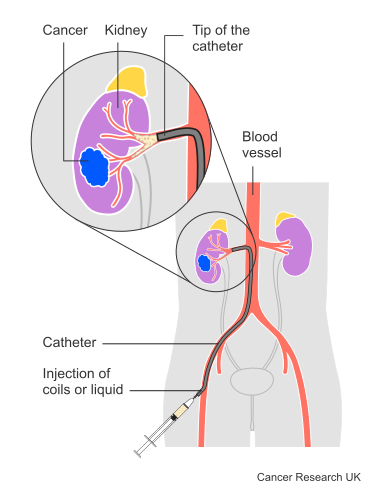
When your doctor has finished they remove the catheter. They may place pressure on the groin to close over the tiny hole in the blood vessel or use a small internal plug to seal it.
They put a dressing over the tiny wound in your groin and you go back to the ward to rest.
On the ward the nurses monitor you closely. They regularly check your blood pressure and make sure there is no bleeding. You need to rest for at least 4 hours.
You may have some pain for a day or two. But your doctor or nurse will give you painkillers.
You may have a patient controlled analgesia (PCA) machine. This injects a small amount of painkiller into your cannula when you press a button. Your nurses show you how to use this. They also monitor how much of the painkiller you are using.
For a few days afterwards you may have some side effects. This is caused by the breakdown of the kidney cancer cells. This can cause a high temperature (fever) and sickness. You might feel like you have the flu. You can usually take paracetamol every 6 hours until the side effects improve. Your doctor or nurse will tell you how to manage any side effects.
They will also talk to you about how soon you can go back to work after the procedure. And, if you had to stop some of your normal medicines before the procedure, when to start taking them again.
Last reviewed: 29 Jan 2024
Next review due: 29 Jan 2027
Treatments for kidney cancer include surgery, cryotherapy, radiofrequency ablation and radiotherapy. You might have different treatment for advanced kidney cancer.
Your doctor and other health professionals meet to discuss the treatments suitable for you. This depends on factors such as the size of the cancer and if it has spread. Treatments include surgery, freezing or heating the cancer and targeted and immunotherapy drugs.
You have regular appointments at the hospital after treatment for kidney cancer. This is called follow up. You may also have CT scans and blood tests. How often you have follow ups depends on what treatment you've had and the chance of the cancer coming back.
Coping with kidney cancer is difficult. There are specialists who can help you and your family and friends cope. There are also things you can do.
Researchers are currently looking at ways to improve the diagnosis and treatment of kidney cancer. They are also looking to see if there are better ways to check if cancer treatments are working.
Kidney cancer is cancer that starts in the kidneys. The kidneys filter waste products out of your blood as urine. Kidney cancer develops when abnormal cells in either of the kidneys start to divide and grow in an uncontrolled way.



