
About Cancer
Eye cancer in when abnormal cells in the eye start to divide and grow in an uncontrolled way. Cancer can start in different parts of the eye.
Find out more about cancer and how it starts
There are different parts of the eye, and some of these are more likely to develop cancer than others.
There are two main areas to the eye – the front of the eye and the back.
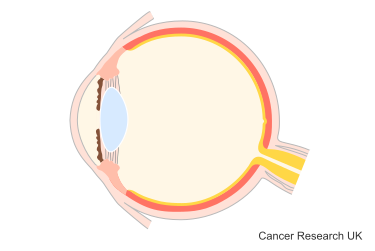
The eyeball has three layers sandwiched together:
the outer white fibrous layer, the sclera
the middle blood rich layer, the choroid
the inner coloured (pigmented) layer, the retina
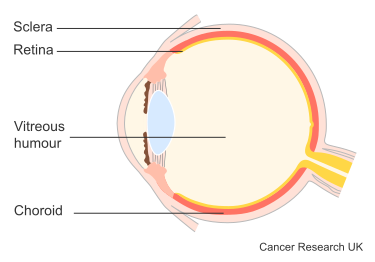
The inside of the eyeball is filled with a clear jelly like substance called vitreous humour. This, and the fibrous white sclera help to keep the shape of your eyeball.
The blood vessels that run through the choroid carry food and oxygen to the cells of the eye.
The retina lines the inside of the eyeball. This is the nerve layer of the eye. The cells of the retina react to light and send messages to the brain through the optic nerve. This makes it possible for you to see.
The front of the eye is the bit you can see.
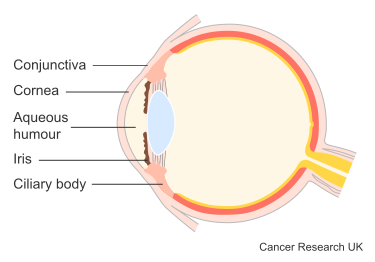
A thin, clear, moist membrane called the conjunctiva coats the inner surfaces of the eyelids and the outer surface of the eye.
The three layers of the eyeball continue round but they make up different structures in the front of the eye. The fibrous sclera becomes clear, instead of white. This part of it is called the cornea and covers your pupil and iris.
The middle choroid layer becomes the iris and the ciliary body. The iris is the coloured part around your pupil that covers the lens of the eye. It controls how much light enters your eye.
The ciliary body lies just behind the iris. It has two functions. It is the muscle that controls the focusing of the eye. And it makes the clear fluid (aqueous humour) that fills and shapes the front of your eye.
The middle layer of the eye is called the uvea. This includes the:
iris and ciliary body at the front (anterior) of the eye
choroid at the back (posterior) of the eye
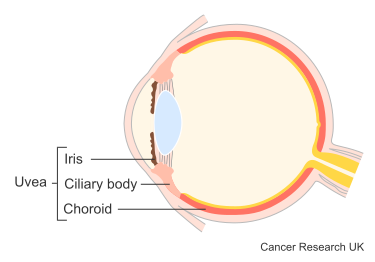
In the UK, the choroid in the uveal layer is the most common area for eye cancers to start.
The most common type of cancer that affects the uvea is melanoma. Melanoma develops in cells called melanocytes, which are found in our skin, lips, and the lining of organs such as the eye. You may hear your doctor talk about uveal, iris, ciliary body or choroidal melanomas.
The orbit is the eye socket that contains the tissues surrounding the eyeball. These include:
muscles that allow the eyeball to move in different directions
nerves attached to the eye
fat that cushions the eyeball
Cancers in this part of the eye are called orbital cancers. They are very rare.
Structures around the eye include the eyelids and tear glands (lacrimal glands). They are called adnexal structures. So doctors call cancers that develop in these tissues adnexal cancers.
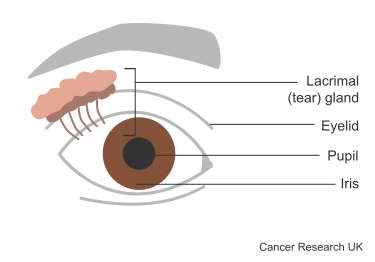
Cancer that starts in the eye is called primary eye cancer. This section is about primary eye cancer.
Sometimes cancer can spread to the eye from another part of the body. This is called secondary eye cancer. In women this is most likely to happen with breast cancer, and in men this is most likely to happen in lung cancer.
If your cancer has spread to the eye, go to information about your primary cancer.
Read about more information on a different cancer type
Around 940 people are diagnosed with eye cancer in the UK every year.
Overall, the risk of developing eye cancer increases as you get older. Around 25 out of 100 people (around 25%) diagnosed with eye cancer in the UK are aged 75 and over. The exception to this is a type called retinoblastoma. This usually affects children under the age of 5.
Read about the risks and causes of eye cancer
Eye cancer symptoms are not always obvious. It might be picked up during a routine eye test. Symptoms include changes to your vision or a change in the appearance of the eye.
We don't know what causes most eye cancers. But there are some factors that can increase your risk of developing it including being older or having certain medical conditions.
Your GP or optometrist will ask you about your symptoms and they might examine you. They may arrange tests or a referral to a specialist. Learn why there is no national screening programme for eye cancer in the UK.
You usually have a number of tests to diagnose eye cancer. The tests you might have include an eye examination and a test to look at the blood vessels in your eye (fluorescein angiogram).
Your treatment depends on several factors. These include what type of eye cancer you have, how big it is and whether it has spread (the stage). It also depends on your general health. Treatments include surgery, radiotherapy and cancer drugs.
Research is looking into diagnosing and treating eye cancer. Talk to your specialist about any trials you might be able to take part in.
Last reviewed: 14 Nov 2024
Next review due: 14 Nov 2027



