Cancer treatment for overseas visitors
People from overseas might be able to have some treatment for free in certain situations. In England, Wales and Scotland, free healthcare is with the National Health Service (NHS). In Northern Ireland, this is called Health and Social Care (HSC). When we use the term NHS on this page, we are referring to free healthcare across the UK nations.
The rules about who can and can’t have free treatment are quite complicated. This information is only a guide, as we cannot cover every situation.
Most of this information is about the law in England. There are different charging regulations in Wales, Scotland and Northern Ireland. But there are a lot of similarities.
There is also information online depending on where you are in the UK:
NHS information for overseas visitors (England)
HSCNI Online (Northern Ireland)
Also, do consider whether you need a visa to visit the UK.
Visit the GOV.UK website to find out about visas when visiting the UK
If you are visiting the UK and need urgent treatment, you can
call an ambulance (999)
or go to a hospital accident and emergency (A&E) department
All the treatment you get in accident and emergency departments is free.
In England, Scotland and Wales, you can get non urgent advice about healthcare by calling 111, or accessing 111 services online.
There are some services in the UK that are free at the point of use for all people.
These services include:
accident and emergency (A&E) services - this includes everything provided in an A&E department of an NHS hospital. This doesn’t include emergency services if you then become a patient on a ward (inpatient) or if you need an appointment as an outpatient
some family planning services
diagnosis and treatment of some infectious diseases
diagnosis and treatment of sexually transmitted infections
palliative care services - if they are provided by a charity or a community group outside of the NHS
non urgent advice and care provided by NHS 111 advice lines (in England, Scotland and Wales)
treatment for a physical or mental condition caused by torture, female genital mutilation, domestic violence or sexual violence - except where you have travelled to the UK for the purpose of getting this treatment
services in GP surgeries
Treatment for cancer does not fall into these categories. You may have to pay for treatment such as cancer drug treatment, radiotherapy and surgery.
There are some people who are also exempt from charges. This includes charges for cancer treatment.
You are exempt if you:
have refugee status - this applies to you and your dependents such as your children
have applied for asylum (asylum seeker) - this applies to you and your dependents
are receiving support from the Home Office or from a local authority and your application for asylum status has been refused
are a child looked after by a local authority
are a victim, or suspected victim, of modern slavery or human trafficking
are receiving treatment under a court order
are in prison or an immigration removal centre
There are also exemptions for UK Government employees and war pensioners. These include UK armed forces members and those working in employment overseas that is financed in part by the UK Government.
For more information visit the NHS website for England
Generally, you can only have NHS treatment if you are a resident of the UK. An overseas visitor is any person who is not ‘ordinarily resident’ in the UK.
You are not ordinarily resident in the UK just because you:
have British nationality
have a British passport
are registered with a GP in the UK
have an NHS number
own property in the UK
have paid (or are currently paying) National Insurance contributions and taxes in the UK
A member of the Overseas Visitors Team can look at your situation and explain what healthcare services you can have for free.
Some people who are not ordinarily resident in the UK will not need to pay (are exempt from charges). For example, if you are:
insured in an EEA country
from a country that has a reciprocal healthcare agreement with the UK
in the UK on a visa and pay an immigration charge (called the health surcharge)
There is more information about these examples below.
UK citizens who return to the UK on a settled basis will be classed as ordinarily resident. This means you will be eligible for free NHS care immediately. This includes cancer care.
You might be asked for proof that you are returning to settle in the UK.
The EEA is made up of the 27 member states of the European Union (EU) as well as Iceland, Lichtenstein and Norway.
The countries in the EU are:
Austria
Belgium
Bulgaria
Croatia
Republic of Cyprus (not Northern Cyprus)
Czech Republic
Denmark
Estonia
Finland
France
Germany
Greece
Hungary
Ireland
Italy
Latvia
Lithuania
Luxembourg
Malta
Netherlands
Poland
Portugal
Romania
Slovakia
Slovenia
Spain
Sweden
Switzerland has a separate agreement with the EU. This means it matches the EU regulations about charging for healthcare.
If you’re an overseas visitor living in an EEA state, you may be insured under your public healthcare insurance system from your home country. This means you won’t be charged for medically necessary treatment on the NHS if you have your relevant EEA healthcare document.
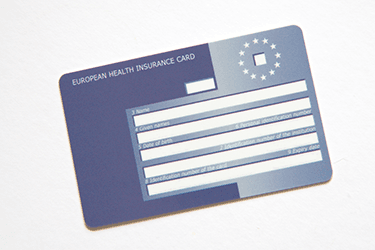
How you become insured can change from country to country. But you should be entitled to hold a European Health Insurance Card (EHIC) or Provisional Replacement Certificate (PRA) from the country you are insured in.
Your EHIC card should look like this.
If you live in a European Economic Area country or Switzerland, you may be able to have treatment in the UK if it’s not available where you live. You need a special form (S2 or DA1) which you get from your own doctor. Most people have the right to free health care in the UK if you have a UK issued S1 form which is registered in another state in the EEA, or Switzerland
This is for people who receive:
an exportable UK pension
contribution based Employment Support Allowance
another exportable benefit
You can find out more about the S2 here
You can read more about the S1 here
You might be coming to the UK for 6 months. If this is the case, you need to pay an immigration charge (called the health surcharge). You send this fee to the Home Office alongside your immigration application fee.
People are generally able to receive the same services as a person ordinarily resident in the UK if they:
have immigration permission to be in the UK and have paid the surcharge
are exempt
their surcharge has been waived by the home office
If you have indefinite leave to remain in the UK or are not subject to immigration control (for example a diplomat posted to the UK) you don’t have to pay the surcharge.
Visit the NHS England website for more information about the health surcharge and fees
If you're visiting England from a non EEA country for less than 6 months, you need to have personal medical insurance. This is the case even if you are a former UK resident.
Some countries might pay for their residents to come to the UK for treatment. This is usually limited to immediate medical treatment. They have what is called a bilateral, or reciprocal, agreement with the UK government.
The rules around these reciprocal agreements can be quite complex. And the level of healthcare you are entitled to in the UK depends on the agreement.
Visit the GOV.UK website for more information about these agreements with different countries.
You can check with your own government health department to see if your government can pay for your treatment.
Private cancer treatment in the UK is generally available for anyone who is able to pay. Unfortunately, cancer treatment can be very expensive. Remember, you will also need to pay for accommodation near the hospital while you are having treatment.
Read about private treatment for overseas visitors
There are organisations that provide information and support for those who come to the UK to apply for asylum. The following are examples of charities that provide support with access to healthcare.
Doctors of the World UK
Doctors of the World UK provide emergency and long term medical care to people in vulnerable conditions, through their London clinic, national advice line and advocacy services.
Visit the Doctors of the Work UK website
Refugee Council
The Refugee Council has information about accessing and using the healthcare system in the UK. They also run the Health Access for Refugees Programme (HARP) in South Yorkshire. This aims to empower asylum seekers and refugees to effectively access the UK health system.
Visit the Refugee Council website
For general information and support, examples include:
Last reviewed: 29 Sept 2023
Next review due: 29 Sept 2026
Anyone from overseas can come to the UK for private treatment if they can afford to pay for it. But it's important to think about this carefully.
Find out how to get the details of an international cancer organisation.
Get information on coping with practical matters such as money and travel, as well as treatment for overseas visitors.
It is sometimes possible for patients from overseas to take part in clinical trials in the UK, but this can be very difficult.
Overseas visitors can find out about getting cancer treatment in the UK.



