Hair loss and cancer treatment
Hair loss is one of the most well known side effects of cancer treatment. For many people losing their hair can be distressing and devastating. It can be a constant reminder of your cancer and what you’re going through. But for most people, their hair will grow back once treatment has finished.
Whether you lose your hair depends on:
the type of drug or combination of drugs you're having
the amount (dose)
your individual sensitivity to the drug
your drug treatment in the past
You may have:
mild thinning of your hair
partial or patchy hair loss
complete hair loss (alopecia)
Complete hair loss can happen gradually. Or your hair may fall out fairly quickly, in clumps.
Hair loss or thinning can also affect your eyelashes, eyebrows and other body hair. For example, pubic hair, underarm hair and chest hair.
Your healthcare team will let you know if hair loss or thinning is a possible side effect of your treatment.
Chemotherapy is the type of cancer treatment most likely to cause hair loss.
Chemotherapy works by killing cells that grow and divide quickly such as cancer cells. But normal body tissues such as the hair follicles, also have cells that divide quickly. This is what makes your hair fall out.
Not all chemotherapy drugs cause hair loss. Some don't cause any hair loss at all and some cause slight thinning. If your hair is going to fall out, it usually begins within 2 to 3 weeks after treatment starts.
Your hair usually grows back once your treatment has finished. However, in some people, it may not grow back or it might grow back patchy. This usually only happens with very high doses of particular drugs.
It might take several months for your hair to grow back. When it does, it might look the same as before, or it may be thicker or thinner. Sometimes it can be a different colour or curlier.
There are different types of targeted cancer drugs and immunotherapy that can cause hair problems. Some of these drugs may cause slower hair growth, hair thinning or dry, brittle hair. Some might cause complete hair loss.
A type of targeted cancer drug called epidermal growth factor receptor (EGFR) inhibitors can cause permanent hair loss. But this is usually when you have it long term.
Instead of hair loss, some targeted cancer drugs cause hair growth in unexpected areas of the body. For example, excessive hair on the face or very long, curly eyelashes. This usually gets better at the end of treatment.
Talk to your doctor or nurse if your treatment is causing excessive hair growth. Ask about the safest way to remove unwanted hair. For example, you (or someone else) might need to carefully trim your eyelashes every few weeks to stop them from irritating your eyes.
Hormone therapies are more likely to cause hair thinning than hair loss. An example of this is a drug called tamoxifen for breast cancer.
Check the name of the cancer drug treatment with your healthcare team, then find out about it on our A to Z list of cancer drugs.
Radiotherapy to the brain will cause some hair loss. If you are having treatment to a particular part of the head, your hair only falls out in that area. You might also have hair loss on the opposite side of the head, where the radiotherapy beams pass through. This area is called the exit site.
Whether or not your hair grows back depends on the type of radiotherapy you're having. For example, if you're having whole brain radiotherapy to treat symptoms it's likely that your hair will grow back. Whereas treatment to try to cure cancer uses a high dose of radiation and so permanent hair loss is much more common.
It might take more than 6 months after radiotherapy for your hair to grow back. If your hair does grow back it may not be quite as thick as before and in some people can be patchy.
Read more about radiotherapy treatment
You may have to remove the hair in the area you are having the surgery. This will grow back after your operation. But the hair will not grow back along the scar.
Your doctor will suggest the best treatment for you. But sometimes there is a choice of drugs you can have.
Speak to your doctor if you find the thought of losing your hair very upsetting. They might be able to suggest a treatment less likely to cause hair loss.
Your doctor might talk to you about ways to reduce hair loss from chemotherapy treatment. They may suggest you try scalp cooling.
Unfortunately, there is no known way to prevent or reduce hair loss from:
radiotherapy
hormone therapy
targeted cancer drugs
immunotherapy
Scalp cooling can sometimes reduce the amount of hair loss.
Scalp cooling lowers the temperature and reduces the blood flow in the scalp. This reduces the amount of chemotherapy that reaches the hair follicles on your head. With less of the chemotherapy drugs getting to the hair follicles, the hair is less likely to die off and fall out.
There are different types of scalp cooling. These include:
cold cap. This is a hat filled with a gel that is chilled before you put it on
refrigerated cooling system. You wear a cap that is attached to a machine that pumps liquid coolant into the cap
You can ask your healthcare team if your hospital has scalp cooling and which type they use. They can explain exactly what happens.
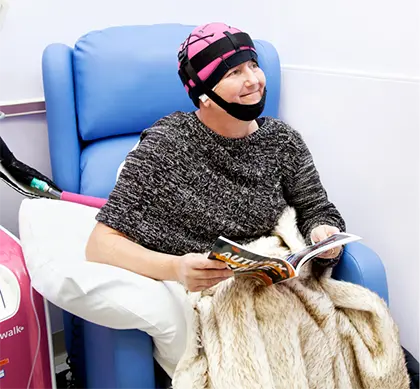
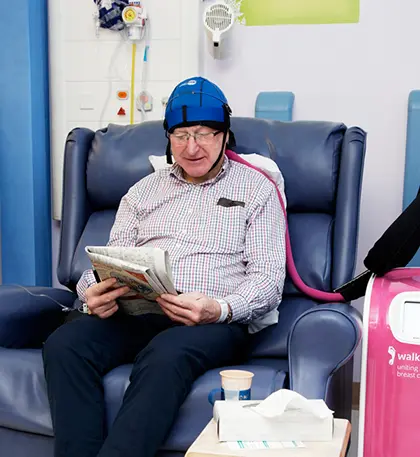
Scalp cooling is not suitable for everyone. You won’t normally have scalp cooling if there is a high risk that there might be cancer cells in your scalp. Scalp cooling is also not recommended for people:
with blood cancers such as leukaemia and lymphoma
who are going to have scalp radiotherapy
who suffer from severe headaches or migraines
You can't have scalp cooling with continuous chemotherapy through a pump or with chemotherapy tablets. This is because you would have to wear the cold cap for 24 hours a day.
Scalp cooling only blocks certain chemotherapy drugs and doesn't work for everyone. So you might still have hair thinning, or lose your hair completely. We can only tell whether it will work for you once you try it.
Your doctor might not suggest scalp cooling if they are worried about the risk of cancer cells being left on the scalp. This can lead to cancer spread in the scalp (scalp metastases).
Researchers did a of studies in 2018. The review showed that the risk of cancer spreading to the scalp after using a cold cap was very small.
You need to wear the cap before, during and after you have the chemotherapy drugs into your bloodstream. So you need to stay at the hospital for longer if you have scalp cooling.
The time varies depending on the drug and type of cold cap system your hospital has. For the Paxman scalp cooling system, you might wear the cap:
for about 30 to 45 minutes before treatment depending on your hair type
during treatment for as long as it takes to receive the drugs
after treatment for a minimum of 20 to 90 minutes depending on the drugs you have had
Your nurse might ask you to dampen or wet your hair before you put on the cap or cooling system. This is to improve contact between the scalp and cap and lower the temperature of the skin on your scalp. You also use a small amount of hair conditioner to help with removing the cap after you have finished treatment.
The cap needs to touch as much of your scalp as possible. So it is best to remove any braids, weaves or hair extensions before your treatment. You might need to wear the cap for longer if you have thick or Afro-textured hair.
Scalp cooling can make you feel cold all over and uncomfortable. You might feel very uncomfortable for around the first 15 minutes. This should then ease. Let your nurse know if you feel uncomfortable and want to stop the scalp cooling. Scalp cooling can also:
cause headaches or pain in your forehead
make you feel sick
make you feel dizzy and lightheaded
take extra layers to wear
take or ask for a blanket
drink hot drinks to help you feel warmer
take a stretchy, cotton head band to protect the skin on your forehead
ask for some painkillers before the scalp cooling starts
Last reviewed: 28 Apr 2026
Next review due: 27 Apr 2029
Hair loss due to cancer treatment can be very stressful. There are some practical things you can do to help.
There are a lot of ways to cover your head if your hair falls out. A wig is the most obvious choice. Some people prefer hats, scarves or baseball caps.
Cancer treatments can change your skin and affect your appearance. Learning some skin care and make up tips can boost your confidence and help you look and feel more like yourself.
Coping with cancer can be difficult. There is help and support available. Find out about the emotional, physical and practical effects of cancer and how to manage them.
Cancer and its treatment can change how you look. This might affect how you feel about yourself.



