Bowel problems with cancer
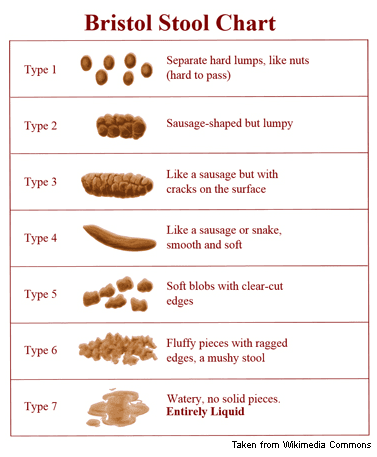
The Bristol stool chart is a scale of different types of stool. It helps when describing what your poo looks like. It has 7 different levels shown in the image below:
It's important that you speak to your healthcare team if you have noticed a change to your poo that isn’t normal for you. The earlier changes are picked up, the easier it is to sort the problem out.
You might find it embarrassing to talk about your bowels and bowel problems. Talking about your bowels and going to the toilet are very private matters for many people. But nurses and doctors are used to talking about these things and will want to help you.
It may help to use the Bristol scale to tell your doctor or nurse what it is like. For example, you could say "It is usually type 4 but for the last few days has been type 6".
Last reviewed: 05 Sept 2025
Next review due: 05 Sept 2028
How cancer or it's treatments can affect the bowel.
The two most common problems are diarrhoea and constipation. But people with cancer might also have problems with bowel blockages, passing wind or having a colostomy or ileostomy.
There are lots of organisations, support groups and helpful books to help you cope with bowel problems caused by cancer and its treatment.
Search for the cancer type you want to find out about. Each section has detailed information about symptoms, diagnosis, treatment, research and coping with cancer.



