Abnormal cervical cells
Abnormal cervical cells are changes in the cells covering the neck of your womb (cervix). You may receive a letter saying that you have abnormal cervical cells following your cervical screening. These changes are not cancer. The cells often go back to normal by themselves. But in a small number of people, if not treated, these changes could develop into cancer in the future.
Your letter may just explain that you have abnormal cervical cells. Or it may give some further detail about your screening result. It may say you have:
low grade dyskaryosis (mild cell changes)
high grade dyskaryosis (moderate or severe cell changes)
borderline changes, meaning the cells don't show cancer
Read more about cervical screening results
Abnormal cervical cells are caused by the human papillomavirus (HPV). Cervical screening tests for high risk types of HPV. If this shows that you have high risk HPV, a pathologist will look at the cells in more detail. This is done under a microscope and is called a cytology test. If the cells are abnormal, you will be referred for a test called to colposcopy.
If you tested positive for HPV, but your cytology results were normal, you will be invited back for a test in a year. If in a year you still test positive for HPV, then you might be referred for a colposcopy.
A colposcopy uses a large magnifying glass to look at the cervix in more detail. During this examination, the colposcopist can take samples (biopsies) of any abnormal areas.
The colposcopist might offer you treatment at the same time as your colposcopy. Or you may go back for treatment once they have your biopsy results.
Find out about having a colposcopy
Following a colposcopy, your biopsy results may show cervical intraepithelial neoplasia (CIN). This is not cancer. There are changes to the cells that cover the outside of the cervix (squamous cells).
There are 3 grades of CIN and they relate to how deeply the abnormal cells have gone into the skin covering the cervix.
CIN 1 (low grade) – up to one third of the thickness of the lining covering the cervix has abnormal cells.
CIN 2 (high grade) – up to two thirds of the thickness of the lining covering the cervix has abnormal cells.
CIN 3 (high grade) – the full thickness of the lining covering the cervix has abnormal cells.
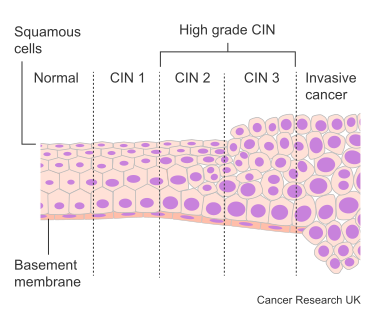
Both the cell abnormality (mild, moderate or severe) and the CIN level are taken into account when deciding which treatment will be best for you. The treatment aims to remove or destroy the abnormal cervical cells.
CIN 1 doesn't normally need treatment as the cell changes often return to normal over time. CIN 2 may be monitored or treated, while CIN 3 is usually treated.
Your biopsy results may show CGIN. This means there are changes to the glandular cells that line the inside of the cervix (endocervix). Without treatment, these cells could develop into a type of cervical cancer called adenocarcinoma.
CGIN is less common than CIN but is treated similarly.
Find out about treatment for abnormal cervical cells
This page is due for review. We will update this as soon as possible.
Last reviewed: 27 Sept 2023
Next review due: 27 Sept 2026
Your biopsy result may show you have abnormal cell changes called CIN or CGIN. You might need treatment for the cell changes.
You usually get your cervical screening results in the post. It can take from 2 to 6 weeks. Most people have a normal screening test result.
Cervical screening uses HPV primary screening. The cervical cells are first of all tested for the HPV virus. If high risk HPV is found, the laboratory will test the sample for cell changes.



