Radiotherapy for breast cancer
Your planning appointment takes from 15 minutes to 2 hours.
You usually have a planning CT scan in the radiotherapy department.
The scan shows the cancer and the area around it. You might have other types of scans or x-rays to help your treatment team plan your radiotherapy. The plan they create is just for you.
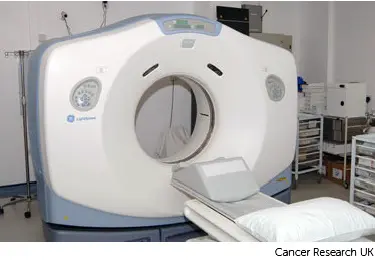
Your radiographers tell you what is going to happen. They help you into position on the scan couch. You usually have to undress from the waist up but you can ask for a gown to help maintain your privacy.
You lie on the CT couch on a special board called a breast board. You might also need to raise one or both arms above your head.
It's important to continue the arm exercises you were shown after your surgery. This will make it easier to get your arm in the right position. It will also help prevent your arm and shoulder from becoming stiff during and after treatment.
Find out more about exercises after surgery to the breast
You will lie in the same position on the breast board for both the CT scan and the radiotherapy treatment. You need to lie very still so tell your radiographers if you aren't comfortable. They can help get you into a more comfortable position.
Also let your radiographer know if you think you may be pregnant or have a .
Once you are in position, your radiographers put some markers on your skin. They move the couch up and through the scanner. They then leave the room and the scan starts.
The scan takes about 5 minutes. You won't feel anything. Your radiographers can see and hear you from the CT control room where they operate the scanner.
Your treatment team puts all the scans together in a special computer to decide your radiotherapy plan.
The radiographers make pin point sized tattoo marks on your skin. They use these marks to line you up into the same position every day. The tattoos make sure they treat exactly the same area for all of your treatments. They may also draw marks around the tattoos with a permanent ink pen, so that they are clear to see when the lights are low.

The radiotherapy staff tell you how to look after the markings. The pen marks might start to rub off in time, but the tattoos won’t. Tell your radiographer if that happens. Don't try to redraw them yourself.
Your treatment team might make a mould for you. They call this a shell.
You wear the shell during the treatment sessions to keep your breasts in the same position each time. The radiographers might also make marks on it. They use the marks to line up the radiotherapy machine for each treatment.
The process of making a shell can vary slightly between hospitals. It usually takes around 30 minutes.
You need to wear clothes that you can easily take off. You also need to take off any jewellery from that area.
A radiographer or technician uses a special kind of plastic that they heat in warm water. This makes it soft and easily bent. They put the plastic onto your chest so that it moulds exactly. It feels a little like a warm flannel.
After a few minutes, the plastic gets hard. The radiographer takes the shell off and it is ready to use.
Breast cancer can sometimes spread to other parts of the body such as the brain. This is secondary or advanced breast cancer. You may have radiotherapy to the brain to help relieve any symptoms you have.
You will have a head mask (or mould) made if you’re having radiotherapy to the brain. This keeps your head still during your planning CT scan and while you have treatment.
Find out more about having radiotherapy to the brain
You might have to wait a few days or up to 3 weeks before you start treatment.
During this time the physicists and your radiotherapy doctor (clinical oncologist) decide the final details of your radiotherapy plan. They make sure that the area of the cancer will receive a high dose and nearby areas receive a low dose. This reduces the side effects you might get during and after treatment.
Last reviewed: 26 Jun 2026
Next review due: 26 Jun 2029
You might have external beam radiotherapy after breast surgery to lower the risk of the cancer coming back. Or you might have radiotherapy to shrink secondary breast cancer and help relieve your symptoms.
The side effects of external radiotherapy to the breast include tiredness and changes to the skin in the treatment area.
Deciding about treatment can be difficult when you have secondary breast cancer. Treatments such as chemotherapy or radiotherapy can help to reduce symptoms and might make you feel better.
Getting practical, physical and emotional support can help you to cope with a diagnosis of breast cancer. It can also help you with life during and after treatment.
Breast cancer is cancer that starts in the breast tissue. It’s the most common cancer in the UK. It mainly affects women, but men can get it too.



