After surgery
After breast cancer surgery you might develop a stiff shoulder or arm. Your breast care nurse or physiotherapist should give you a leaflet which explains the simple exercises to do. These exercises can help to:
keep your movement full in your arm and shoulder
relieve pain and stiffness
reduce swelling
encourage circulation
If you have had breast reconstruction, the exercises you need to do are different. They depend on the type of reconstruction you have had.
Read about exercises after breast reconstruction
You usually start the exercises the day after surgery if possible. You should aim to do the exercises 2 or 3 times a day. The goal is to get your arm and shoulder moving as well as it did before the surgery.
Below is a short video showing you how to do exercises after breast cancer surgery. The advice may vary depending on your individual situation.
Begin each session by circling your shoulders to get the muscles moving.
Other early exercises are:
brushing or combing your hair
slowly reaching up behind your back to touch just under the shoulder blades
Once your drains and stitches are out, and as you get stronger and more confident you can do more of the exercises and increase the range of movements.
These exercises shouldn’t be painful, but you may feel a stretching sensation in your armpit or along your arm. It can help to take painkillers before you start. It will become easier and more comfortable the more you do the exercises.
Breast Cancer Now have a leaflet called ‘Exercises after breast cancer’. You can download the leaflet from their website.
Go to the Breast Cancer Now website
Talk to your healthcare team if you have ongoing problems with arm or shoulder pain, stiffness or swelling.
Sometimes fluid collects near the wound, this is called a seroma. Sometimes the fluid needs to be drained and it may affect the movement in your arm. Speak with your doctor if this happens to you.
Contact your healthcare team if your wound looks red, inflamed or is painful. In any of these situations, they may need to see you in clinic. They may also suggest that you stop the exercises for a short time.
If you haven’t seen a physiotherapist already and you are struggling with pain or lack of movement speak to your doctor or breast care nurse. They can arrange for you to see one. The physiotherapist can give you more exercises to do and offer advice on physical activity.
Some women develop scar tissue in the armpit after lymph node removal. The connective tissues in the armpit get inflamed, which forms one or more tight bands. This usually happens within the first few weeks or months after the operation.
The scar tissue is called cording, banding or axillary web syndrome. It can feel something like a guitar string. It can extend down the arm past the elbow, possibly as far as the wrist or thumb.
Cording is harmless but can be painful and may limit your arm movement. Massaging the area regularly can help. Tell your breast care nurse if you develop cording. They can refer you to a physiotherapist. They can show you how to massage the area and teach you stretching exercises. It usually gets better within a few months. Taking anti inflammatory painkillers may also help. Speak to your nurse or doctor about taking these.
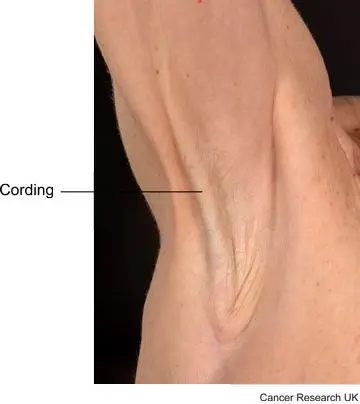
It is important to massage the scar area to keep the skin as supple as possible. This can be done with a gentle moisturiser. If you are having radiotherapy, check with your specialist which moisturiser is suitable.
Read about possible problems after breast surgery
You should continue your arm exercises until you get back to the range of arm movements you had before surgery, and without any discomfort. This can take a few weeks or months.
You should carry on with these exercises during radiotherapy treatment. This helps to stop your arm and shoulder from becoming stiff during your treatment.
Speak to your healthcare team if you have any concerns about the exercises.
Find out more about breast cancer surgery
Davina had a lumpectomy and lymph nodes removed. This is her story about her treatment, challenges and how she coped.
“I’m getting stronger every day by doing the exercises I was shown at the hospital.”
Read Davina's story about her diagnosis, treatment and support
Last reviewed: 16 Jun 2026
Next review due: 15 Jun 2029
Getting practical, physical and emotional support can help you to cope with a diagnosis of breast cancer. It can also help you with life during and after treatment.
Treatment for breast cancer depends on a number of factors. The main treatments are surgery, chemotherapy, radiotherapy, hormone therapy, and targeted and immunotherapy drugs.
Most people begin their breast cancer treatment with surgery. There are different types of surgery for breast cancer including lumpectomy and mastectomy.
Read about what happens after breast surgery, exercises you need to do, and how to cope with possible problems.
You may have regular follow up after your treatment for breast cancer. This is to check how you are and see whether you have any problems or concerns. In some hospitals, you can arrange follow up appointments when you need them.
Breast cancer is cancer that starts in the breast tissue. It’s the most common cancer in the UK. It mainly affects women, but men can get it too.



