Types
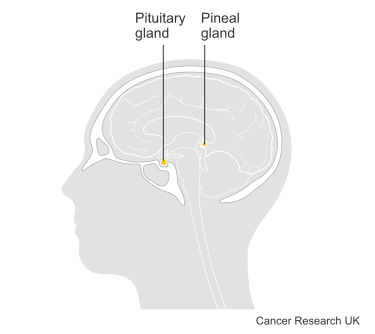
Craniopharyngiomas (pronounced cran-ee-oh-fah-rin-gee-oh-mahs) usually grow near the base of the brain, just above the . The pituitary gland makes hormones that control important body functions.
There are two different types:
adamantinous craniopharyngioma (ACP)- mostly found in children and teenagers, and most adults
papillary craniopharyngioma (PCP) - this type mainly occurs in adults
Find out more about the brain and spinal cord
Craniopharyngiomas do not usually spread. They grow close to the pituitary gland. So they can cause changes in the way the gland works, which can lead to changes in hormone levels. The hormone change can cause symptoms. For example, it might cause difficulty getting an erection or irregular periods. It can also cause a type of diabetes that makes you very thirsty and pee a lot. In children it can cause growth problems.
Other symptoms of craniopharyngiomas include:
changes to your eyesight
headaches
a build up of pressure in and around the brain, which can cause double vision, feeling or being sick, feeling sleepy and confused. And problems with balance and coordination
Symptoms can develop suddenly, which means that you feel unwell quickly. Or they can develop more slowly.
Craniopharyngiomas are rare tumours. In adults, about 1 to 3 out of every 100 brain tumours (about 1 to 3%) are craniopharyngiomas.
To find out what is causing your symptoms your doctor will arrange for you to have some tests. The tests you might have include:
blood tests to look at the levels of hormones
an or
eye examinations
a
As well as finding out whether you have a tumour, the tests check the size of the tumour and its location. This helps your doctor plan your treatment.
We have more information about the tests you might have to diagnose a brain tumour
Most people have surgery. You might need radiotherapy after surgery if your surgeon hasn’t been able to remove all of the tumour. You might also need hormone replacement therapy if you have changes in hormone levels.
Your healthcare team will talk to you about your treatment and the side effects you might have.
You may hear this called neurosurgery. A brain specialist surgeon (neurosurgeon) removes all the tumour. Or they remove just a part depending on where the tumour is.
Some tumours are close to important parts of the brain such as the optic nerve and the hypothalamus. The surgeon cannot usually completely remove these tumours.
You might have surgery to remove the tumour via the nose. This is called transsphenoidal surgery. Or you might have surgery through a small opening in the skull to remove the tumour.
The side effects you might have after the operation include:
changes in the hormone levels
a type of diabetes that makes you feel thirsty and pee a lot
changes in your vision
weight gain
changes in your behaviour
Read more about surgery for brain tumours
You might have radiotherapy after surgery if the tumour was not completely removed. You might also have radiotherapy if the tumour comes back.
For small tumours, you might have stereotactic radiotherapy or radiosurgery. Both treatments target high doses of radiotherapy to the tumour.
Some people may also have a type of radiotherapy called proton beam therapy. It uses high energy or low energy proton beams to treat cancer.
We have more information about radiotherapy
Many people with a craniopharyngioma have changes in their hormone levels. This is due to either the tumour itself or as a side effect of treatment.
You might need to take hormone replacement therapy to help with this. The type of hormone you take depends on your individual needs.
You have regular appointments with your doctor or nurse after treatment finishes. Your doctor examines you at each appointment. They ask how you are feeling and whether you have had any symptoms or side effects. And you can discuss any worries you might have.
You might have tests on some visits including:
tests to check your hormone levels
eye tests
MRI scans
How often you have check ups depends on your individual situation. They are generally more frequent at first. You can contact your doctor or specialist nurse if you have any concerns between appointments. You should also contact them if you notice any new symptoms. You don’t have to wait until your next visit.
Read more about follow up appointments after treatment for brain tumour
Coping with a diagnosis of a brain tumour can be difficult, both practically and emotionally. It can be especially difficult when you have a rare tumour. Being well informed about the type of tumour you have, and its treatment can make it easier to cope.
Find out what you can do, who can help and how to cope with a brain tumour
Doctors are always trying to improve the diagnosis and treatment of brain tumours. As part of your treatment, your doctor might ask you to take part in a clinical trial. This might be to test a new treatment or look at different combinations of existing treatments.
Find out about the latest UK research and how you can take part in a clinical trial
Last reviewed: 30 Mar 2026
Next review due: 30 Mar 2029
Primary brain tumours are tumours that start in the brain. They can start anywhere in the brain and there are many different types of tumours.
You usually start by seeing your GP who might refer you to a specialist. Or you might go to Accident and Emergency (A&E) if you suddenly have severe symptoms.
Treatment for a brain or spinal cord tumour depends on the type of tumour you have, where it is and your general health.
Survival depends on different factors such as the type, position and grade of your brain or spinal cord tumour.
It can be difficult to find out that you have a brain tumour. There is practical and emotional support available to help you, your family and your friends cope with a brain or spinal cord tumour.
Primary brain tumours are cancers that start in the brain. Tumours can start in any part of the brain or related structures.



