Radiotherapy for brain tumours
External radiotherapy uses a machine from outside the body. It directs radiation beams at the cancer to destroy it.
Radiotherapy might be your main treatment if you can’t have surgery to remove the tumour for any reason. For example, if you are too unwell to have an operation. Or if the tumour is in an area of the brain that is difficult for doctors to operate on, such as the brainstem.
You may also have radiotherapy after surgery to:
treat any tumour that your surgeon couldn't remove
lower the risk of the brain tumour coming back in the future
Some people might have radiotherapy and chemotherapy together (chemoradiotherapy).
Radiotherapy usually starts once the wounds from the operation have fully healed. This can take a few weeks. You might feel anxious about waiting to start your treatment. Speak to your doctor or radiographer if you have any concerns about the timing of your treatment.
Find out more about surgery and chemotherapy for brain and spinal cord tumours
The full dose of radiotherapy is usually divided into a number of smaller doses called fractions. This allows the healthy cells to recover between treatments. You might have treatment once a day from Monday to Friday for between 3 and 6 weeks. This means that you might have between 15 and 30 treatments of radiotherapy in total.
For some types of tumour, you might be able to have the full dose of radiotherapy over a single treatment. This is called stereotactic radiosurgery.
You might have radiotherapy to help with symptoms or slow down the growth of your tumour. This is called palliative radiotherapy and is usually a shorter course of treatment. This may be for around 2 weeks.
Your doctor and radiographers will let you know how often you have your treatment and how long it will last. They will also explain the possible side effects and what they can do to help you cope with them.
External radiotherapy destroys cancer cells by using radiation aimed at a cancer from a machine. The most common type of machine used is called a linear accelerator machine (LINAC).

You can have different types of external radiotherapy:
conformal radiotherapy
proton beam therapy (PBT)
stereotactic radiotherapy (SRT)
stereotactic radiosurgery (SRS)
Conformal radiotherapy shapes the radiation beams to closely fit the tumours. This means that the tumour receives a high dose of radiation and healthy tissues around receive a lower dose. It is also called 3D conformal radiotherapy.
You have conformal radiotherapy on a LINAC machine. This is the most common type of radiotherapy for brain and spinal cord tumours.
You might have a type of conformal radiotherapy called (IMRT).
Find out more about conformal radiotherapy
This treatment uses high energy proton beams to destroy cancer cells. It is only suitable for certain types of cancer. For adults, this includes cancers that started in the base of the skull or near the spine.
Find out more about proton beam therapy
Stereotactic radiotherapy gives radiotherapy from many different angles around the body. The beams meet at the tumour. The tumour receives a high dose of radiation and the tissues around it receive a much lower dose. Which lowers the risk of side effects.
You usually have treatment through a machine called a linear accelerator (LINAC). But you may also have it on a CyberKnife or GammaKnife machine.
The full dose of stereotactic radiotherapy treatment is usually divided into smaller doses (fractions). The number of fractions you have can vary. It might be between 2 and 5. You have one fraction a day.
You might hear the term stereotactic radiosurgery. This isn’t a type of brain surgery. It means having a very high dose of stereotactic radiotherapy to a small area. You usually have a single treatment.
Stereotactic radiotherapy and radiosurgery isn’t suitable for everyone. You might have this type of treatment if you have a
vestibular schwannoma
meningioma
pituitary gland tumour
cancer that has spread to the brain from somewhere else in the body (secondary brain cancer)
You are most likely to have this treatment for small tumours that measure less than 3 cm across.
Find out more about stereotactic radiotherapy
Your head needs to be kept as still as possible during radiotherapy. This is so the treatment is as accurate as possible. Keeping the head still is called immobilisation. So, before you start radiotherapy you have a radiotherapy mask made or a head frame fitted. The type of immobilisation you have depends on the type of radiotherapy you have.
Most people have a radiotherapy mask made from plastic. It is called a thermoplastic mask. The mask attaches to the scanner or radiotherapy machine while you are wearing it. This means that you can't move your head.
Your radiotherapy team might fit a head frame if you are having stereotatic radiosurgery. They usually fit the frame on the same day as your radiotherapy treatment.
Your treatment team attaches a frame to your skull using 4 pins. Before they attach the frame, you have injections of so that you don’t feel any pain. As the frame is fitted, you might feel some pressure and tightness. This usually feels better within a few minutes.
Your radiographer will give you more information about the frame and how long it will take to prepare you for treatment. You may be in the hospital for several hours. If the frame becomes uncomfortable, let your radiographers know. They can arrange for you to have pain relief if you need it. The treatment team removes the frame when your treatment finishes.
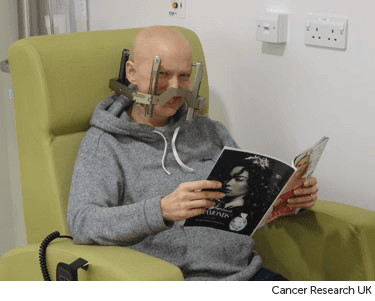
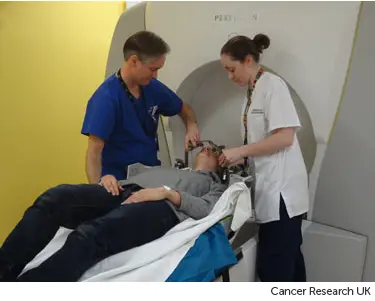
Before treatment you also have a planning CT scan. This helps your doctors map where the radiation needs to go.
Read more about having a planning CT scan and a radiotherapy mask or frame fitted
Radiotherapy machines are very big and could make you feel nervous when you see them for the first time. The machine rotates around you to give the treatment. But it doesn't touch you at any point.
Before your first treatment, your radiographers will explain what you will see and hear. In some departments, the treatment rooms have docks for you to plug in your music player. So you can listen to your own music.
To have treatment you lie on the treatment table. Because your position is so important, the radiographers may take a little while to get you ready. The radiographers attach your mask or head frame to the treatment table. They then leave the room before your treatment starts. This is so they are not exposed to the radiation
Your radiographers watch and listen to you on a CCTV screen in the next room. Tell them if you need to move or want the machine to stop.
You need to lie very still. The machine makes whirring and beeping sounds. You can't feel the radiotherapy when you have the treatment.
This video is about radiotherapy for brain tumours. It lasts for 1 minute and 18 seconds.
This type of radiotherapy won't make you radioactive. It's safe to be around other people, including pregnant women and children.
You might have to travel a long way each day for your radiotherapy. This depends on where your nearest cancer centre is. This can make you very tired, especially if you have side effects from the treatment.
You can ask your radiographers for an appointment time to suit you. They will do their best, but some departments might be very busy. Some radiotherapy departments are open from 7 am till 9 pm.
Car parking can be difficult at hospitals. Ask the radiotherapy staff if you are able to get free parking or discounted parking. They may be able to give you tips on free places to park nearby.
Hospital transport may be available if you have no other way to get to the hospital. But it might not always be at convenient times. It is usually for people who struggle to use public transport. Or who have any other illnesses or disabilities. You might need to arrange hospital transport yourself.
Some people are able to claim back a refund for healthcare travel costs. This is based on the type of appointment and whether you claim certain benefits. Ask the radiotherapy staff for more information about this and hospital transport.
Some hospitals have their own drivers and local charities might offer hospital transport. So do ask if any help is available in your area.
A brain tumour can affect your ability to drive. You may not be allowed to drive for some time after your diagnosis or treatment.
Ask your doctor or specialist nurse how your brain tumour might affect your right to drive.
Radiotherapy for a brain tumour can make you feel tired. There are other possible side effects.
Your treatment team will discuss the side effects of radiotherapy with you before you start. They will also help you manage any side effects you might have.
Last reviewed: 25 May 2026
Next review due: 26 May 2029
Your radiotherapy treatment plan is individual to you. Your radiotherapy team carefully work out how much radiation you need and exactly where you need it.
Radiotherapy to the brain and spinal cord can cause side effects. These include tiredness and feeling sick.
It can be difficult to find out that you have a brain tumour. There is practical and emotional support available to help you, your family and your friends cope with a brain or spinal cord tumour.
Primary brain tumours are cancers that start in the brain. Tumours can start in any part of the brain or related structures.
There are many different types of brain tumours. They are usually named after the type of cell they develop from.



