Treatment
You might have chemotherapy after surgery or if your brain tumour comes back. Common chemotherapy drugs used for brain tumours include temozolomide. A combination of drugs called procarbazine, lomustine and vincristine (PCV) may also be used for some types of brain tumour. Your doctor, nurse or pharmacist will tell you more about your chemotherapy and how you have it.
It can be difficult to treat brain tumours with some chemotherapy drugs. This is because the brain is protected by the blood brain barrier. This is a natural filter between the blood and the brain which protects the brain from harmful substances.
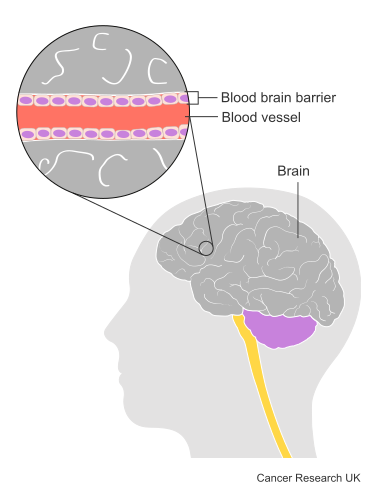
You might have chemotherapy:
after surgery for some types of brain tumour such as gliomas
with radiotherapy and for some months afterwards
for a brain tumour that has come back after treatment
Find out more about the different types of brain tumours
Common types of chemotherapy drugs for brain tumours include:
temozolomide
lomustine (CCNU)
a combination of drugs called PCV (procarbazine, lomustine and vincristine)
For some types of brain tumour that come back after treatment, chemotherapy may include carboplatin and etoposide. Or etoposide may be given on its own.
The type of chemotherapy you have depends on the type of brain tumour you have. Some people with less common types of brain tumour may have different chemotherapy drugs. For example, people with primary central nervous system (CNS) lymphoma may have methotrexate.
Read about primary central nervous system (CNS) lymphoma
Your doctor, nurse or pharmacist will tell you more about your chemotherapy and how you have it. They will also explain the possible side effects and answer any questions you may have.
Choose a chemotherapy drug on our A-Z list to find out more
You usually have chemotherapy in cycles of treatment. This means that you have the drugs for a few days every few weeks. There is a time with no treatment when you recover from the side effects.
How often you have treatment depends on the particular drug or drugs that you are having.
There are different ways of having chemotherapy for a brain or spinal cord tumour.
You might have it:
as a drip into your bloodstream (intravenously)
as tablets or capsules that you swallow (oral chemotherapy)
into the fluid around your spinal cord (intrathecal chemotherapy). This way of giving chemotherapy is not often used. But some people with lymphoma of the brain or spinal cord may have it
You have treatment through a thin short tube (a cannula) that goes into a vein in your arm each time you have treatment.
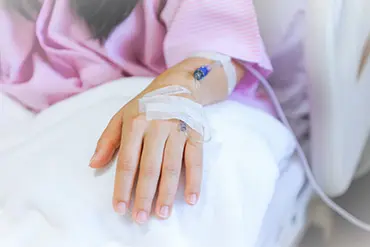
Or you might have treatment through a long line: a central line, a PICC line or a portacath. These are long plastic tubes that give the drug into a large vein in your chest. The tube stays in place throughout the course of treatment.
Whether you have a full or empty stomach can affect how much of a drug gets into your bloodstream.
You should take the right dose, not more or less.
Talk to your healthcare team before you stop taking a cancer drug, or if you have missed a dose.
You might have chemotherapy injected into the fluid around the brain and spinal cord (cerebrospinal fluid or CSF). This is called intrathecal chemotherapy. This way of giving chemotherapy is sometimes used to treat lymphoma of the brain or spinal cord.
To have intrathecal chemotherapy, you have an injection into your lower back. This is similar to having a lumbar puncture. The drug mixes with the cerebrospinal fluid and circulates around the brain.

Find out more about having a lumbar puncture
You might have chemotherapy given directly into the brain or the fluid around the brain. These treatments are not commonly used.
Your surgeon might put chemotherapy drugs into the brain tissue as a wafer. The chemotherapy drug is inside a gel wafer, which slowly dissolves over 2 to 3 weeks.
This isn't a very common treatment. Your doctor and nurse will give you more information if you have this treatment.
Find out more about carmustine wafers
During surgery, your surgeon might put a small plastic dome under the skin of your scalp. It's called a ventricular access device or an Ommaya reservoir.
Your doctor or nurse gently puts a small needle through your skin into the reservoir. They then give the chemotherapy straight into the fluid filled spaces in your brain. So it goes straight into your cerebrospinal fluid (CSF). This bypasses the blood brain barrier.
This way of giving chemotherapy is not widely available in the UK. It is sometimes used to give treatment in . Your doctor or nurse will give you more information if this is a treatment option for you.

You usually have treatment into your bloodstream at the cancer day clinic. You might sit in a chair for a few hours. It can help to take newspapers, books or electronic devices to help to pass the time. You can usually bring a friend or family member with you.
For some types of chemotherapy you might have to stay in a hospital ward. This could be overnight or for a couple of days.
You need to have blood tests to make sure it’s safe to start treatment. You usually have these a few days before or on the day you start treatment. You have blood tests before each round or cycle of treatment.
Your blood cells need to recover from your last treatment before you have more chemotherapy. Sometimes your blood counts are not high enough to have chemotherapy. If this happens, your doctor usually delays your next treatment. They will tell you when to repeat the blood test.
The side effects vary from one person to another. It is difficult to predict how you will feel and what side effects you will have.
Common side effects of chemotherapy include:
feeling sick
a drop in the levels of white blood cells causing an increased risk of infection
feeling very tired
Find out more about the possible side effects of each chemotherapy drug
Chemotherapy for a brain tumour can be difficult to cope with. Tell your doctor or nurse about any problems or side effects that you have. The nurse will give you telephone numbers to call if you have any problems at home.
Last reviewed: 03 Aug 2026
Next review due: 03 Aug 2029
There are many cancer drugs and cancer drug combinations. They all have individual side effects.
Treatment for a brain or spinal cord tumour depends on the type of tumour you have, where it is and your general health.
There are many different types of brain tumours. They are usually named after the type of cell they develop from.
It can be difficult to find out that you have a brain tumour. There is practical and emotional support available to help you, your family and your friends cope with a brain or spinal cord tumour.
Primary brain tumours are cancers that start in the brain. Tumours can start in any part of the brain or related structures.



