Surgery
Unfortunately, most people with bile duct cancer cannot have surgery. Less than 30 out of 100 people (less than 30%) can have surgery to remove bile duct cancer. This is because the cancer has already spread by the time most people are diagnosed. This is called advanced bile duct cancer.
Read more about advanced bile duct cancer
Your surgeon looks at your tests and scan results to see if they can remove (resect) the cancer. If they think they can, they call the cancer resectable.
They also check how well you are overall. This is because surgery to remove bile duct cancer is a major operation. So, you need to be generally fit to have it.
Like all operations, there is a risk of problems after this surgery. Your surgeon will talk to you about:
what the operation involves
what to expect after the operation
the chance of the cancer coming back
the risks and benefits of having the operation
if you are well enough to have the operation
The type of surgery you have depends on where the bile duct cancer is. This is your type of bile duct cancer. There are 3 main types:
intrahepatic bile duct cancer - starts in the bile ducts in the liver
perihilar bile duct cancer - starts in the bile ducts just outside the liver. This is where the right and left hepatic bile ducts meet
distal bile duct cancer - starts in the bile duct near the and small bowel (duodenum)

Find out about the different types of bile duct cancer
During the operation, your surgeon removes the cancer and a border of tissue around it. This is called the margin.
It can be difficult for your surgeon to remove a margin without cancer cells in it. This is because the bile ducts are very close to main blood vessels and other organs.
If there are cancer cells in the margin it increases the chance of the cancer coming back.
If there is a collection of in your liver, your surgeon may want to drain it before the operation. This is called biliary drainage. It can make your liver work better. It can also help your liver grow back if your surgeon needs to remove part of it.
They can drain the bile by putting a small tube in your bile duct to keep it open. This is called a stent.
Read about having a stent for bile duct cancer
Or they can pass a thin tube called a catheter through your skin and into your liver. A does this during a procedure called a percutaneous transhepatic cholangiography (PTC).
You don’t normally need biliary drainage for intrahepatic bile duct cancer. But you might need it if the cancer is in the perihilar or distal bile ducts.
Your surgeon will talk to you about how they will drain the bile and the risks and benefits.
Your surgeon normally removes the parts of your liver where the cancer is. The operation is called a liver resection or a hepatectomy.
They check how well your liver works before the operation. Having some of your liver removed might sound frightening. You might worry that the remaining part may not work well enough. But your surgeon only needs to leave a third of your liver for it to grow back. And if you don’t have other liver problems it will usually work normally.
If you have a medical condition called , you might not have enough healthy liver for your body to cope after the operation. Your doctors will talk to you about other treatment options instead of surgery.
Your surgeon might ask you to have a procedure called a portal vein embolisation before the operation. They do this if your liver is too small to work properly after surgery. It sends more blood to the part of the liver that isn’t being removed. The extra blood makes it grow. This means it works better.
The portal vein brings blood from your tummy (abdomen) to your liver. In the liver the vein branches in 2. One branch goes to the left side and the other goes to the right. They are called the left and right portal veins.

A radiologist puts a thin tube called a catheter through your skin and into your liver. They inject a dye (contrast medium) down the catheter. This lets them see the portal vein on an x-ray or scan.
They then inject very thin coils, beads or a special liquid into the portal vein on the same side of the liver as the cancer. This stops blood going to that side. More blood then goes to the other side making it grow. This is the part that isn’t going to be removed.
After 4 to 6 weeks your surgeon will check the size of your liver again. If they are happy it has grown enough to work properly, they will arrange the operation.

This is called a liver resection.
The liver is split into 8 sections.

Your surgeon might remove a number of them. Which ones and how many depends on:
the size of the cancer
whether the cancer is in the intrahepatic or perihilar bile ducts
whether intrahepatic bile duct cancer is in the left or right hepatic duct
Your surgeon only removes the hepatic bile duct on the same side of your liver as the cancer. This means bile keeps flowing from the hepatic duct on the other side.
Sometimes, they may also need to remove:
the junction where the left and right hepatic bile ducts meet
the bile ducts outside of the liver
your gallbladder
This means there will be no connection between the remaining bile duct in your liver and your small bowel.

During the operation, your surgeon connects the remaining bile duct to the second part of the small bowel. This part is called the jejunum. They do this by cutting the jejunum in half and bringing the bottom part up to attach the bile duct. Your surgeon then reattaches the top part of the jejunum further down. Doctors call this a Roux-en-Y hepaticojejunostomy.

If you have intrahepatic bile duct cancer, your surgeon might remove the cancer using (laparoscopic) surgery.
Your surgeon may do an operation called a pylorus preserving pancreaticoduodenectomy (pank-ree-at-ic-oh dew-oh-den-ek-tom-ee) or PPPD. Or they may do a pancreaticoduodenectomy. This is also called a Whipple’s procedure.
Your surgeon normally removes:
the bile ducts outside your liver (extra hepatic bile ducts)
your gallbladder
part of your pancreas and duodenum
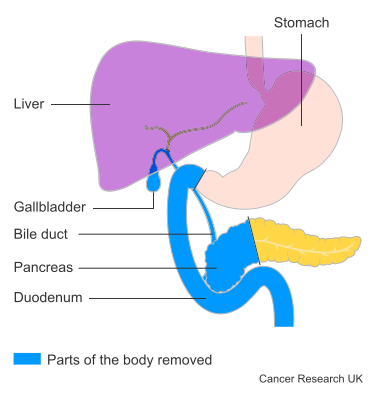
After the operation, your stomach, pancreas and the remaining part of your bile duct are joined to your duodenum.
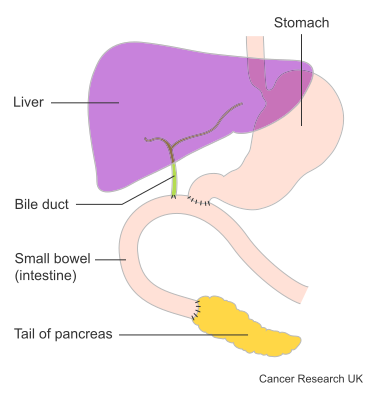
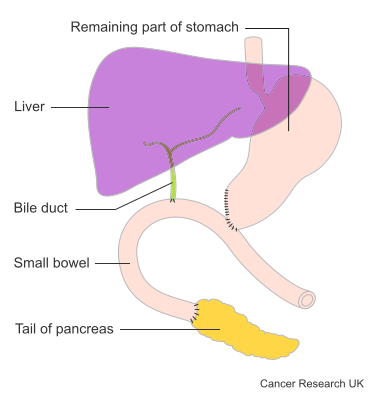
As well as your extra hepatic bile ducts, gallbladder and parts of your pancreas and duodenum, your surgeon might also need to remove the lower part of your stomach.
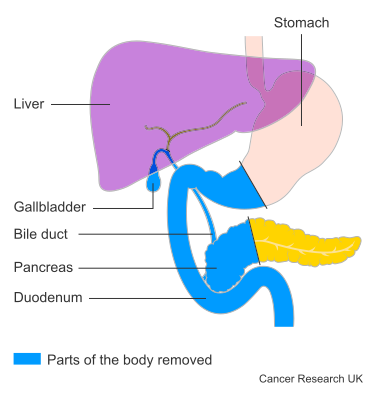
The diagram below shows how your surgeon might join your pancreas and your remaining stomach and bile duct after the operation.
Your pancreas is important for digestion of food. It makes:
insulin to control your blood sugar
pancreatic juice – this contains which help break down food and make it easier for your body to use
The remaining part of your pancreas should continue to make insulin and pancreatic juice after surgery. So, you may not need to take extra insulin or enzymes. Your doctor will monitor your blood sugar and digestion in case this changes.
You will need support with your eating and drinking after these types of surgery. It might take time to return to a normal diet.
Read about coping with diet problems caused by bile duct cancer
Cancer can spread to the . These are part of your . They get rid of damaged cells and waste products. And they contain cells that fight infection.
Your surgeon normally removes a number of nodes near the bile ducts during the operation. This is to check for cancer cells. Which lymph nodes they remove depends on where the bile duct cancer is.
Read more about the lymph nodes and cancer
Complications after bile duct surgery can be serious. Possible problems include bleeding and liver failure.
Read more about possible problems after surgery for bile duct cancer
After any cancer surgery there is a risk the cancer may come back. The risk depends on a number of factors including:
the size of the cancer and how far it has grown
where it is in your body
whether your surgeon can remove a clear margin of tissue from around the cancer
whether there are cancer cells in the nearby lymph nodes
Unfortunately, it is common for bile duct cancer to come back after surgery. Your surgeon will talk to you about the risk of it coming back and answer any of your questions.
After surgery, your doctor might suggest you have treatment to lower the chance of the cancer coming back. This is called adjuvant therapy. You usually have a chemotherapy drug called capecitabine for 6 months after surgery.
Find out more about chemotherapy for bile duct cancer
If bile duct cancer comes back after surgery you normally have treatment with chemotherapy, targeted cancer drugs and immunotherapy.
Some targeted and immunotherapy drugs are only used to treat bile duct cancer that has certain gene changes (mutations). Your doctor will test you for these changes. This helps them decide on the best treatment for you.
Read more about targeted and immunotherapy drugs for bile duct cancer
Last reviewed: 03 Dec 2024
Next review due: 03 Dec 2027
You have a pre assessment and some tests before your operation. This is to make sure you are well enough for surgery and know how to prepare for it.
After surgery you will have some tubes and drains in. Your healthcare team will help you to get up and tell you when you can eat and drink again.
There is a risk of problems (complications) after any operation. Possible complications include infections, blood clots, bleeding and a bile leak.
There are 3 main types of bile duct cancer. Intrahepatic bile duct cancer starts in the liver. Perihilar and distal bile duct cancers start in the bile ducts outside the liver.
Surgery is the main treatment for some cancers. You may also have it for other reasons. But what happens before, during and after surgery, normally depends on the type of cancer and your general health.
Bile duct cancer is also called cholangiocarcinoma. It is a rare type of cancer that develops in the small tubes that connect the liver and gallbladder to the small bowel.



