We’ve gathered some of our most exciting updates from the past 12 months so you can see the big strides we’re making towards beating cancer – all thanks to you.
Discover how we're:
launching a world-first clinical trial of a vaccine aiming to prevent lung cancer in people at high risk
making bowel cancer cells self-destruct
using tears to detect brain tumours
helping to create the UK’s first smokefree generation
uncovering a weakness in pancreatic cancer
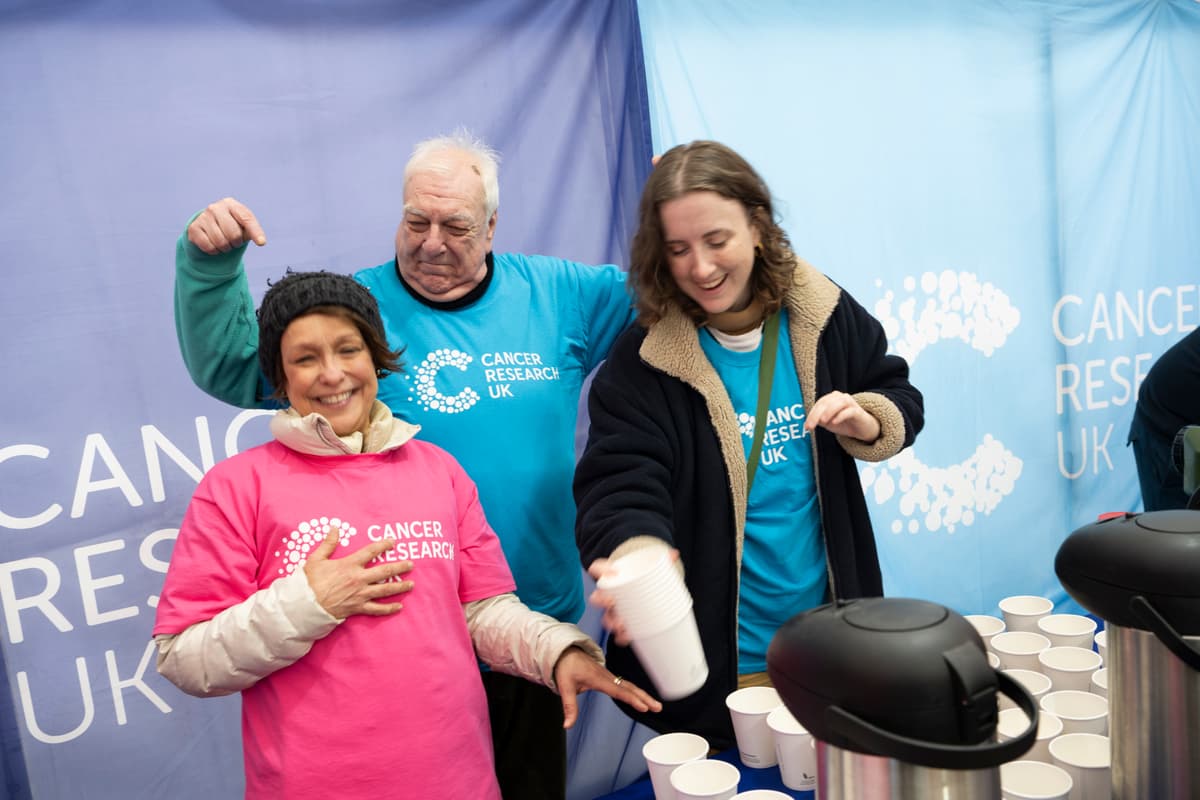
And so much more! You’ll also hear from people like Graeme, pictured above, who’ve shared their own experiences to show how your support is helping to shape a better future for people affected by cancer.
Read your annual update
of you went All In at Race for Life, raising £36.4m across 476 events in 2025.

hours of time were given by our incredible shop volunteers, who served happy customers to support cutting-edge science.
was raised by our passionate community of monthly donors, helping us commit to complex, long-term projects with huge potential to change lives.

of you pledged a generous gift in your Will to help back tomorrow’s breakthroughs.
We want everyone to access this update in a way that works for them. It’s also available as an accessible PDF.
View PDF versionGet more detailed information on how we spend your money and the progress we’ve made together over the last year.

On 29 April 2026, the Tobacco and Vapes Act officially became law in the UK. This world-leading legislation will prevent people born on or after 1 January 2009 from ever being legally sold tobacco in the UK, helping to create our first smokefree generation.
We urged the incoming governments in both nations to take action on cutting cancer waiting times, increasing early diagnosis and investing more in research.
More than 35,000 of you signed our open letter to the health secretary and we’ll keep holding politicians to account to make sure people affected by cancer get the research and care they deserve.
Cancer Grand Challenges team REWIRE-CAN is pioneering a bold new approach to bowel cancer treatment.
Instead of blocking the signals that drive tumour growth, they aim to amplify them, causing cancer cells to self-destruct.
In Manchester, our scientists are developing a test to detect signs of brain tumours in tears.
Their goal is to give doctors a tool to help spot tumours and diagnose people sooner, when treatment is more likely to be successful.
At the Cancer Research UK Scotland Centre, our researchers have uncovered curious dementia-like behaviour in cells during the development of pancreatic cancer.
This curious discovery could give us vital clues on how pancreatic cancer develops and unlock new ways to prevent, detect and treat it.